
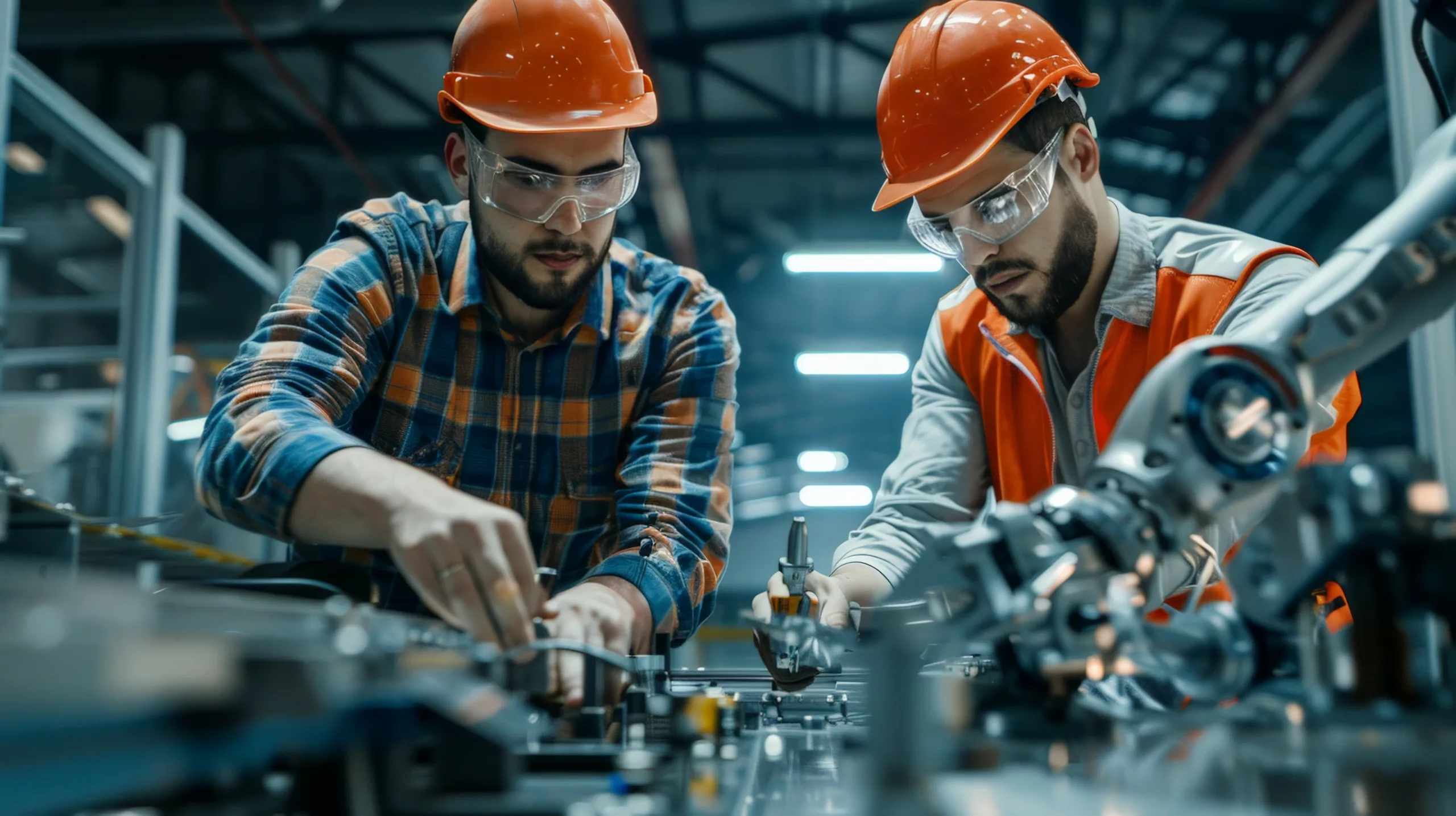
Industrial maintenance is rarely discussed outside factory floors or engineering journals, yet it is one of the most consequential forces in the global economy. Within the first moments of inquiry, the central reality becomes clear: without industrial maintenance, industrial society cannot function. Power plants fail, transportation systems stall, water supplies become unreliable, and manufacturing lines grind to a halt. Maintenance is the connective tissue holding modern infrastructure together.
The phrase “industrial maintenance international” does not describe a single organization. Instead, it refers to a worldwide discipline practiced across borders, cultures, and industries. It encompasses the inspection, servicing, repair, and optimization of physical assets machines, facilities, networks that underpin industrial production. From chemical plants in Western Europe to mining operations in Latin America, from semiconductor fabrication plants in East Asia to oil refineries in the Middle East, maintenance professionals operate within a shared technical language shaped by global standards and expectations.
Over the last several decades, industrial maintenance has undergone a quiet transformation. Once viewed as a necessary expense, it is now widely understood as a strategic function. Executives increasingly recognize that maintenance decisions influence productivity, safety, environmental impact, and long-term competitiveness. In a globalized economy where supply chains span continents, a single equipment failure can cascade across regions.
This article explores industrial maintenance as an international system. It traces its historical development, explains how technology reshaped its methods, examines its economic and social impact, and considers the challenges it faces in an era defined by sustainability demands and systemic risk. The story of industrial maintenance is, ultimately, a story about how the modern world keeps itself running.
The Historical Evolution of Industrial Maintenance Worldwide
Industrial maintenance emerged alongside mechanized production during the Industrial Revolution. Early factories relied on craftsmen who repaired machinery after breakdowns occurred. This reactive approach was sufficient when production volumes were low and equipment was relatively simple. As factories grew larger and more complex, unplanned downtime became increasingly costly.
The mid-20th century marked a turning point. Wartime production demands forced industries to rethink maintenance practices. Preventive maintenance scheduled inspections, routine servicing, and planned part replacements became standard across industrialized nations. This shift reduced catastrophic failures and improved output reliability.
Different regions developed distinct philosophies. In Japan, manufacturers introduced Total Productive Maintenance, emphasizing operator involvement and continuous improvement. European industries focused on engineering rigor, documentation, and safety compliance. In North America, maintenance practices evolved alongside reliability engineering and risk analysis, particularly in aerospace and defense sectors.
Globalization gradually unified these approaches. Multinational corporations required consistent maintenance standards across facilities worldwide. International standards organizations provided common frameworks, allowing maintenance teams in different countries to align their practices. What emerged was an international maintenance culture—diverse in execution, but unified in purpose.
Maintenance as a Strategic Business Function
For much of its history, industrial maintenance was treated as a cost center. Budgets were trimmed, staffing minimized, and maintenance deferred whenever possible. This perspective began to change as industries gathered data linking maintenance quality to financial performance.
Reliability-centered maintenance reframed the discipline around function rather than failure. The goal shifted from fixing broken equipment to ensuring assets consistently performed their intended roles. This change had profound implications. Maintenance planning became integrated with production scheduling, capital investment, and risk management.
In global operations, the stakes are higher. A failure at a critical facility can disrupt supply chains spanning multiple countries. Maintenance leaders now participate in strategic planning discussions, advising executives on asset risk, lifecycle costs, and resilience planning.
An expert in asset management once summarized the shift succinctly: “Maintenance is no longer about minimizing cost; it’s about maximizing value.” This idea has gained traction internationally, particularly in asset-intensive industries such as energy, transportation, and heavy manufacturing.
Common Maintenance Models Used Globally
| Maintenance Approach | Defining Characteristic | International Usage |
|---|---|---|
| Reactive Maintenance | Repair after failure | Declining worldwide |
| Preventive Maintenance | Time-based servicing | Universally applied |
| Predictive Maintenance | Condition-based monitoring | Rapid global growth |
| Reliability-Centered Maintenance | Function and risk focused | International best practice |
| Total Productive Maintenance | Operator involvement | Strong adoption in Asia |
Most global organizations apply multiple models simultaneously. Critical assets receive predictive or reliability-centered care, while less critical equipment may follow simpler preventive routines. This layered approach reflects the complexity of modern industrial systems.
Technology and the Global Maintenance Transformation
Digital technology has reshaped industrial maintenance more profoundly than any innovation since electrification. Sensors embedded in machinery collect real-time data on vibration, temperature, pressure, and energy consumption. This information feeds analytics platforms capable of identifying subtle performance changes long before failures occur.
Predictive maintenance has become a defining feature of modern industrial operations. By analyzing patterns across thousands of similar assets worldwide, organizations can forecast failures with increasing accuracy. Maintenance interventions are timed precisely, reducing downtime and extending equipment life.
Artificial intelligence and machine learning further accelerate this transformation. Algorithms continuously refine predictions as new data becomes available. Cloud-based systems allow multinational organizations to monitor assets across continents from centralized locations.
An engineering researcher specializing in condition monitoring has noted that the true power of predictive maintenance lies not in prediction itself, but in decision optimization. Knowing when not to intervene is often as valuable as knowing when to act. This insight underscores why maintenance has become a strategic discipline rather than a purely technical one.
Workforce Challenges in an International Context
Despite automation and analytics, industrial maintenance remains deeply human. Skilled technicians diagnose problems, make judgment calls, and perform complex repairs under demanding conditions. Globally, this workforce faces significant challenges.
In many countries, experienced maintenance professionals are approaching retirement age. At the same time, fewer young workers are entering industrial trades. This demographic imbalance is not confined to one region; it is a global phenomenon affecting both developed and emerging economies.
Training systems vary widely. Some countries emphasize formal apprenticeships and certification, while others rely on informal, experience-based learning. For multinational employers, this creates inconsistency in skill levels and safety practices.
Digital tools offer partial solutions. Augmented reality systems guide technicians through complex procedures. Remote experts provide real-time support across borders. These innovations help bridge skill gaps, but they also demand new competencies in digital literacy and cross-cultural communication.
A workforce development analyst observed that maintenance skills travel well, but credentials do not always. Harmonizing training and certification internationally remains an ongoing challenge.
Safety, Regulation, and Global Standards
Industrial maintenance operates under intense regulatory scrutiny because failures can have severe consequences. Equipment breakdowns can cause environmental damage, worker injuries, and public harm. As a result, maintenance practices are governed by extensive safety and compliance requirements.
International standards play a crucial role in aligning expectations. Frameworks for asset management, reliability data, and maintenance terminology provide a common reference point. While enforcement remains national, these standards enable benchmarking and shared learning across borders.
Global supply chains have increased accountability. Regulators and stakeholders expect multinational companies to apply consistent safety and maintenance practices worldwide, regardless of local enforcement strength. This expectation reflects a growing recognition that industrial risk does not respect national boundaries.
Maintenance and Environmental Sustainability
Sustainability has reshaped how industrial maintenance is valued. Well-maintained equipment operates more efficiently, consumes less energy, and produces fewer emissions. Extending asset life reduces the environmental impact associated with manufacturing and disposing of new equipment.
In renewable energy sectors, maintenance is essential. Wind turbines, solar installations, and hydroelectric facilities rely on predictive maintenance to remain economically viable. Harsh operating environments and remote locations make unplanned failures particularly costly.
A sustainability engineering expert has argued that maintenance is among the most effective environmental interventions available to industry. By preserving asset performance, maintenance supports both economic and environmental objectives, aligning operational efficiency with climate goals.
The Economic Scale of Industrial Maintenance
| Industry Sector | Estimated Maintenance Cost Share | Operational Risk |
|---|---|---|
| Manufacturing | 10–15% | High |
| Energy and Utilities | 20–30% | Critical |
| Oil and Gas | 15–25% | Very High |
| Transportation | 8–12% | High |
| Water Infrastructure | 25–35% | Essential |
Globally, industrial maintenance represents trillions of dollars in economic activity. Its costs are distributed across operations, making its full scale difficult to quantify. Yet its impact is undeniable. Effective maintenance reduces downtime, prevents accidents, and stabilizes production across industries.
Resilience and the Future of Global Maintenance
Recent global disruptions pandemics, climate extremes, geopolitical tensions—have highlighted the fragility of industrial systems. Maintenance strategies increasingly account for resilience, emphasizing preparedness and adaptability.
Digital twins allow organizations to simulate equipment behavior under extreme conditions. Scenario planning helps maintenance teams anticipate supply shortages and environmental stressors. These tools support proactive decision-making on a global scale.
The future of industrial maintenance will depend on integration: integrating data with experience, global standards with local knowledge, and efficiency with ethical responsibility. As automation expands, ensuring equitable access to training and opportunity will shape the next generation of maintenance professionals.
Key Takeaways
- Industrial maintenance is a global discipline essential to economic stability.
- The field has evolved from reactive repair to predictive strategy.
- International standards enable consistency across borders.
- Workforce shortages pose a worldwide challenge.
- Maintenance supports sustainability and climate resilience.
- Digital tools are transforming global collaboration and decision-making.
Conclusion
Industrial maintenance international is not a hidden industry but a foundational one. It operates quietly, often unnoticed, yet its influence extends across every sector that relies on physical infrastructure. As industries globalize and systems grow more complex, the importance of maintenance continues to rise.
The discipline’s evolution reflects broader changes in how societies value reliability, safety, and sustainability. Maintenance professionals may work behind the scenes, but their decisions shape the resilience of modern life. In a world defined by uncertainty, industrial maintenance stands as a stabilizing force one inspection, one repair, one predictive insight at a time.
FAQs
What does industrial maintenance international mean?
It refers to the global practice of maintaining industrial assets across countries and industries using shared standards and methods.
Why is maintenance considered strategic today?
Because failures can disrupt global supply chains, harm safety, and cause significant financial losses.
How has technology changed maintenance worldwide?
Through sensors, predictive analytics, remote monitoring, and digital collaboration tools.
Are maintenance standards global?
Core principles are shared internationally, though enforcement varies by country.
What skills are most important for maintenance professionals?
Technical expertise, reliability analysis, safety compliance, and digital literacy.
References
International Organization for Standardization. (2014). ISO 55000: Asset management—Overview, principles and terminology. ISO.
Moubray, J. (1997). Reliability-centered maintenance. Industrial Press.
Jardine, A. K. S., Lin, D., & Banjevic, D. (2006). A review on machinery diagnostics and prognostics implementing condition-based maintenance. Mechanical Systems and Signal Processing, 20(7), 1483–1510.
Mobley, R. K. (2002). An introduction to predictive maintenance. Butterworth-Heinemann.
Smith, A. M., & Hinchcliffe, G. R. (2004). RCM—Gateway to world class maintenance. Elsevier.