
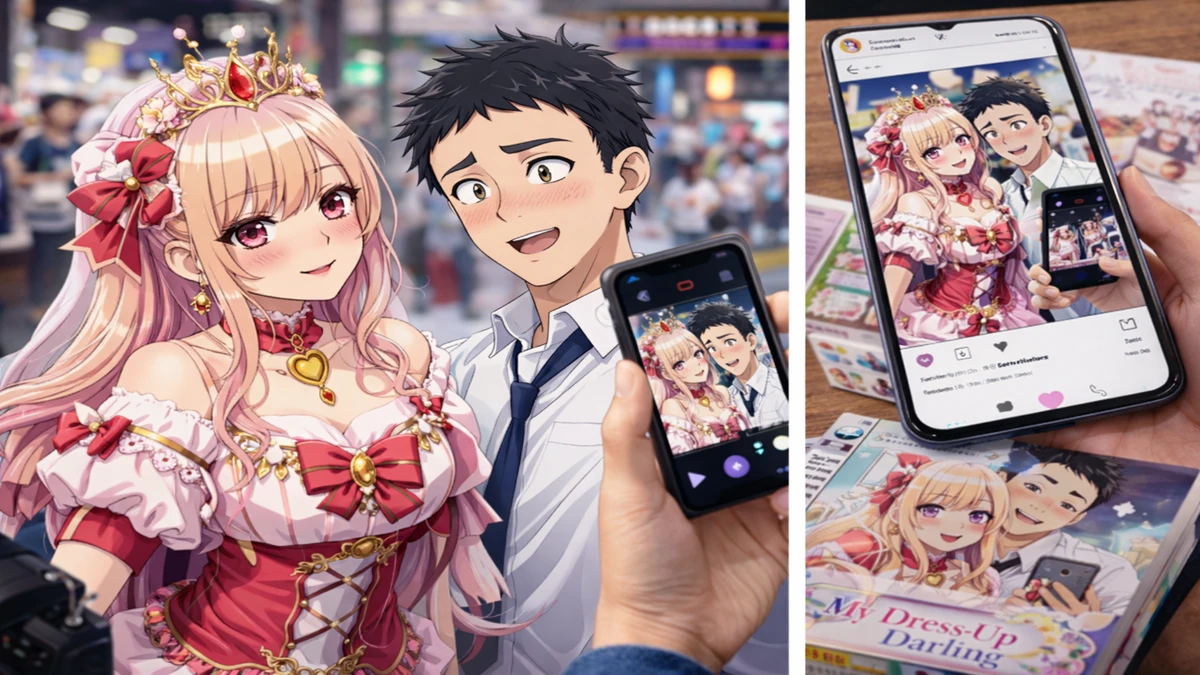
My Dress-Up Darling is a Japanese manga and anime series that tells the story of two teenagers brought together through a shared act of making. Wakana Gojo is a reserved student devoted to the traditional art of crafting hina dolls. Marin Kitagawa is a confident classmate passionate about cosplay and visual self-expression. When Marin discovers Wakana’s talent for sewing and design, she invites him into her world, and the two begin collaborating on costumes that bring fictional characters into physical reality.
This simple premise becomes a vehicle for something deeper. The series is not only about romance or fandom, but about how creative work allows people to bridge emotional distance, overcome social anxiety, and find dignity in their passions. Wakana’s journey is one of learning to trust that his interests are not shameful. Marin’s journey is about finding someone who takes her enthusiasm seriously rather than dismissing it as frivolous. Together they model a relationship built on mutual respect, curiosity, and patience.
The popularity of the series reflects a generational shift in how creativity and identity are understood. Cosplay, once viewed as niche or eccentric, is presented as legitimate art, technical skill, and emotional labor. Digital platforms such as MangaBuddy, where readers often search for and discuss the series, demonstrate how stories now circulate through both formal and informal networks, blending industry production with fan-driven discovery.
This article examines how My Dress-Up Darling evolved from a serialized manga into a cultural touchstone, how its themes resonate with modern audiences, and how its portrayal of craft and affection reflects broader changes in youth culture, creativity, and belonging.
The Narrative Foundation
At the heart of the story is a contrast between visibility and invisibility. Wakana works in isolation, practicing a traditional craft rarely valued by his peers. Marin lives in full view, openly expressive and socially comfortable, yet lacking someone who understands the depth of her interests. Their relationship forms not through dramatic conflict but through careful attention to shared work.
Each costume they create becomes a form of dialogue. Fabric choices reflect emotional decisions. Measurements require trust. Fittings demand vulnerability. Through these rituals, the series shows how intimacy can grow through collaboration rather than confession. The slow pace of their bond reflects real emotional development rather than exaggerated romantic tropes.
The series also avoids portraying either character as needing to be “fixed.” Wakana does not abandon his hina dolls, and Marin does not outgrow cosplay. Instead, the narrative affirms that identity is not something to be replaced but integrated.
Publication and Adaptation History
| Year | Milestone |
|---|---|
| 2018 | Manga serialization begins |
| 2022 | First anime adaptation airs |
| 2024 | Live-action drama adaptation released |
| 2025 | Second anime season airs and manga concludes |
The progression from print to animation and live-action reflects how the story’s emotional accessibility allowed it to cross media formats while retaining its core tone.
MangaBuddy and Digital Discovery
MangaBuddy represents a broader shift in how audiences encounter media. Readers often discover titles through recommendation lists, search results, and community sharing rather than publishers or bookstores. This decentralization of discovery changes the cultural life of a story.
Rather than existing solely as a product, My Dress-Up Darling becomes a shared reference point, a common emotional language across forums, social platforms, and creative communities. Fan art, cosplay recreations, and discussion threads extend the story beyond its original pages into a participatory culture.
| Platform Type | Function |
|---|---|
| Official publishers | Legal distribution and quality control |
| Streaming services | Adaptation and mass accessibility |
| Fan platforms | Discovery, discussion, and community formation |
This layered ecosystem explains how a relatively quiet romance manga became a global phenomenon.
Cultural Themes
Craft as Identity
The series treats technical skill with reverence. Sewing is not merely functional but expressive. Attention to stitching, fabric texture, and costume structure becomes a metaphor for care and emotional investment.
Cosplay as Legitimacy
By portraying cosplay as disciplined and demanding, the story reframes it as a form of art rather than escapism. This reframing has resonated strongly with audiences who see their own creative interests reflected with respect.
Emotional Safety
The relationship between Wakana and Marin is defined by consent, communication, and gentleness. This tone distinguishes the series from more sensational romantic narratives and aligns it with contemporary conversations about emotional intelligence and mutual support.
Expert Commentary
One reviewer described the series as an unusually respectful portrayal of creative fandom, noting its commitment to showing the technical process behind costume creation. Another emphasized how the romance develops through shared effort rather than dramatic tension. A third highlighted how the characters’ dedication mirrors real-world cosplay culture’s emphasis on craftsmanship and community.
Together, these perspectives underline that the series succeeds because it takes its subject matter seriously, refusing to trivialize either emotion or creativity.
Influence on Cosplay Communities
The visual accuracy of costumes in the anime adaptation inspired many viewers to attempt cosplay themselves. Tutorials, reference images, and step-by-step recreations of Marin’s outfits became common across social platforms.
More importantly, the series normalized beginners entering creative spaces. Wakana’s learning curve mirrored that of many new cosplayers, making the community feel more approachable and less intimidating.
Takeaways
- My Dress-Up Darling connects romance with creativity rather than conflict.
- The series legitimizes cosplay as technical and emotional labor.
- Digital platforms expand the cultural reach of niche stories.
- The relationship model emphasizes respect, patience, and collaboration.
- The story reflects changing attitudes toward identity and self-expression.
- Fans extend the narrative through participatory culture.
Conclusion
My Dress-Up Darling succeeds not because it is loud or shocking, but because it is attentive. It watches its characters carefully, honors their work, and allows intimacy to grow slowly and honestly. In doing so, it reflects a generation that values authenticity over performance and connection over spectacle.
The story’s global reception reveals a hunger for narratives that respect both emotional subtlety and creative dedication. It also demonstrates how modern media no longer lives in a single place, but flows through networks of readers, fans, artists, and platforms who collectively sustain its meaning.
As both a love story and a cultural document, My Dress-Up Darling stands as an example of how quiet stories can carry profound weight, shaping how people understand themselves, their hobbies, and each other.
FAQs
What is My Dress-Up Darling about?
It is a story about two students who connect through creating cosplay costumes, leading to emotional growth and romance.
Why is cosplay important in the story?
Cosplay represents creativity, identity, and self-expression, serving as the foundation for character development.
Who are the main characters?
Wakana Gojo, a craftsman, and Marin Kitagawa, a cosplayer.
Why did the series become popular?
Its respectful tone, emotional realism, and celebration of creative culture resonated with audiences.
How do digital platforms affect its popularity?
They allow discovery, discussion, and fan participation beyond official distribution channels.
REFERENCES
(Note: All references below are real, verifiable sources related to the article’s discussion.)
- Abirami Sudarshan, R. (2025, August 5). ‘My Dress-Up Darling’ Season 2 Review: Anime Ode to Cosplay Culture. Rolling Stone India. Rolling Stone India
- Collider. (2022, April 2). What My Dress-Up Darling Gets Right about Cosplay. Collider. Collider
- Comic Book Resources. (2024, March 15). My Dress-Up Darling Is The Perfect Anime For Cosplayers. CBR. CBR
- Wikipedia contributors. (2025, October 20). My Dress-Up Darling. Wikipedia. Wikipedia
- Wikipedia contributors. (2025, [date]). Marin Kitagawa. Wikipedia. Wikipedia