
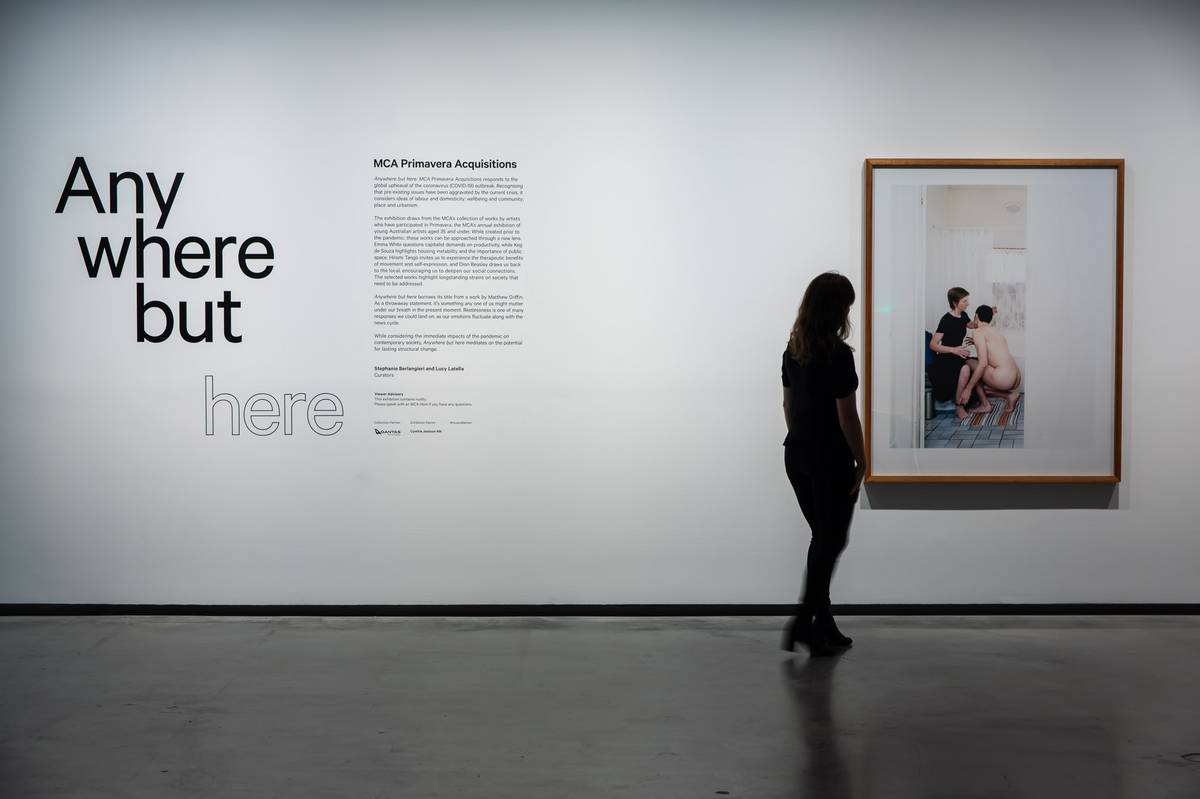
Art wall text is among the most familiar yet overlooked elements of the museum experience. Visitors encounter it almost instinctively: a small block of words beside a painting, a panel introducing an exhibition, a paragraph offering historical or conceptual framing. In those few sentences, viewers are told what they are looking at, who made it, and often why it matters. Within the first moments of an exhibition visit, wall text quietly establishes expectations and boundaries for interpretation.
For many readers, the primary intent behind art wall text is practical. It answers basic questions and reduces uncertainty, particularly when artworks are abstract, conceptual, or culturally distant. Yet its influence goes far beyond simple explanation. Wall text shapes meaning. It frames how viewers understand artistic intent, historical context, and even moral or political significance. In doing so, it acts as a mediator between artwork and audience.
The modern emphasis on art wall text emerged alongside the transformation of museums into public educational institutions. As collections once reserved for elites became accessible to broader audiences, institutions assumed responsibility for interpretation. Over time, labels expanded from factual identifiers into curatorial narratives. Today, wall text reflects ongoing debates about authority, inclusivity, and access. Institutions must decide how much to explain, whose voice to prioritize, and whether interpretation should instruct, invite, or provoke.
Art wall text is never neutral. It carries institutional values, cultural assumptions, and editorial judgment. Understanding how it works and why it matters offers insight into how art is experienced, remembered, and contested in public spaces.
Historical Foundations of Art Wall Text
Early art displays required little explanation because they were not designed for a general audience. Collections housed in palaces, academies, and private salons assumed a shared cultural literacy among viewers. The rise of public museums in the eighteenth and nineteenth centuries altered this dynamic. Institutions such as the British Museum and the Louvre welcomed visitors with diverse educational and social backgrounds, creating a need for explanatory frameworks.
Initial wall labels were minimal. They typically included the artist’s name, title, and date. Interpretation was secondary, reflecting a belief that meaning resided primarily in visual appreciation. By the late nineteenth century, however, museums increasingly embraced educational missions. Wall text expanded to include stylistic classifications, historical narratives, and moral lessons aligned with national identity.
The twentieth century intensified this shift. As modern and contemporary art challenged traditional aesthetics, explanatory text became essential. Abstract painting, conceptual art, and installation practices demanded context. Curators used wall text to articulate movements, intentions, and critical frameworks. In doing so, wall text evolved into a form of authorship one capable of legitimizing unfamiliar work and shaping public understanding.
Types of Art Wall Text and Their Functions
Art wall text exists in several forms, each serving a distinct role within exhibition design. These texts work together to guide visitors through both physical space and intellectual structure.
| Type of Wall Text | Typical Length | Core Purpose |
|---|---|---|
| Object Label | 40–80 words | Identify and contextualize a single artwork |
| Section Panel | 100–150 words | Introduce a thematic grouping |
| Exhibition Introduction | 150–300 words | Present the curatorial framework |
| Extended Didactic | 300+ words | Offer deeper historical or theoretical context |
Object labels emphasize clarity and accuracy, while introductory panels establish broader narratives. Extended didactics are often reserved for complex themes or historically dense material. Each form reflects assumptions about audience attention, prior knowledge, and interpretive need.
Increasingly, museums test wall text for readability and comprehension. Short sentences, active voice, and clear structure are favored. This approach reflects a growing consensus that accessibility enhances rather than diminishes intellectual rigor.
Curatorial Voice and Institutional Authority
One of the most significant questions surrounding art wall text concerns voice. Traditionally, museums wrote in an impersonal, authoritative tone that implied institutional consensus. This style positioned the museum as an unquestioned source of knowledge. Museum scholar Eilean Hooper-Greenhill has argued that museums do not merely transmit knowledge but actively produce it. From this perspective, wall text is not neutral explanation but interpretation shaped by institutional priorities. Similarly, participatory museum advocate Nina Simon emphasizes that visitors are not passive recipients of meaning but active interpreters.
These ideas have influenced contemporary practice. Many institutions now experiment with first-person narratives, artist-authored labels, or multiple perspectives presented side by side. Some explicitly acknowledge uncertainty or disagreement, signaling that interpretation is provisional rather than absolute.
Despite these shifts, authority has not disappeared. Choosing which voices appear on the wall and which do not remains a powerful curatorial act. Wall text continues to reflect institutional values, even when it seeks to decentralize them.
Accessibility and Inclusive Interpretation
Accessibility has become a defining concern in wall text design. Language complexity, font size, placement, and translation all affect who can fully engage with an exhibition. Museums increasingly recognize that access is cognitive and linguistic as well as physical. Plain-language initiatives aim to reduce jargon while preserving nuance. Many institutions target a reading level appropriate for a general adult audience. Multilingual labels acknowledge global and diasporic publics, while digital tools provide optional layers of interpretation.
| Accessibility Strategy | Purpose | Common Practice |
|---|---|---|
| Plain Language | Reduce cognitive barriers | Short sentences, clear syntax |
| Multilingual Text | Serve diverse audiences | Dual-language labels |
| Visual Legibility | Improve readability | Larger fonts, high contrast |
| Digital Extensions | Offer layered depth | QR-linked audio or essays |
These strategies reframe wall text as an interface rather than a fixed authority—one that adapts to different learning styles and preferences.
Controversy and Ethical Responsibility
Wall text often becomes a focal point of controversy when exhibitions address colonialism, race, gender, or political violence. Language choices are scrutinized for omissions, euphemisms, or institutional bias. In several high-profile cases, museums have revised wall texts mid-exhibition following public critique. Cultural theorist James Clifford described museums as “contact zones,” spaces where cultures meet under conditions of unequal power. Wall text is frequently where those tensions surface. Words can either reinforce dominant narratives or invite critical reflection on historical injustice. As social values evolve, institutions face pressure to revisit interpretive language. Wall text thus becomes an ethical practice, requiring transparency, accountability, and willingness to change.
The Balance Between Looking and Reading
A long-standing critique of wall text is that it distracts from direct engagement with art. Some artists and viewers argue that excessive explanation conditions perception, turning visual experience into an intellectual exercise. Curators respond by carefully choreographing how and when text appears. Placement, spacing, and sequencing are designed to encourage initial visual encounter before reading. The goal is not to replace looking with reading, but to allow text to deepen rather than dominate experience.
Effective wall text respects the autonomy of the artwork. It offers context without closing interpretation, supporting a dialogue between seeing and understanding rather than prescribing meaning.
Key Takeaways
- Art wall text plays a central role in shaping interpretation.
- It evolved alongside the rise of public museums and education.
- Voice and tone reflect institutional authority and values.
- Accessibility has become a core design principle.
- Wall text can be ethically and politically contested.
- Balance between explanation and visual experience is essential.
Conclusion
Art wall text may appear modest, but its influence is profound. It frames how visitors understand art, history, and culture, often in subtle ways that go unnoticed. As museums reassess their roles in increasingly diverse and critical societies, wall text has emerged as a key site of reflection and change.The future of art wall text lies not in silence or excess, but in thoughtful balance. It must remain clear without being prescriptive, inclusive without diluting complexity, and authoritative without denying multiplicity. In acknowledging its power, wall text can become a more honest and responsive companion to art—one that invites viewers not just to read, but to think, question, and engage.
Frequently Asked Questions
What is art wall text?
Art wall text refers to written materials displayed alongside artworks to provide identification, context, or interpretation.
Who writes wall text?
Curators and museum educators typically write wall text, sometimes in collaboration with artists or communities.
Why is wall text important?
It helps visitors understand unfamiliar works and situates art within broader historical and cultural contexts.
Can wall text influence meaning?
Yes. Language choices can frame interpretation and shape how viewers perceive artworks.
Is minimal wall text better?
Not always. Effective wall text balances clarity and openness rather than avoiding interpretation altogether.
References
Hooper-Greenhill, E. (2000). Museums and the interpretation of visual culture. Routledge.
Simon, N. (2010). The participatory museum. Museum 2.0.
Clifford, J. (1997). Routes: Travel and translation in the late twentieth century. Harvard University Press.
American Alliance of Museums. (2021). Accessibility and inclusion practices in exhibition design. AAM Publications.
The British Museum. (2019). Writing museum labels. British Museum Research Publications.