
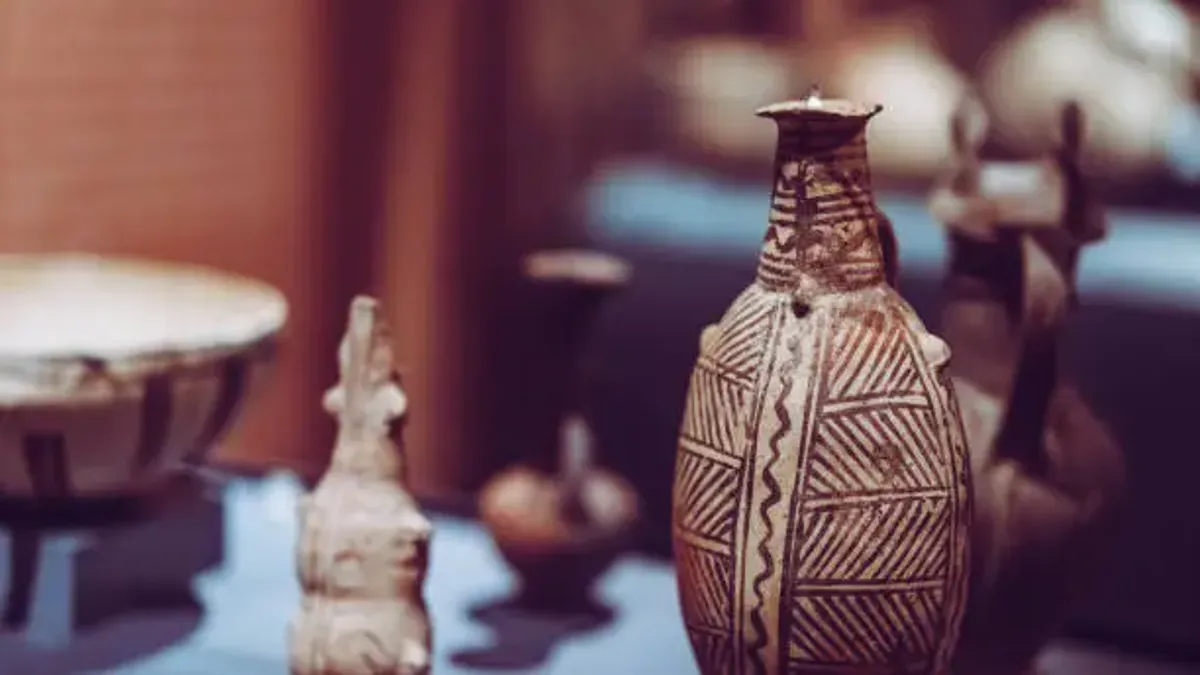
A carafe is among the most familiar objects on a dining table, yet it is rarely examined with the attention it deserves. At its most basic, a carafe is an open vessel used for serving liquids such as water, wine, juice, or coffee. Within the first moments of encountering one, its purpose is clear: to hold, pour, and present. But beneath that simplicity lies a long story of craft, language, and social habit. The carafe exists precisely where function meets ceremony, making it an object that quietly structures daily rituals without calling attention to itself.
Over centuries, the carafe has traveled across borders and dining traditions, adapting to new materials, beverages, and expectations. From medieval European tables to modern cafés, it has remained a symbol of hospitality and accessibility. Unlike specialized vessels designed for singular purposes, the carafe’s strength lies in its flexibility. It can serve humble tap water or accompany fine wine, appearing equally at home in casual meals and formal settings. This adaptability explains why the carafe has endured even as other tableware has fallen in and out of fashion.
Examining the carafe offers insight into how everyday objects carry cultural meaning. Its shape reflects craftsmanship, its use reflects social norms, and its persistence reflects a human desire to elevate ordinary acts—like pouring a drink—into something quietly graceful.
Linguistic Roots and Early History
The word carafe entered English through French, itself influenced by Italian usage, with deeper roots that trace back to Arabic terminology for vessels used to draw or hold liquids. This linguistic journey mirrors centuries of trade, cultural exchange, and shared domestic practices across the Mediterranean world. Language, in this sense, preserves evidence of how essential such vessels were to everyday life.
Historically, early carafe-like vessels appeared alongside the development of glassmaking in Europe. During the Middle Ages, glass workshops in regions such as Venice and Bohemia refined techniques that allowed artisans to create thin-walled, transparent containers. These early carafes were not merely practical; they were statements of skill and refinement. Transparency allowed hosts to display the clarity of water or the color of wine, subtly communicating quality and care.
By the Renaissance, carafes were common in affluent households, often paired with matching glasses as part of coordinated table services. Over time, production methods improved, and carafes became accessible beyond elite circles. What began as a crafted luxury gradually transformed into an everyday object, retaining its elegance while becoming more democratic in use.
Form, Materials, and Design Principles
The defining characteristics of a carafe are deceptively simple: a wide mouth, an open top, and a shape optimized for pouring. Most traditional carafes lack a stopper, distinguishing them from bottles and certain types of decanters. This openness prioritizes convenience and immediacy, reinforcing the carafe’s role as a serving vessel rather than a storage container.
Glass remains the most common material, chosen for its neutrality and visual clarity. Crystal carafes elevate the form further, adding weight and brilliance that signal formality. In some contexts, ceramic, stainless steel, or insulated materials are used, particularly for coffee or temperature-sensitive beverages. Regardless of material, balance is central to good carafe design. The vessel must pour smoothly without dripping, feel stable when set down, and be comfortable to hold.
Design historians often note that the carafe succeeds because it resists overcomplication. Even contemporary interpretations tend to preserve its fundamental silhouette. Minor variations—slender necks, curved shoulders, or integrated lips—add character without compromising function. The result is an object that feels timeless, capable of blending into changing aesthetic trends without losing its identity.
Carafe and Decanter: A Functional Distinction
Although the terms are sometimes used interchangeably in casual speech, the carafe and the decanter serve distinct roles. The carafe is primarily a serving vessel, while the decanter is designed to alter the wine itself, typically through aeration or sediment separation. Understanding this difference clarifies why both objects coexist on tables and in wine culture.
| Aspect | Carafe | Decanter |
|---|---|---|
| Primary role | Serving and presenting liquids | Aerating wine and managing sediment |
| Neck design | Wide and open | Often narrow and elongated |
| Stopper | Usually none | Frequently included |
| Typical use | Water, juice, wine, coffee | Primarily wine |
| Symbolism | Hospitality and accessibility | Expertise and ritual |
The carafe’s openness allows for easy refilling and sharing, reinforcing its communal role. The decanter, by contrast, often signals intentionality and expertise, particularly in formal wine service. Both vessels reflect different aspects of dining culture: one centered on generosity, the other on refinement.
The Carafe in Everyday Dining Cultures
In many European countries, the carafe is deeply embedded in daily dining customs. In France, requesting a carafe of water is a standard practice, signaling tap water served freely alongside a meal. This custom emphasizes accessibility and hospitality, positioning water as a shared resource rather than a commodity. The carafe, in this context, becomes a symbol of egalitarian dining values.
In Mediterranean regions, carafes are frequently used for local wines, especially in casual restaurants and family gatherings. Serving wine by the carafe conveys informality and trust, often associated with house wines meant to accompany food rather than dominate attention. These practices highlight how the carafe supports communal experiences, encouraging sharing rather than individual consumption.
Outside Europe, the term carafe has evolved in different ways. In North America, it commonly refers to the glass or thermal container used in drip coffee makers. Here, the carafe’s function expands into the rhythm of daily routines, holding brewed coffee for multiple servings throughout the morning. Across cultures, the carafe adapts while maintaining its core identity as a vessel of shared consumption.
Wine Service and the Practice of Carafing
Within wine culture, the act of pouring wine into a carafe—known as carafing—occupies a space between casual enjoyment and technical practice. For young wines, carafing can help release aromas and soften harsh tannins by increasing contact with air. This process, while less dramatic than full decanting, still enhances sensory experience.
| Wine Context | Purpose of Carafing |
|---|---|
| Young wines | Opening aromas and softening structure |
| Everyday wines | Improving drinkability |
| Casual service | Practical, elegant presentation |
| Light-bodied wines | Gentle aeration without excess |
Wine professionals often emphasize restraint, noting that not all wines benefit from prolonged exposure to oxygen. Older vintages, for example, may lose delicate aromas if carafed for too long. In such cases, the carafe serves primarily as a serving vessel rather than an aeration tool. This dual role underscores the carafe’s flexibility within wine service.
Expert Perspectives on the Carafe
Culinary historians frequently point out that tableware reflects broader social patterns. One historian has observed that serving vessels like carafes reveal how societies balance practicality with ceremony, embedding values of sharing and moderation into everyday meals.
From a wine service perspective, sommeliers often describe the carafe as an approachable alternative to the decanter. One professional notes that carafes encourage people to engage with wine without intimidation, making the experience more inclusive while still honoring tradition.
Design experts, meanwhile, emphasize the carafe’s aesthetic longevity. They argue that its enduring presence stems from its refusal to be overly stylized. By maintaining a clear relationship between form and function, the carafe remains relevant across shifting tastes and design movements.
Modern Interpretations and Contemporary Use
Today’s carafes reflect both continuity and innovation. Minimalist designs favor clean lines and neutral materials, aligning with contemporary interiors. At the same time, artisanal makers experiment with subtle textures, colored glass, and asymmetrical forms, treating the carafe as both functional object and decorative statement.
Sustainability has also influenced modern carafe use. Serving water in carafes reduces reliance on bottled beverages, aligning with environmental consciousness in restaurants and homes. In this sense, the carafe reasserts its relevance not just culturally but ethically, supporting practices that prioritize reuse and simplicity.
Whether found in a modern café, a family kitchen, or a fine dining establishment, the carafe continues to adapt. Its presence signals care, intentionality, and a willingness to share—values that remain central to dining culture regardless of era.
Takeaways
- The carafe is a versatile serving vessel with deep linguistic and cultural roots.
- Its design emphasizes simplicity, balance, and ease of pouring.
- Carafes differ from decanters in purpose, prioritizing service over transformation.
- Across cultures, the carafe symbolizes hospitality and shared consumption.
- In wine service, carafing can enhance young wines while maintaining informality.
- Modern carafes reflect sustainability and timeless design principles.
Conclusion
The carafe’s quiet presence on the table belies its significance. As an object, it encapsulates centuries of craft, language, and social practice, proving that even the most ordinary tools can carry cultural weight. Its endurance lies not in extravagance but in reliability, serving generations with minimal change while accommodating evolving tastes and values.
In a world increasingly defined by specialization, the carafe stands as a reminder of the power of versatility. It invites sharing, encourages moderation, and elevates simple acts into moments of connection. Whether filled with water, wine, or coffee, the carafe continues to shape how people gather, pour, and pause together at the table.
FAQs
What is a carafe?
A carafe is an open vessel designed to hold and serve beverages such as water, wine, juice, or coffee.
How is a carafe different from a decanter?
A carafe focuses on serving liquids, while a decanter is often used to aerate wine or separate sediment.
Can a carafe be used for wine?
Yes, carafes are commonly used to serve wine and can gently aerate young wines.
Are carafes only made of glass?
No, carafes can also be made from ceramic, metal, or insulated materials, depending on use.
Why are carafes common in restaurants?
They allow easy sharing, reduce packaging waste, and enhance the presentation of beverages.
References
- Encyclopaedia Britannica. (n.d.). Carafe.
https://www.britannica.com/dictionary/carafe - Merriam-Webster Dictionary. (n.d.). Carafe.
https://www.merriam-webster.com/dictionary/carafe - Oxford Learner’s Dictionaries. (n.d.). Carafe.
https://www.oxfordlearnersdictionaries.com/definition/english/carafe - Wikipedia contributors. (n.d.). Carafe. In Wikipedia.
https://en.wikipedia.org/wiki/Carafe - Dalby, A. (2003). Food in the ancient world from A to Z. Routledge.
https://www.routledge.com/Food-in-the-Ancient-World-from-A-to-Z/Dalby/p/book/9780415232593 - Johnson, H., & Robinson, J. (2013). The world atlas of wine (7th ed.). Mitchell Beazley.
https://www.octopusbooks.co.uk/titles/hugh-johnson/the-world-atlas-of-wine-8th-edition/9781784726188/ - Norman, D. A. (2013). The design of everyday things (Revised ed.). Basic Books.
https://www.basicbooks.com/titles/don-norman/the-design-of-everyday-things/9780465050659/