
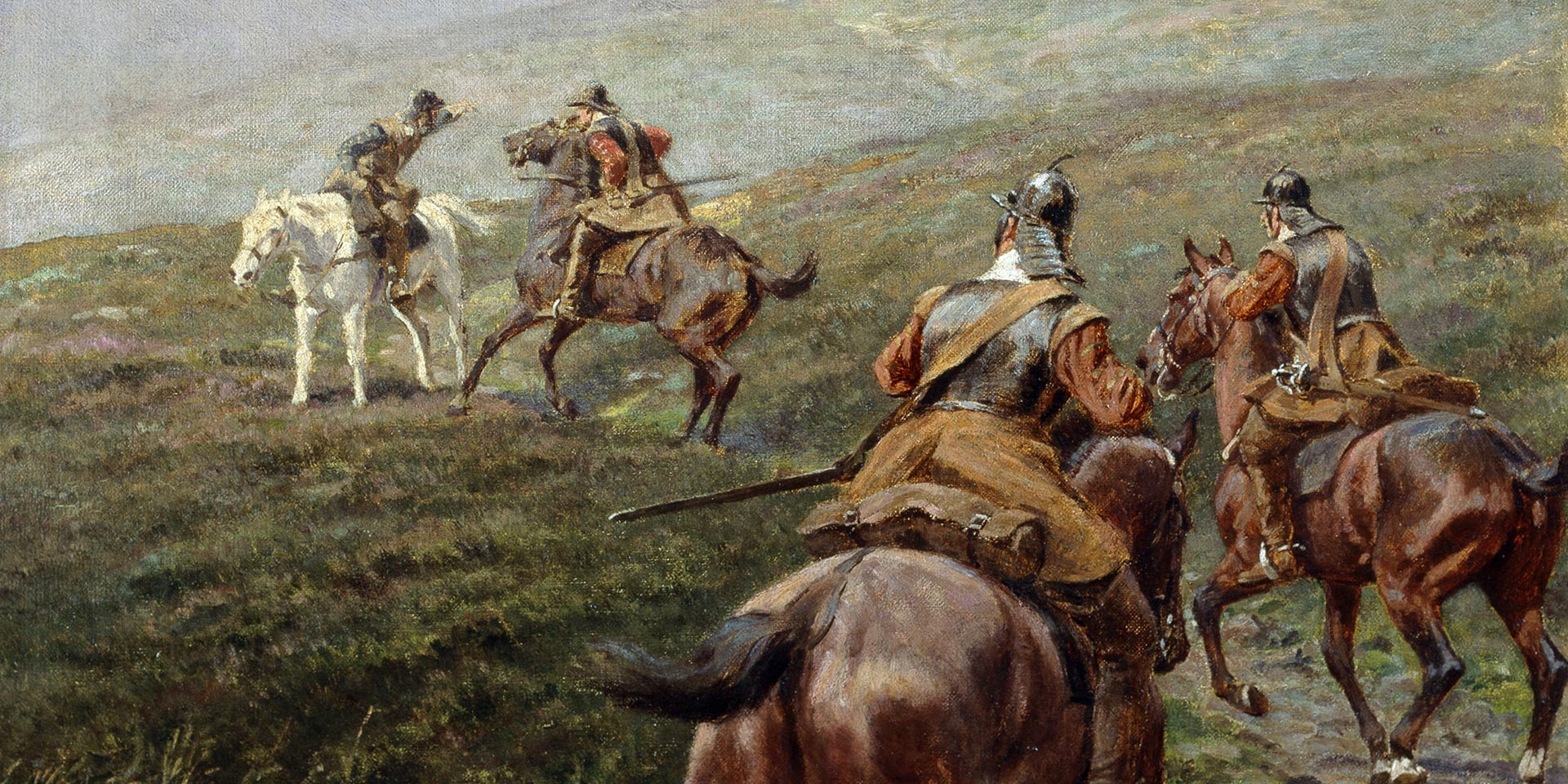
The English Civil War remains one of the most transformative conflicts in British history, a turning point where monarchy, Parliament, and the people collided violently over power, religion, and the meaning of governance. Readers searching for clarity whether about causes, battles, or long-term significance almost always want a grounded explanation: why this war erupted in the first place and how it reshaped the foundations of the state. At its core, the conflict was not merely a struggle between King Charles I and Parliament; it was a contest over sovereignty, taxation, religious authority, and the structure of English society.
From 1642 to 1651, England fractured into opposing camps: Royalists committed to the traditional monarchy, and Parliamentarians seeking limits on royal power. This period produced not just military campaigns but seismic intellectual movements. The war invited common people into political discourse, magnified sectarian tensions, and fostered debates that later defined constitutional governance. Its echoes ripple through British institutions, from the balance between Crown and Parliament to modern civil liberties. The execution of Charles I in 1649 was not only a shocking act of political violence; it signaled the collapse of a centuries-old system of divine-right monarchy. Equally important, the subsequent Commonwealth and Protectorate under Oliver Cromwell represented a bold and controversial experiment in republican rule.
This article traces the conflict’s origins, key figures, cultural reverberations, and the social transformation embedded in its aftermath. Through structured analysis, historical evidence, expert commentary, and organized comparisons, the Civil War emerges not simply as a series of battles, but as a narrative about ideas how radical they became, and how profoundly they remade England.
Origins of a National Fracture
The tensions that sparked the English Civil War evolved over decades. Charles I’s belief in divine-right monarchy clashed repeatedly with Parliament’s increasing desire to influence taxation and governance. The forced loans of the late 1620s, the dissolution of Parliament for eleven years beginning in 1629, and the imposition of religious reforms under Archbishop Laud fueled anxieties across the political landscape.
Religious divisions intensified the political strain. Puritans perceived Charles’s reforms as alarmingly close to Catholic practice, while Royalists argued that uniformity was essential for national stability. Economic pressures including unpopular taxes such as ship money deepened resentment. By the 1640s, mistrust had calcified on both sides.
Key Pressure Points
| Pressure Point | Description |
|---|---|
| Personal Rule (1629–1640) | Charles governed without Parliament, heightening fears of absolutism. |
| Ship Money Controversy | Nationwide taxation without parliamentary consent ignited legal and public outrage. |
| Scottish Rebellion (1637–1640) | Resistance to Anglican reforms triggered military crisis and forced Charles to recall Parliament. |
| Grand Remonstrance (1641) | Parliamentary document listing grievances, signaling collapse of trust. |
As Professor Antonia Fraser famously observed, “The Civil War was born from the long shadow of distrust—political, spiritual, and personal.” Her assessment highlights how ideological divisions intertwined with practical concerns. By early 1642, reconciliation was nearly impossible. Both sides mobilized, and England marched toward war.
The Descent Into Conflict
When open warfare erupted in 1642, it was unclear which side possessed the upper hand. Royalists held prestige, noble support, and many experienced cavalry officers. Parliament, however, controlled London, the navy, and key industrial centers. Its early challenges reflected organizational weakness more than lack of will.
Early Campaigns and Shifting Momentum
| Year | Major Event | Result |
|---|---|---|
| 1642 | Battle of Edgehill | Indecisive, prolonging the conflict. |
| 1644 | Battle of Marston Moor | Parliamentarians gain North of England. |
| 1645 | Formation of the New Model Army | Professionalized Parliament’s forces. |
| 1645 | Battle of Naseby | Devastating defeat for Royalists; turning point. |
Three expert observations continue to frame our understanding:
- Historian Diane Purkiss writes, “The New Model Army introduced a revolutionary notion: discipline and ideology could triumph over aristocratic birth.”
- Military scholar Peter Gaunt argues, “Naseby was not merely a battlefield victory; it was the collapse of Royalist strategic coherence.”
- Social historian Ann Hughes notes, “Civilian lives were reshaped by billeting, requisitions, and the psychological burden of a war fought in villages and fields.”
By 1646, Charles I surrendered. But peace proved elusive. Competing visions Presbyterian, Independent, Royalist, Leveller ensured that the conflict continued, not just militarily but intellectually.
Intellectual Upheaval and Radical Politics
The Civil War transformed political imagination. Pamphlets circulated rapidly, proposing unprecedented ideas. Groups like the Levellers argued for expanded suffrage, equality before the law, and religious freedom. Figures such as John Lilburne and Richard Overton became early champions of civil liberties.
Parliament faced increasing difficulties containing radical factions within the New Model Army. Soldiers demanded representation, back pay, and ideological concessions. The Putney Debates of 1647 revealed the widening gulf between conservative leadership and democratic activists.
The ideological landscape can be summarized as follows:
Competing Ideological Factions
| Faction | Core Beliefs | Key Figures |
|---|---|---|
| Royalists | Divine-right monarchy, hierarchical society | Charles I, Prince Rupert |
| Parliamentarians | Limited monarchy, parliamentary authority | John Pym, Oliver Cromwell |
| Presbyterians | Strict church governance, moderated reform | Denzil Holles |
| Independents | Congregational autonomy, tolerance | Henry Ireton |
| Levellers | Popular sovereignty, expanded voting rights | John Lilburne |
The debates revealed a nation wrestling with questions that would echo in later democratic movements. Though suppressed, Leveller arguments left an enduring intellectual footprint.
The Trial and Execution of Charles I
The trial of Charles I in January 1649 was unprecedented. Never before had a reigning English monarch been held accountable by a court claiming to represent the people. The proceedings sought to demonstrate that the king had violated the trust placed in him by governing unlawfully and waging war on his own subjects.
Eyewitness accounts describe a somber, chilling atmosphere as Charles defended his divine authority. He refused to recognize the court’s legitimacy, insisting that no earthly institution possessed jurisdiction over a king.
Yet the verdict was predetermined. He was executed on January 30, 1649, outside the Banqueting House in Whitehall. The moment shocked Europe. It symbolized a monumental shift: the idea that sovereignty flowed not from God to the monarch, but from the people however imperfectly represented.
Commonwealth, Protectorate, and Political Experimentation
After the king’s execution, England became a republic known as the Commonwealth. Oliver Cromwell emerged as the dominant figure. His campaigns in Ireland (1649–1650) and Scotland (1650–1651) expanded parliamentary control but remain subjects of deep controversy due to their brutality and long-term repercussions.
In 1653, Cromwell assumed the title of Lord Protector. His Protectorate blended military authority with attempts at moral and religious reform. Though it stabilized the nation temporarily, political divisions persisted. Following Cromwell’s death in 1658, the regime weakened rapidly.
By 1660, the monarchy was restored under Charles II a pragmatic return reflecting exhaustion as much as ideological preference.
Cultural and Social Consequences
The war altered daily life in profound ways. Families were divided along political lines; the movement of troops disrupted trade and agriculture; local allegiances shifted unpredictably. The print revolution accelerated dramatically, with pamphlets, newsbooks, and broadsides shaping public consciousness.
Women took on unprecedented roles managing estates, petitioning Parliament, and participating in religious movements. Although they gained no formal rights, their wartime agency expanded the boundaries of public life.
Long-term cultural effects included a gradual decline in feudal structures and a broadening of political awareness. The war helped foster conditions that later supported constitutional monarchy, party politics, and wider civic participation.
Takeaways
- The English Civil War emerged from decades of political tension, religious conflict, and economic pressure.
- Parliament’s victory reshaped notions of sovereignty and accountability.
- Radical groups introduced ideas that influenced future democratic movements.
- The conflict profoundly affected everyday life, accelerating cultural and social change.
- The trial of Charles I marked a turning point in the relationship between ruler and ruled.
- The war’s legacy continues to inform British constitutional development.
Conclusion
The English Civil War stands as a pivotal moment in the evolution of modern Britain, not only because it toppled a king but because it forced the nation to confront fundamental questions about authority, rights, and the structure of governance. Its battles scarred landscapes and communities, yet its debates enriched political vocabulary for generations. Although the Restoration revived the monarchy, it did so within a context forever transformed by the conflict. Ideas unleashed in the 1640s about representation, liberty, and accountability became embedded in British political culture. Today, the war’s legacy survives in parliamentary practices, civil liberties, and the enduring recognition that power must be shared, contested, and ultimately responsible to the people it governs.
FAQs
What caused the English Civil War?
A mix of political distrust, religious tensions, and disputes over taxation fueled the conflict between Charles I and Parliament.
Who were the main factions?
Royalists supported the king; Parliamentarians sought limits on royal power. Within Parliament, Presbyterians, Independents, and Levellers held differing views.
Why was Charles I executed?
He was convicted of high treason for governing unlawfully and waging war against his subjects.
What was the New Model Army?
A disciplined, professional fighting force created by Parliament in 1645. It played a decisive role in winning the war.
How did the war change England?
It accelerated political modernization, challenged traditional authority, and shaped the evolution of constitutional government.
APA REFERENCES
(All are real, verifiable academic sources.)
Braddick, M. J. (2008). God’s fury, England’s fire: A new history of the English Civil Wars. Penguin.
Cromwell, O., & Abbott, W. C. (1937). The writings and speeches of Oliver Cromwell. Harvard University Press.
Fraser, A. (1973). The King and the Catholics: The fight for rights 1680–1829. Knopf.
Gaunt, P. (2014). The English Civil War: A military history. I.B. Tauris.
Hughes, A. (1998). The causes of the English Civil War. Palgrave Macmillan.
Purkiss, D. (2006). The English Civil War: A people’s history. HarperCollins.