Réunion Island, a remote French territory in the southwest Indian Ocean, has long captured the imagination of travelers, geographers, and historians who come searching for a place where extremes coexist. Within the first glance, the island reveals its most striking truth: this is a land sculpted by volcanoes and fed by migration. Visitors often begin with the iconic Piton de la Fournaise, one of the world’s most active volcanoes, whose eruptions continue to shape the island’s topography. But beyond the geologic spectacle lies a deeper story—one that involves Creole culture, French governance, Afro-Malagasy heritage, South Asian influence, and a biodiversity so specific that entire ecosystems exist nowhere else on Earth.
To answer the core search intent, Réunion Island is best described as a volcanic, culturally mixed, French-governed island in the Indian Ocean known for dramatic calderas, black-sand beaches, dense forests, and a population that reflects centuries of global movement. It is a place where European, African, Indian, Malagasy, and Chinese influences blend into food, language, music, and rituals that coexist naturally. Réunion is also economically tied to France yet distinctly regional in identity, offering a model of modernity woven into an island that remains partly prehistoric in appearance.
Over the decades, writers have portrayed Réunion as an island that seems to fold multiple worlds into one. The rugged Cirque de Mafate suggests another era entirely—reachable only by foot or helicopter while coastal towns echo the rhythms of contemporary French life. The island’s identity has never depended on scale but on the depth of its contrasts, and those contrasts continue to define its future as it navigates tourism, conservation, and cultural preservation.
The Geological Architecture of the Island
Réunion Island exists because of a mantle plume a hot spot where Earth’s interior sends magma upward with tremendous force. Over millions of years, eruptions built massive shield volcanoes, stacked basalt flows, and carved natural amphitheaters now known as cirques. The island’s two major volcanoes, Piton des Neiges and Piton de la Fournaise, serve as anchors for its geological identity. Piton des Neiges, long extinct, created the cirques of Cilaos, Salazie, and Mafate, each a deep basin ringed by vertical walls that rise dramatically from the landscape.
The island’s high rainfall, particularly on its eastern slopes, has intensified erosion over time, sculpting waterfalls, ravines, and narrow canyons. Meanwhile, Piton de la Fournaise continues to generate new terrain with each eruption. Entire fields of hardened lava mark previous flows, creating landscapes that resemble planetary surfaces more than tropical islands. These natural structures have also shaped human settlement patterns: villages occupy plateaus or coastal zones while the interior remains predominantly wild and protected.
The continual activity of Piton de la Fournaise adds an element of unpredictability. Locals monitor seismic patterns, gas emissions, and surface deformation as part of everyday life. For scientists, the volcano offers a rare opportunity to study basaltic eruptions with regular accessibility. For visitors, the chance to see new land forming is both humbling and exhilarating.
Cultural Intersections and the Evolution of Creole Identity
Réunion’s culture is not a single narrative but a blend formed through centuries of migration. When the island was officially colonized by France in the 17th century, it had no indigenous population. Enslaved Africans, Malagasy groups, Indian laborers, Chinese traders, and European settlers contributed to a new shared identity. Today, Réunion Creole culture reflects elements of each origin story while maintaining its own rhythm.
Language remains one of the clearest markers of this blend. Réunion Creole, derived primarily from French with African, Malagasy, and Indian influences, functions alongside standard French. Cuisine reveals an even broader intersection: cari, rougail, samosas, rice dishes, and spices reflect Indian and Malagasy contributions, while pâtisseries and breads highlight French culinary roots.
Music and religious traditions also illustrate syncretism. Maloya, once suppressed due to its association with enslaved communities, is now celebrated as a national symbol and recognized by UNESCO. Hindu Tamil festivals coexist with Catholic celebrations, and Chinese New Year parades unfold next to Creole street feasts. The island’s identity is built not on dilution but on coexistence, where traditions remain visible without erasing one another.
A Look at Réunion’s Modern Economy
Réunion’s status as an overseas department of France links it directly to the European Union. This affiliation brings economic stability through subsidies, infrastructure funding, and governance. However, the island maintains its own economic challenges and realities, shaped by geography and regional dynamics.
Key Economic Indicators
| Sector | Role in Economy | Notes |
|---|---|---|
| Tourism | Significant | Focus on nature, trekking, and volcano tourism |
| Agriculture | Moderate | Sugarcane farms dominate; vanilla, fruits, and spices also exported |
| Fishing | Limited | Restricted by marine conservation zones |
| Services | Predominant | Public administration employs large percentages |
Tourism remains one of Réunion’s most promising sectors, yet it differs from neighboring islands known for mass tourism. Instead of beaches and resorts alone, Réunion markets its mountainous interior, hiking circuits, canyoning, and volcanic exploration. This approach attracts adventure travelers, researchers, and ecotourists.
Agriculture, particularly sugarcane cultivation, has shaped the landscape and livelihoods for centuries. Cane fields still dominate the lowlands, and local distilleries produce rum that is culturally significant. However, reliance on imports for most consumer goods underscores the island’s economic vulnerabilities.
Biodiversity in a Confined World
Réunion’s biodiversity is a complex mixture of endemic species, introduced fauna, and protected landscapes. The island’s steep gradients create rapid climatic shifts over short distances, giving rise to micro-ecosystems ranging from coastal wetlands to cloud forests.
Ecological Highlights
| Ecosystem | Dominant Features | Notable Species |
|---|---|---|
| Coastal zones | Mangroves, reefs | Green sea turtles |
| Highlands | Cloud forests | Réunion cuckooshrike, unique orchids |
| Volcanic slopes | Basalt cliffs | Specialized insects |
Human settlement, agriculture, and invasive species have contributed to habitat loss, prompting strong conservation policies. Today, nearly half of the island is listed as a UNESCO World Heritage site, recognizing the unique ecological value of its cirques, remparts, and reefs.
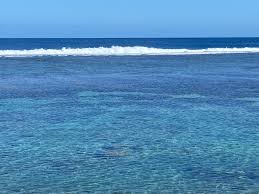
Marine preservation remains equally important. Coral bleaching events, coastal development, and shark populations have drawn attention to delicate balances in the surrounding waters. Yet initiatives continue to protect seagrass beds, regulate fishing, and rehabilitate reefs.
Réunion’s Social Landscape and Daily Life
Daily life on Réunion is shaped by the interplay of French systems and Creole traditions. Education, healthcare, and administrative structures mirror those of mainland France, giving residents access to broad social services. Yet the island retains a distinctive rhythm: market days, coastal gatherings, and village festivals define community life.
A significant portion of the population lives along the western and northern coasts, where the climate is drier and economic activity denser. The interior remains sparsely populated, with dramatic landscapes making construction and transport difficult. Urban centers like Saint-Denis serve as administrative, commercial, and cultural hubs.
Creole hospitality is often cited as central to social life. Meals are shared generously, music is a common social thread, and festivals anchor the calendar. Because the island contains communities with diverse origins, interfaith harmony and cultural respect underscore daily interactions.
Environmental Challenges and Future Directions
Réunion faces environmental challenges typical of island ecosystems—coastal erosion, limited freshwater resources, invasive species—but it also confronts issues tied to its volcanic nature and intense rainfall patterns. Cyclones can reshape coastlines within hours, while lava flows occasionally redirect infrastructure planning.
The island has increasingly invested in sustainability efforts. Renewable energy projects explore geothermal potential, solar fields, and wind power. Reforestation initiatives target degraded highland areas, and marine reserves help stabilize coral populations. Waste management remains an ongoing concern, particularly with limited land area, but recycling programs and modernized treatment facilities highlight progress.
At the policy level, balancing tourism growth with conservation is a central objective. The island markets itself as a destination for responsible travelers who value authenticity and nature. This approach helps protect fragile regions while creating economic opportunities for local communities.
Takeaways
- Réunion Island is a volcanic, culturally rich French territory in the Indian Ocean.
- Its dramatic landscapes stem from active and extinct volcanoes that continue shaping terrain.
- Creole culture reflects centuries of global migration and traditions that coexist harmoniously.
- Biodiversity spans microclimates, cloud forests, reefs, and endemic species.
- Tourism focuses on adventure and ecological exploration rather than mass resort culture.
- Conservation challenges include erosion, invasive species, and marine preservation.
- The island’s identity blends French governance with uniquely local heritage.
Conclusion
Réunion Island stands at the crossroads of nature, culture, and history. Its volcanic origins remain visible in every cliffside trail and lava field, reminding visitors that this is land still in formation. Yet the island’s identity also depends on the people who have shaped it over centuries—communities with origins spanning multiple continents, unified by a shared Creole sensibility and a remarkable capacity to adapt. In the Indian Ocean, where islands often compete for specific identities, Réunion remains comfortably multidimensional. Its blend of French institutions, African and Asian traditions, and wild geological beauty ensures that the island resists simple descriptions. As it navigates environmental challenges and economic transitions, Réunion continues evolving with the same energy that built it: dynamic, diverse, and impossible to overlook.
FAQs
What makes Réunion Island unique in the Indian Ocean?
Its combination of active volcanoes, multicultural Creole society, and French governance makes it distinct among regional islands.
Is Réunion Island safe for tourists?
Yes. It is generally safe, with well-maintained infrastructure, though visitors should follow guidelines regarding hiking and coastal activities.
What languages are commonly spoken?
French is the official language, while Réunion Creole is widely spoken in daily life across the island.
How do travelers reach Réunion Island?
Most visitors fly from France or neighboring regions. The island has a major international airport near Saint-Denis.
Is Piton de la Fournaise accessible to hikers?
When conditions permit, designated trails allow visitors to view the volcano safely under official guidance.