
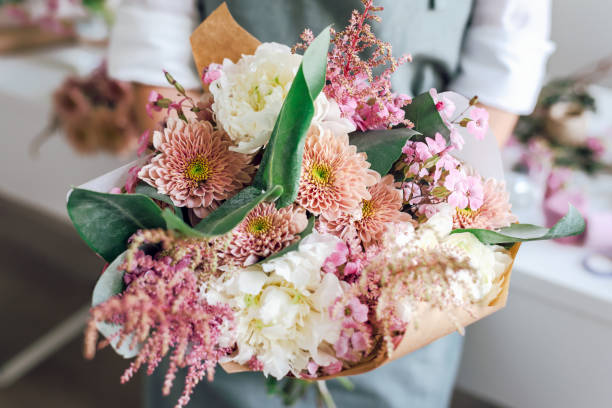
A nosegay is a small, tightly arranged bouquet of flowers and herbs, traditionally carried rather than displayed. At its most basic level, it exists to be smelled its very name meaning something “pleasant for the nose.” Yet this modest definition barely hints at the depth of history and meaning bound into its stems. From medieval marketplaces to Victorian drawing rooms, the nosegay has served as protection, ornament, and language.
In its earliest use, the nosegay addressed a practical concern. Before modern sanitation, cities were crowded and odorous. People believed disease traveled through foul air, and fragrant plants offered comfort and perceived protection. Carrying herbs and flowers close to the face became an everyday habit, especially in public spaces. Over time, what began as necessity transformed into tradition.
As societies changed, so did the nosegay. It moved from utility to symbolism, becoming a vehicle for emotional expression and social signaling. In eras where direct speech was constrained by etiquette, flowers spoke quietly but clearly. Today, the nosegay endures in weddings, historical reenactments, and traditional floristry. Its persistence reflects a timeless human impulse: to use nature not only for survival, but to express meaning, beauty, and connection.
The Origin of the Term
The word “nosegay” comes from Middle English, combining “nose” with “gay,” meaning cheerful or pleasing. Linguistically, it captures the object’s purpose with charming economy. Unlike larger floral arrangements, the nosegay was meant to be held close, engaging the senses directly.
The term’s survival across centuries suggests cultural continuity. While fashions in clothing and architecture shifted dramatically, the idea of a small, fragrant bundle remained familiar. Language scholars often note that words tied to sensory experience tend to endure, and the nosegay is a clear example. It describes not only an object, but an interaction between human and plant.
Nosegays in Medieval Society
In medieval Europe, nosegays were common accessories. Streets lacked sewage systems, livestock moved freely, and refuse accumulated quickly. Amid these conditions, fragrance was valued not as luxury, but as relief. Herbs such as rosemary, sage, lavender, and rue were favored for their strong scents and reputed medicinal qualities.
People believed that pleasant smells counteracted “miasmas,” the invisible vapors thought to cause illness. Carrying a nosegay offered reassurance, especially during outbreaks of disease. Although modern science has disproven these beliefs, the practice reveals how people responded creatively to fear and uncertainty.
A cultural historian once noted that the nosegay functioned as “portable comfort.” It was inexpensive, accessible, and deeply personal, reflecting both environmental conditions and human resilience.
Renaissance Refinement and Symbolism
During the Renaissance, the nosegay took on new significance. Courts emphasized manners, symbolism, and display, and flowers became tools of social communication. The nosegay shifted from purely functional to intentionally expressive.
Flowers were chosen for meaning as much as scent. Roses suggested love or loyalty, violets humility, and carnations fascination. Carrying a nosegay signaled education and sensitivity to cultural codes. Paintings and literature of the period frequently depict figures holding small bouquets, reinforcing their role as markers of refinement.
This era transformed the nosegay into an accessory of identity. It was no longer just protection against odor, but a statement of taste and belonging within a sophisticated social world.
The Victorian Language of Flowers
The nosegay reached its symbolic height during the Victorian era. Floriography the formal language of flowers assigned specific meanings to individual plants. In a society governed by strict etiquette, flowers became a discreet means of communication.
Victorian nosegays were carefully constructed. A single bloom could alter the message, and the way a nosegay was given or received carried significance. Young women learned to interpret these signals, turning bouquets into coded conversations.
A historian of Victorian culture once observed that flowers functioned as “emotional vocabulary.” The nosegay, compact yet deliberate, allowed people to express affection, regret, or hope without violating social norms.
Design and Materials
Traditional nosegays emphasize restraint and balance. Stems are cut short, creating a compact form meant to be held comfortably. Herbs often form the base, providing fragrance and structure, while flowers add color and symbolism.
Foliage frames the arrangement, increasing durability and visual harmony. Binding materials such as ribbon or twine keep the bouquet intact. Unlike modern bouquets, which often prioritize scale, the nosegay values intimacy and intention.
Traditional Components of a Nosegay
| Element | Function | Common Examples |
|---|---|---|
| Herbs | Scent, symbolism | Rosemary, lavender |
| Flowers | Meaning, color | Roses, violets |
| Foliage | Support, texture | Ivy, myrtle |
| Binding | Structure | Ribbon, twine |
Social Class and Accessibility
One reason for the nosegay’s longevity is its accessibility. While elite versions could be elaborate, simple nosegays were made from garden herbs or wildflowers. This made them common across social classes.
In rural areas, nosegays reflected seasonal growth and local plants. In cities, street vendors sold small bundles to passersby. The nosegay thus became a shared cultural object, understood by many regardless of wealth.
An ethnobotanist has described the nosegay as “democratic fragrance,” allowing ordinary people to participate in rituals of beauty and meaning.
Decline of Practical Use
As sanitation improved and medical understanding advanced, the nosegay’s original purpose faded. Germ theory replaced miasma theory, and cities became cleaner. Fragrance shifted from necessity to luxury.
Yet the nosegay did not disappear. It adapted. Weddings adopted it as a symbol of joy and fertility. Memorials used small bouquets to express remembrance. The nosegay became ceremonial rather than practical, preserving its form while changing its function.
Nosegay and Bouquet Compared
Although often confused, nosegays differ from bouquets in scale and intent. Bouquets are typically larger and designed for display or gifting. Nosegays are personal, meant to be carried and experienced closely.
Nosegay vs. Bouquet
| Feature | Nosegay | Bouquet |
|---|---|---|
| Size | Small, compact | Medium to large |
| Purpose | Personal, symbolic | Decorative |
| Design | Tight, symmetrical | Expansive |
| Use | Carried | Displayed |
The Nosegay Today
In modern culture, nosegays appear in weddings, historical dramas, and traditional floristry. Designers revive them for clients seeking elegance and symbolism. Sustainable floristry trends favor herbs and local flowers, echoing historical practices.
The nosegay’s revival reflects a broader interest in mindfulness and craftsmanship. In an age of excess, its simplicity feels intentional. As one contemporary florist remarked, “The nosegay reminds us that meaning doesn’t require scale.”
Takeaways
- A nosegay is a small, symbolic bouquet meant to be carried.
- It originated as protection against odor and disease.
- Over time, it became a language of emotion and etiquette.
- Victorian floriography formalized its symbolism.
- Nosegays differ from bouquets in size and purpose.
- The tradition persists in modern ceremonies.
Conclusion
The nosegay’s journey from medieval necessity to modern symbol reveals how humans use nature to navigate fear, beauty, and communication. Its compact form holds layers of belief, artistry, and social practice. While its practical role has faded, its cultural resonance remains.
In a world often dominated by spectacle, the nosegay offers something quieter: intimacy, intention, and connection. It asks us to notice scent, symbolism, and history woven into a handful of stems. Small though it is, the nosegay carries centuries of human experience, reminding us that meaning often resides in the simplest forms.
FAQs
What is a nosegay?
A small, hand-held bouquet of flowers and herbs.
Why were nosegays used historically?
To mask odors and protect against perceived disease.
Are nosegays still used today?
Yes, especially in weddings and traditional floristry.
What plants are common in nosegays?
Roses, violets, lavender, rosemary, and ivy.
Is a nosegay the same as a posy?
They are similar, but a nosegay traditionally emphasizes scent and symbolism.
References
Encyclopaedia Britannica. (n.d.). Nosegay. https://www.britannica.com
Oxford English Dictionary. (n.d.). Nosegay. Oxford University Press. https://www.oed.com
The British Library. (n.d.). Victorian floriography. https://www.bl.uk
Smithsonian National Museum of Asian Art. (n.d.). Symbolism of flowers. https://asia.si.edu
Royal Horticultural Society. (n.d.). History of garden plants and herbs. https://www.rhs.org.uk