
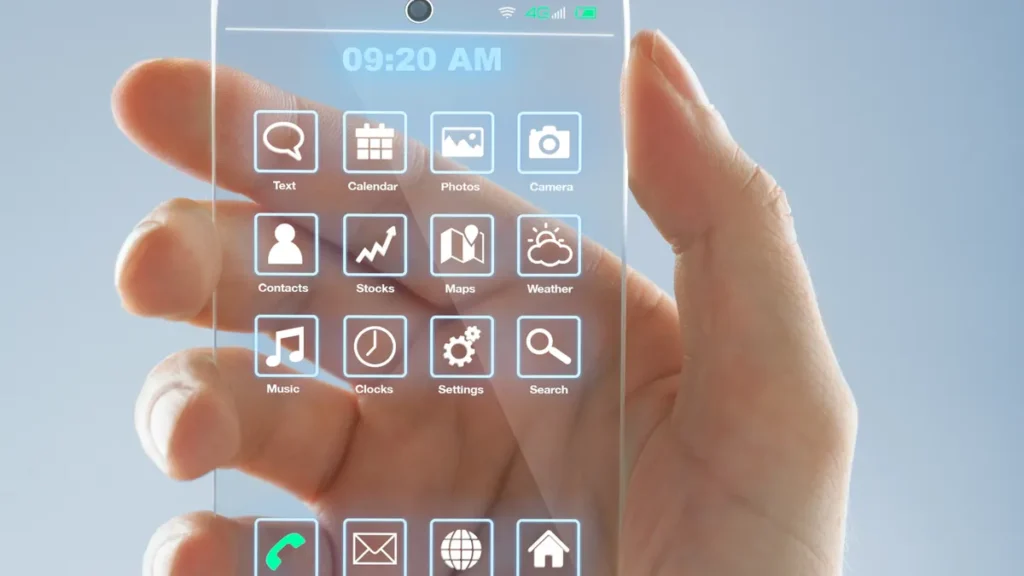
For nearly two decades, the smartphone has served as the primary gateway to the digital world. It replaced cameras, maps, wallets, music players, and in many ways even memory itself. But across Silicon Valley and beyond, a growing consensus is taking hold: the smartphone may no longer represent the final form of personal computing.
In boardrooms and developer conferences, technology’s largest companies are increasingly focused on what comes next. Their vision is not centered on better screens or faster processors, but on an entirely different relationship between humans and machines one that relies less on touch and more on context, voice, vision, and artificial intelligence. In this future, computing becomes ambient rather than attention-seeking, woven into daily life instead of demanding constant engagement.
The shift is driven by both technological maturity and cultural fatigue. Smartphones, while indispensable, have reached a plateau. Annual upgrades deliver diminishing returns, and consumers show signs of exhaustion with screen-based interaction. At the same time, advances in generative AI, spatial computing, and miniaturized hardware have opened new pathways for interaction that were once impractical.
Tech giants are not predicting the disappearance of smartphones overnight. Instead, they are positioning them as transitional devices tools that will eventually recede into the background as new interfaces take precedence. What replaces them may not be a single device, but an ecosystem of intelligent systems that respond seamlessly to human intent.
The Strategic Shift Toward a Post-Smartphone World
The idea that smartphones could one day lose their central role would have sounded implausible a decade ago. Today, it is openly discussed by technology executives and engineers. The reasoning is straightforward: the smartphone’s form factor limits how naturally humans can interact with digital systems.
Leading companies now speak in terms of platform transitions rather than product upgrades. Just as personal computers gave way to smartphones, the next era is expected to revolve around spatial interfaces, wearables, and AI-driven environments. These platforms are designed to minimize friction reducing the need to pull a device from a pocket, unlock it, and navigate menus.
Instead, information appears when and where it is needed. Communication becomes conversational. Computing adapts to the user rather than demanding adaptation from the user. This philosophical shift underpins nearly every major investment in emerging consumer technology today.
Wearables as the New Interface Layer
Wearable devices particularly smart glasses and mixed-reality headsets are widely viewed as the most likely successors to smartphones. Unlike phones, they do not require constant hand engagement or visual fixation on a screen. Instead, they integrate digital information directly into the user’s field of awareness.
Early smart glasses focused on limited functionality, but newer designs aim to combine audio, visual overlays, cameras, and AI assistance in a single form factor. The ambition is to create devices that feel less like gadgets and more like extensions of perception.
| Device Category | Intended Role |
|---|---|
| Smart glasses | Contextual information and communication |
| Mixed-reality headsets | Immersive work and media environments |
| Wearable audio | Voice-driven AI interaction |
| Sensors and accessories | Environmental and biometric awareness |
These devices are not designed to replace smartphones immediately. Instead, they operate alongside them, gradually absorbing tasks such as navigation, messaging, translation, and information retrieval.
Artificial Intelligence as the Core Enabler
Without artificial intelligence, the post-smartphone vision collapses. Voice recognition, image interpretation, predictive behavior, and contextual understanding are all essential to replacing screen-based interaction.
Modern AI systems are evolving beyond reactive assistants. They increasingly function as anticipatory agents summarizing information, filtering distractions, and responding to intent rather than explicit commands. This allows interaction to feel less transactional and more conversational.
In wearable and ambient systems, AI acts as the connective tissue that binds hardware, environment, and user behavior. It interprets signals from cameras, microphones, and sensors to determine what information is relevant at a given moment. In doing so, it reduces the need for constant manual input.
Ambient Computing and Invisible Interfaces
One of the most radical ideas shaping the future beyond smartphones is ambient computing the notion that technology should recede into the background. Instead of opening apps, users simply exist within an environment that understands and responds.
In an ambient system, a reminder might surface because the system recognizes location and time, not because a user set an alarm. Directions may appear because the system detects movement patterns. Information becomes situational rather than requested.
This approach challenges decades of interface design that centered on screens, icons, and menus. It also raises profound questions about privacy, consent, and trust, which technology companies must navigate carefully if such systems are to gain widespread acceptance.
Competition for the Next Computing Platform
The move beyond smartphones is also a battle for platform dominance. History suggests that whoever controls the dominant interface controls the ecosystem of developers, services, and commerce that follows.
Each major technology company is pursuing this future differently. Some prioritize open platforms that allow multiple manufacturers to participate. Others focus on tightly integrated systems that promise seamless experiences. The competition echoes the early smartphone era, when operating systems and app ecosystems determined long-term winners.
| Strategic Focus | Platform Goal |
|---|---|
| Open ecosystems | Broad adoption across devices |
| Integrated systems | Premium, controlled experiences |
| AI-first design | Context-aware interaction |
| Hardware-software synergy | Long-term ecosystem lock-in |
The outcome of this competition will shape how billions of people interact with technology for decades.
Barriers to Adoption and Cultural Resistance
Despite bold visions, replacing smartphones is far from inevitable. Wearables must overcome significant challenges, including comfort, battery life, social acceptance, and cost. Many users remain skeptical of devices that are worn on the face or constantly listening.
Additionally, smartphones benefit from entrenched habits. They are familiar, reliable, and deeply integrated into daily routines. Any successor must offer clear advantages not merely novelty to justify change.
Early adoption is likely to occur in professional and enterprise contexts, where productivity gains justify experimentation. Consumer adoption may follow more slowly, shaped by generational attitudes and cultural norms.
Rethinking Human Attention
Perhaps the most profound implication of a post-smartphone world is how it redefines attention. Smartphones demand focus; they pull eyes downward and fragment awareness. The next generation of devices aspires to do the opposite supporting awareness without monopolizing it.
If successful, this shift could reshape how people work, socialize, and experience the physical world. Technology would become less about consumption and more about augmentation enhancing perception rather than replacing it.
This vision is aspirational, but it reflects a growing recognition that progress is not merely about faster devices, but healthier relationships with technology.
Takeaways
- Smartphones are approaching a maturity point in innovation
- Wearables and spatial computing aim to reduce screen dependency
- Artificial intelligence enables context-aware interaction
- Ambient computing shifts technology into the background
- Platform competition will define the next dominant interface
- Cultural acceptance remains the greatest uncertainty
Conclusion
The future beyond smartphones is not a single product waiting to be unveiled, but a gradual transformation already underway. Tech giants are preparing for a world where computing is less visible, more intuitive, and deeply integrated into human behavior. Smart glasses, AI assistants, and ambient systems represent early steps toward that future.
Yet history cautions against assuming inevitability. Many promising technologies fail not because they lack innovation, but because they misjudge human needs and social dynamics. The smartphone succeeded because it aligned power with convenience. Its successor must do the same.
Whether smartphones fade into the background or remain central longer than expected, one truth is clear: the next era of computing will be defined not by screens, but by intelligence, context, and the quiet negotiation between humans and machines.
FAQs
Will smartphones disappear entirely?
Unlikely. They may become secondary devices rather than primary interfaces.
What replaces touchscreens?
Voice, gesture, gaze, and contextual AI interaction.
Are smart glasses ready for mass adoption?
Not yet, but rapid progress is being made.
Why is AI essential to post-smartphone devices?
AI enables natural, context-aware interaction without screens.
Is this transition happening soon?
It is gradual, likely unfolding over the next decade.
References
International Data Corporation. (2024). Worldwide mobile device market outlook. IDC.
McKinsey & Company. (2023). The future of human-computer interaction. McKinsey Global Institute.
Apple Inc. (2024). Spatial computing and vision-based interfaces. Apple Developer Documentation.
Google LLC. (2024). Extended reality and ambient computing principles. Google Research.
Meta Platforms, Inc. (2023). The next computing platform: AR, AI, and wearables. Meta Reality Labs.