
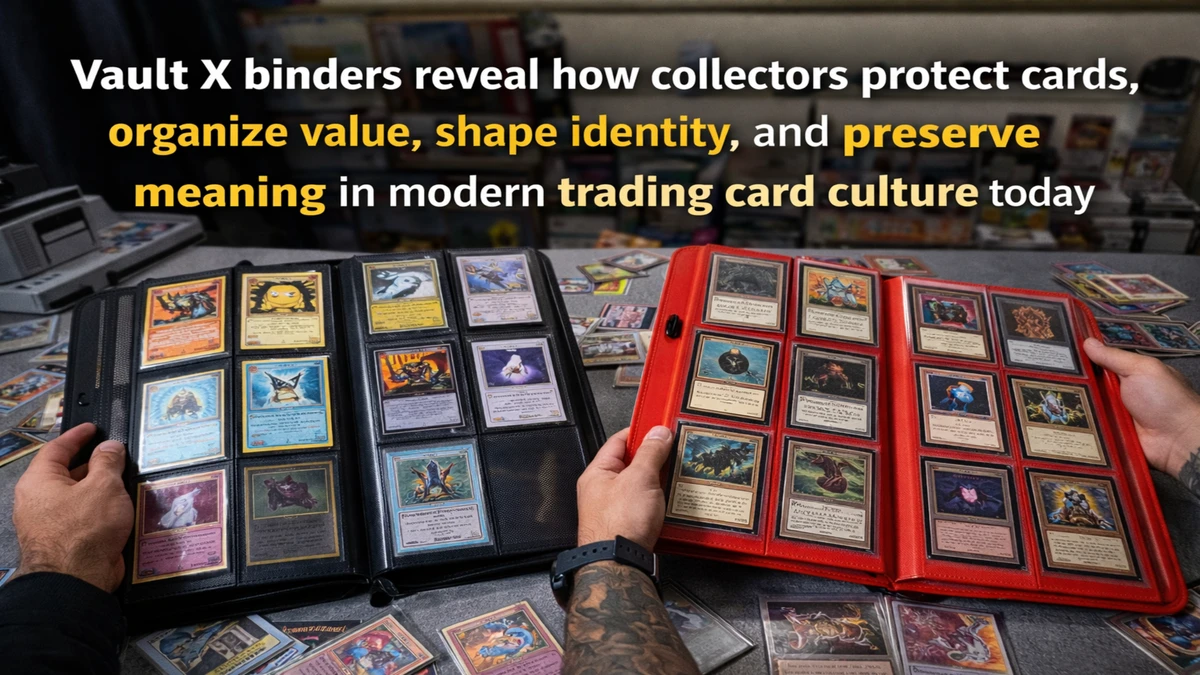
A Vault X binder is a premium storage book designed to protect, organize, and display trading cards. For Pokémon collectors, sports investors, and tabletop gamers alike, it has become a standard piece of equipment, as essential as sleeves or deck boxes. Its purpose is deceptively simple: hold cards safely. Yet the popularity of Vault X binders reveals a deeper transformation in how collecting works in the digital and financial age.
Cards are no longer just toys or game pieces. They are assets, archives, and emotional artifacts. A rare Pokémon card can be worth thousands of dollars. A childhood set can hold decades of memory. As value and meaning accumulate, so does the need for protection. The binder becomes not just a container, but a vault in the literal sense of the word.
Vault X binders sit at the intersection of preservation, presentation, and participation. They protect against physical damage, organize sprawling collections, and allow collectors to perform their identity through layout, labeling, and display. They are used at kitchen tables and international trade shows, by children and investors, casual fans and professionals.
This article examines how Vault X binders emerged, how their design reflects both material science and cultural values, how collectors use them, and what their success tells us about the evolution of collecting in a world where hobbies, markets, and identities increasingly overlap.
The Rise of Premium Storage in Collecting Culture
For decades, collectors stored cards in cheap plastic sleeves and ring binders bought from office supply stores. These were functional but flawed. Rings bent cards. PVC pages yellowed and leached chemicals. Dust, humidity, and friction slowly degraded even carefully kept collections.
As card values rose sharply in the 2000s and 2010s, especially in Pokémon and sports markets, collectors began to treat preservation as a serious discipline. Condition became everything. A tiny edge nick or surface scratch could mean thousands of dollars lost.
This economic pressure transformed storage from an afterthought into a priority. A new market emerged for premium, archival-safe storage. Vault X positioned itself inside this shift by offering binders built from acid-free, non-PVC materials, padded covers, side-loading pockets, and secure closures.
The binder became part of the value chain. It did not just hold the collection. It helped preserve its financial and cultural worth.
Design as Preservation Technology
Vault X binders are engineered around a core principle: reduce every form of risk that can degrade a card.
Chemical risk is addressed through inert, acid-free, non-PVC materials that do not react with ink, foil, or cardstock over time. Physical risk is reduced through padded covers and rigid spines that protect against bending, crushing, and impact. Environmental risk is mitigated through enclosed designs that limit dust, light, and moisture exposure.
Side-loading pockets prevent cards from sliding out and reduce edge wear. Zippered closures create a sealed micro-environment that protects during transport. The binder functions less like a book and more like a soft archival case.
This design reflects a convergence between hobbyist culture and museum logic. The collector becomes a curator. The binder becomes a preservation instrument.
Capacity, Scale, and Organization
Collections today are vast. A single Pokémon expansion can contain hundreds of cards. A long-term collector may own thousands across generations, editions, and franchises.
Vault X binders respond to this scale with modular capacity. Different pocket layouts serve different purposes. Smaller binders allow focused curation. Larger binders support complete set building.
Table: Typical Binder Formats and Uses
| Format | Pocket Layout | Use Case |
|---|---|---|
| 4-Pocket | Compact grid | Portable trade binders |
| 9-Pocket | Standard grid | General collection storage |
| 12-Pocket | High density | Full set archiving |
| Expanded | Extra pages | Large scale collectors |
This modularity allows collectors to match storage to intention. A binder is not just chosen for size but for narrative. One binder may tell the story of a single set. Another may track a decade of collecting.
The Binder as Identity Object
Collectors do not just store cards. They curate them. They arrange by rarity, type, chronology, or personal meaning. They label sections. They theme binders. They choose colors that match franchises or personal aesthetics.
The binder becomes a visible representation of taste, dedication, and expertise. Bringing a Vault X binder to a trade event signals seriousness. It communicates that the collector values preservation, organization, and respect for the hobby.
In this way, the binder becomes a social object. It mediates interaction. It shapes conversation. It structures how collections are shared and evaluated.
The product thus transcends its function. It becomes infrastructure for a community.
Comparison with Traditional and Alternative Storage
Not all collectors use binders. Some prefer rigid cases, graded slabs, or storage boxes. Each method reflects different priorities.
Table: Storage Methods Compared
| Method | Strengths | Limitations |
|---|---|---|
| Binder | Visual access, organization | Less rigid protection |
| Slabs | Maximum protection | No flexibility or browsing |
| Boxes | High capacity | No display or browsing |
| Sleeves only | Cheap and flexible | Minimal protection |
Vault X binders occupy a middle ground. They balance accessibility and protection. They are not designed for single ultra-high-value cards but for collections as living systems.
Expert Perspectives
A preservation specialist notes that inert materials significantly slow chemical degradation and are essential for long-term storage of printed media.
A product designer explains that side-loading pockets dramatically reduce wear on card edges during handling.
A cultural researcher argues that modern collecting is as much about identity construction as asset accumulation, and that tools like binders play a central role in that process.
These perspectives show that the binder’s value is technical, economic, and social at once.
Market Forces and Innovation
Vault X operates in a competitive environment where aesthetics, materials, and price all matter. The brand differentiates itself through consistent quality, visual branding, and responsiveness to collector feedback.
Themed releases align binders with specific card expansions, tapping into seasonal collecting cycles. New materials and configurations respond to concerns about weight, glare, and environmental impact.
Innovation here is incremental but constant. Each small improvement reinforces trust and loyalty in a community that values care and precision.
The Emotional Economy of Collecting
Behind every collection is a story. Cards are gifts, memories, achievements, and investments. They represent childhood joy, adult nostalgia, financial speculation, and social connection.
The binder holds these stories physically. It gives them order. It gives them safety. It gives them a place.
This emotional function explains why collectors care so deeply about storage quality. They are not protecting cardboard. They are protecting meaning.
Takeaways
- Vault X binders are designed for long-term preservation and organization.
- Their materials reduce chemical and physical degradation.
- Capacity options support collections of different scales and purposes.
- The binder functions as a cultural and identity object, not just storage.
- Its success reflects the convergence of hobby, market, and memory.
- Storage design now shapes collecting behavior itself.
Conclusion
Vault X binders represent a quiet but profound shift in how people relate to their collections. They turn storage into stewardship. They transform accumulation into curation. They elevate protection into a form of care.
In a world where value is fragile and meaning is personal, the humble binder becomes a tool for preserving both. It protects not only objects, but stories, identities, and investments.
That is why a binder matters. It is not just where collections live. It is how they survive.
FAQs
What is a Vault X binder
A premium binder designed to store and protect trading cards using archival-safe materials.
Why are they popular
They combine protection, organization, and visual presentation in one system.
Are they better than boxes
They offer better browsing and display, though less rigid protection.
Do they prevent damage
They reduce many risks but cannot eliminate all environmental or handling damage.
Who should use them
Collectors who want both protection and access to their cards.