
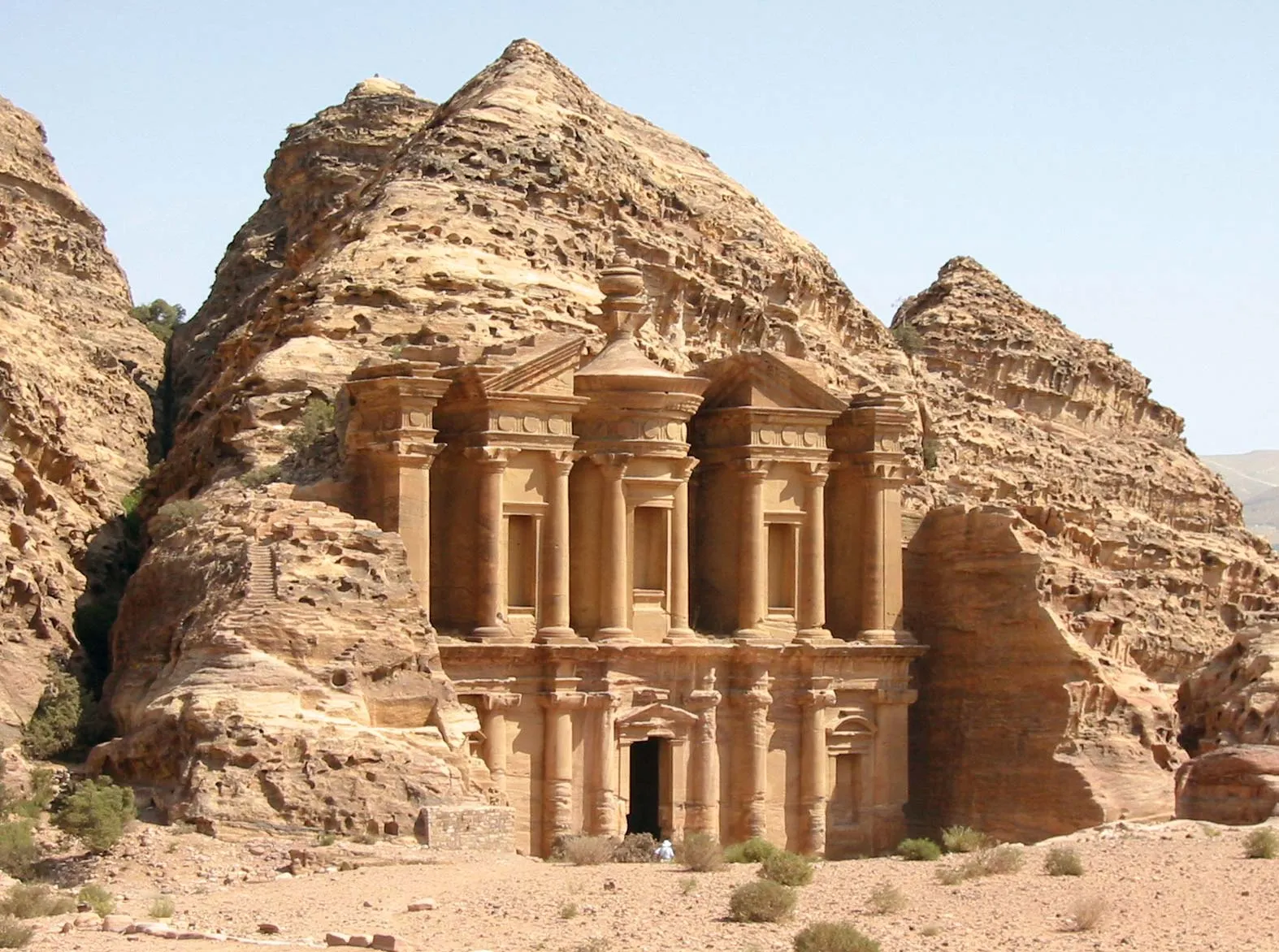
Jordan is located in Western Asia, firmly within the Middle East, a region where geography has long influenced culture, trade, and political power. For readers asking where is Jordan in Asia, the answer is geographically precise: Jordan sits east of Israel and the Palestinian territories, south of Syria, west of Iraq, and north of Saudi Arabia. Its western edge follows the Jordan River and the Dead Sea, while its southern tip reaches the Gulf of Aqaba on the Red Sea.
This location places Jordan entirely within the Asian continent. It is not transcontinental, nor does it share land with Africa or Europe, despite lying close to both. Jordan’s position on the map explains much about the country its climate, its historical role as a crossroads, and its modern diplomatic significance. From ancient caravan routes to present-day geopolitical boundaries, Jordan’s place in Asia has always been strategic.
Beyond borders, Jordan’s geography links contrasting environments. Fertile valleys descend sharply into deserts, highlands overlook ancient trade routes, and seismic fault lines shape the land itself. These features are not accidental; they result directly from Jordan’s placement in Western Asia along major geological systems. To understand Jordan fully, one must begin with its location not just where it is, but what that location has meant across time.
Jordan’s Place Within the Asian Continent
Asia stretches across half the globe, making regional classification essential. Jordan belongs to Western Asia, a subregion that includes the Levant and parts of the Arabian Peninsula. This classification is based on physical geography, geology, and long-established academic conventions.
Jordan rests on the Arabian Plate, a massive tectonic structure underlying much of the Middle East. This places the country squarely within Asia’s geological framework. Unlike countries that span continents, Jordan’s territory is fully Asian, without ambiguity or overlap. Its proximity to Africa across the Red Sea and to Europe across the Mediterranean often causes confusion, but geographically, Jordan remains entirely Asian.
Jordan’s western boundary is defined by the Jordan Rift Valley, part of the Great Rift system that stretches from Anatolia through the Red Sea and into eastern Africa. This feature reinforces Jordan’s geographic importance, positioning it within one of the most significant natural systems on the planet while remaining firmly on Asian land.
Borders That Define Jordan’s Regional Identity
Jordan’s modern borders reflect both natural geography and twentieth-century political decisions. To the north, Jordan borders Syria, sharing cultural and historical ties shaped by centuries of regional interaction. To the east lies Iraq, connected by desert corridors that once carried caravans and now support trade and transport routes.
Saudi Arabia stretches along Jordan’s southern and eastern edges, linking the country directly to the Arabian Peninsula. To the west, Jordan borders Israel and the Palestinian territories, with the Jordan River serving as both a natural boundary and a deeply symbolic one. This western border places Jordan at the heart of one of the most geopolitically sensitive regions in the world.
Jordan’s only coastline is a short stretch along the Gulf of Aqaba, giving it access to the Red Sea. While limited, this outlet connects Jordan to global shipping lanes. Still, Jordan’s identity remains primarily continental, shaped by land routes rather than maritime dominance.
Jordan’s Neighboring Countries
| Direction | Neighbor |
|---|---|
| North | Syria |
| East | Iraq |
| South | Saudi Arabia |
| West | Israel and Palestinian territories |
| Southwest | Red Sea (Gulf of Aqaba) |
Physical Geography and Landscape
Jordan’s location in Asia places it within a zone of striking physical contrast. The western part of the country drops into the Jordan Valley, home to the Dead Sea, the lowest exposed point on Earth. This dramatic descent is the result of tectonic movement along the Rift Valley.
East of the valley, the land rises into highlands where major population centers are located. These areas experience milder temperatures and historically supported agriculture and settlement. Further east, the terrain flattens into desert, forming part of the greater Arabian Desert that stretches deep into Asia.
Rainfall patterns follow this west-to-east transition. Areas near the Mediterranean climate zone receive more precipitation, while eastern regions are arid. Jordan’s water scarcity, one of its most pressing modern challenges, is directly tied to this geographic reality. The land itself reflects Jordan’s position between fertile and arid Asia.
Jordan as Part of the Middle East
While “Western Asia” is a geographic term, “Middle East” is more political and cultural. Jordan fits squarely into both. Linguistically, culturally, and historically, Jordan aligns with the Arab world and the Levant, sharing traditions, language, and social structures with its neighbors.
Jordan’s central location within the Middle East has given it strategic importance beyond its size. Historically, routes linking Asia, Africa, and the Mediterranean passed through Jordanian lands. In the modern era, Jordan’s borders place it adjacent to multiple conflict zones, shaping its role as a stabilizing and diplomatic actor.
Despite lacking major natural resources like oil, Jordan’s geographic position has allowed it to maintain influence through diplomacy, logistics, and regional cooperation. Geography has made Jordan relevant not because of what lies beneath its soil, but because of where it stands.
Historical Geography: A Crossroads of Asia
For thousands of years, the land now called Jordan functioned as a bridge between civilizations. Ancient highways connected Egypt to Mesopotamia, Arabia to the Mediterranean, passing directly through Jordanian territory. These routes made the region vital for trade, communication, and empire-building.
Civilizations rose and fell along these paths. Nabataean traders built cities that flourished on commerce. Roman administrators governed provinces that linked Asia to Europe. Islamic caliphates controlled routes that tied together vast territories. Each era reinforced Jordan’s role as a connector rather than an isolated frontier.
This layered history explains why Jordan’s archaeological landscape is dense with ruins, roads, and fortifications. Its Asian location was never peripheral; it was central to movement and exchange across regions.
Historical Periods Shaped by Location
| Era | Geographic Role |
|---|---|
| Ancient | Trade and caravan crossroads |
| Classical | Roman provincial connector |
| Medieval | Islamic route network |
| Ottoman | Administrative corridor |
| Modern | Strategic buffer state |
Jordan’s Geographic Identity Today
Today, Jordan’s location in Asia continues to shape national priorities. Water scarcity, population growth, and regional instability are all influenced by geography. At the same time, Jordan’s position allows it to act as a hub for humanitarian aid, diplomacy, and regional coordination.
Internationally, Jordan is consistently classified as a Western Asian country. Its participation in regional organizations, economic networks, and political forums reflects this placement. While culturally connected to regions beyond Asia, Jordan’s physical location remains constant.
Understanding where Jordan is in Asia clarifies misconceptions and deepens understanding. Geography explains not only where Jordan sits on a map, but why its history unfolded as it did and why its role in the region remains significant.
Expert Perspectives
“Jordan’s geographic position has consistently made it a bridge between regions rather than a boundary.”
— Regional geography scholarship
“The Jordan Rift Valley places the country within one of the most important geological systems in Western Asia.”
— Earth science analysis
“Modern borders overlay ancient Asian landscapes that long predate nation-states.”
— Historical geography studies
Takeaways
- Jordan is located entirely in Western Asia.
- It is part of the Middle East and the Levant region.
- The Jordan Rift Valley defines much of its western geography.
- Jordan borders Syria, Iraq, Saudi Arabia, Israel, and Palestinian territories.
- Its location has shaped trade, history, and diplomacy.
- Jordan is continental, with limited but strategic sea access.
Conclusion
Jordan’s location in Asia is both clear and consequential. Geographically, it sits at the western edge of the Asian continent, shaped by deserts, valleys, and tectonic forces. Historically, it has functioned as a bridge connecting civilizations, economies, and cultures across regions.
Today, Jordan’s geography continues to influence its challenges and strengths. Water scarcity, regional tensions, and economic limitations are inseparable from place, just as resilience, diplomacy, and cultural richness are rooted in location. To understand Jordan is to understand how geography shapes identity. In Jordan’s case, Asia is not merely a continental label it is the foundation of history, politics, and national character.
FAQs
Is Jordan in Asia or Africa?
Jordan is entirely in Asia, specifically Western Asia.
Is Jordan considered Middle Eastern?
Yes, Jordan is universally classified as a Middle Eastern country.
Does Jordan have a coastline?
Yes, a short coastline along the Gulf of Aqaba.
Is Jordan close to Europe?
It is geographically Asian but relatively close to southeastern Europe.
Is Jordan transcontinental?
No, Jordan lies fully within the Asian continent.
APA References
Central Intelligence Agency. (2025). Jordan — The World Factbook: Geography. CIA. https://www.cia.gov/the-world-factbook/about/archives/2023/countries/jordan/ CIA
Encyclopaedia Britannica, Inc. (2025). Jordan: Geographical features, location, and boundaries. Britannica. https://www.britannica.com/place/Jordan Encyclopedia Britannica
WorldAtlas.com. (2025). Where is Jordan located? Maps & facts. World Atlas. https://www.worldatlas.com/as/jo/where-is-jordan.html WorldAtlas
International Atomic Energy Agency. (2025). Jordan geography and map overview. IAEA Country Profile (PDF). https://infcis.iaea.org/udepo/Resources/Countries/Jordan.pdf infcis.iaea.org
Wikipedia contributors. (2025). Geography of Jordan. Wikipedia, The Free Encyclopedia. https://en.wikipedia.org/wiki/Geography_of_Jordan Wikipedia