
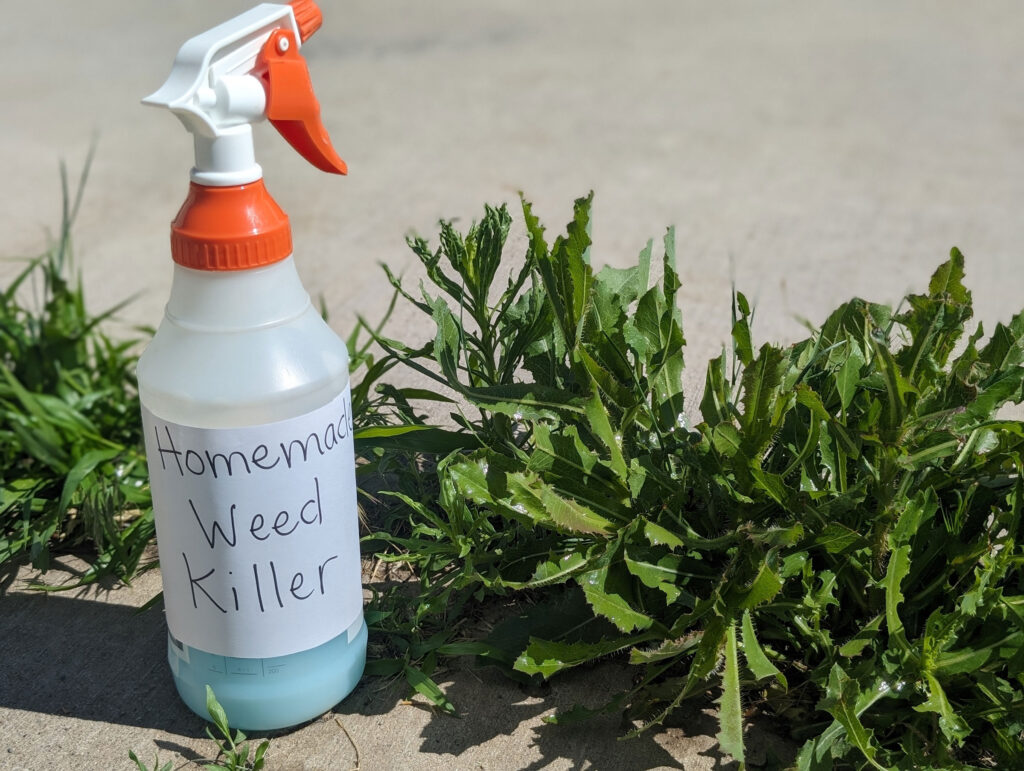
A homemade weed killer recipe is usually searched with urgency and optimism. Someone has spotted weeds creeping through driveway cracks, spreading across a garden bed, or reclaiming a carefully edged path. The goal is immediate: kill the weeds without buying commercial herbicides. Vinegar, salt, boiling water, and dish soap often appear as quick answers, framed as safer, cheaper, and more “natural” alternatives. In the first moments, the core question is practical: do homemade weed killers actually work? The short answer is yes sometimes, and only in specific situations. Most homemade weed killers act as contact herbicides. They damage leaves and stems but rarely destroy roots. This explains why weeds often wilt dramatically, only to return weeks later. Understanding this distinction helps align expectations with reality. The renewed interest in homemade solutions is not accidental. Over the past two decades, concerns about synthetic herbicides, environmental exposure, and long-term soil health have reshaped how people think about lawn and garden care. Homeowners increasingly want control without chemical complexity. Homemade weed killers appear to offer that control using familiar household ingredients.
But familiarity can be misleading. Vinegar is acidic enough to burn plant tissue. Salt permanently alters soil chemistry. Boiling water kills indiscriminately. These methods are not harmless; they are simply different. This article explores homemade weed killer recipes through plant science, environmental context, and real-world use what they do well, where they fail, and how to use them responsibly.
Why Homemade Weed Killers Attract Attention
Homemade weed killers thrive at the intersection of distrust and nostalgia. As commercial lawn products became more complex and regulated, many gardeners began looking backward toward older, simpler methods that predated synthetic herbicides. Kitchen ingredients felt reassuring, rooted in domestic knowledge rather than industrial chemistry. Social media and home-improvement blogs amplified this appeal. A short video showing weeds collapsing within hours of a vinegar spray creates a powerful impression. The simplicity is persuasive: no labels, no warnings, no long instructions. Yet these demonstrations often omit what happens later regrowth, soil damage, or unintended plant death nearby.
Historically, weed control before modern herbicides relied heavily on labor, timing, and prevention. Homemade chemical methods existed but were used sparingly. The modern garden, by contrast, is expected to remain uniformly tidy with minimal effort. Homemade weed killers promise to reconcile those expectations without confronting the labor reality that once accompanied them.
How Weeds Respond to Damage
To understand homemade weed killers, it is essential to understand how weeds survive. Plants are resilient systems. Leaves capture sunlight, roots store energy, and stems transport water and nutrients. Most household weed killers attack only the visible parts of the plant. Acetic acid in vinegar dissolves plant cell membranes, causing rapid dehydration. Salt disrupts osmotic balance, pulling water out of cells. Heat from boiling water denatures proteins and ruptures tissues. All of these cause visible damage quickly. What they often do not reach are roots, rhizomes, or underground storage structures.
Perennial weeds are especially resistant. Dandelions, thistles, bindweed, and crabgrass store energy below ground. When foliage is destroyed, the plant simply reallocates resources and regrows. Annual weeds, by contrast, rely entirely on above-ground growth and are more easily controlled with contact methods. This biological reality explains why homemade weed killers are inconsistent. They are effective when matched to the right weed type and location, and disappointing when used as universal solutions.
Vinegar-Based Weed Killer Recipes
Vinegar is the most common homemade weed killer ingredient. Household white vinegar contains approximately 5% acetic acid. This concentration is sufficient to damage young, tender weeds, especially on hot, sunny days.
A typical recipe includes:
- White vinegar
- A small amount of dish soap
The soap acts as a surfactant, allowing vinegar to coat leaves rather than bead and roll off. Applied correctly, this mixture can suppress small annual weeds within hours. The effect is visual and immediate, which reinforces its popularity. However, vinegar is non-selective. It damages any plant tissue it contacts. Repeated use lowers soil pH and can reduce beneficial microbial activity. Stronger horticultural vinegars sometimes sold at 20% acetic acid are significantly more dangerous and can cause skin burns and eye injuries if mishandled. Vinegar works best in limited contexts: cracks in pavement, gravel paths, and edges where collateral damage is acceptable.
Salt as a Weed Killer: Ancient and Risky
Salt is one of the oldest weed-control substances known. It works by dehydrating plant cells and disrupting water uptake. Homemade recipes often dissolve salt in water and apply it directly to weeds. Salt’s effectiveness is undeniable and so is its persistence. Sodium accumulates in soil, interfering with structure and nutrient absorption. Once salt is present, it does not break down or evaporate. Rain may spread it beyond the intended target. Because of this, salt-based weed killers should only be used where no plants are desired long-term, such as cracks in concrete or stone pathways. Using salt in garden beds or lawns risks permanent soil damage that extends far beyond the original weed problem.
Boiling Water: Direct and Indiscriminate
Boiling water is the simplest homemade weed killer. It requires no mixing and leaves no chemical residue. Heat destroys plant tissue instantly, making this method surprisingly effective for weeds growing in hardscaped areas. Pouring boiling water over weeds in sidewalks, driveways, or gravel kills them on contact. Roots near the surface may also be damaged. For deep-rooted perennials, repeat applications are often necessary. The downside is precision and safety. Boiling water damages anything it touches desirable plants, soil organisms, and human skin. In garden beds, it can temporarily sterilize soil, reducing beneficial microbial life. Used carefully, however, it remains one of the cleanest options for non-growing surfaces.
Comparing Homemade Weed Killer Methods
| Method | Primary Action | Longevity | Best Application |
|---|---|---|---|
| Vinegar + Soap | Burns foliage | Short-term | Small annual weeds |
| Salt Solution | Dehydrates cells | Long-term soil impact | Pavement only |
| Boiling Water | Heat destruction | Immediate, repeatable | Hardscapes |
| Manual Removal | Root extraction | Variable | Garden beds |
This comparison highlights a central truth: homemade weed killers are situational tools, not universal solutions.
Environmental Considerations
Homemade weed killers are often described as environmentally friendly, but their impact depends on concentration, frequency, and location. Acids alter soil pH. Salts accumulate. Heat disrupts microbial ecosystems. Environmental agencies consistently emphasize that “natural” substances can still function as pesticides. Their origin does not determine their safety. Dose and context do. A single vinegar application may have negligible impact, while repeated treatments can degrade soil health. Responsible use means limiting applications, targeting weeds precisely, and favoring prevention over repeated destruction.
Expert Perspectives on Weed Management
Plant scientists and extension horticulturists consistently stress that weed control works best as a system. Dr. Linda Chalker-Scott has noted that many viral homemade recipes confuse visible damage with actual plant death. Dr. Charles Mohler emphasizes prevention through soil coverage, mulch, and competition rather than reactive spraying. The National Pesticide Information Center has repeatedly advised that mechanical methods hand pulling, mulching, and cultivation remain the most reliable and least disruptive weed-control strategies for home gardens. Homemade weed killers can supplement these approaches, but they rarely replace them.
When Homemade Weed Killers Are Appropriate
Homemade weed killers make sense when:
- Weeds are small and young
- The area is non-vegetated
- Chemical drift is a concern
- Precision is possible
They are less effective when:
- Weeds are perennial
- The area includes desirable plants
- Soil health is a priority
Matching method to context is the difference between success and frustration.
A Short History of Weed Control
| Period | Dominant Strategy | Outcome |
|---|---|---|
| Pre-1900 | Manual removal | Labor-intensive |
| Mid-1900s | Synthetic herbicides | Efficient, controversial |
| Late 1900s | Integrated management | Balanced |
| Present | Renewed “natural” interest | Context-dependent |
This cycle shows that homemade weed killers are not innovations, but rediscoveries.
Safety in the Home Garden
Even common household ingredients require caution. Vinegar can burn skin. Boiling water can cause severe injury. Salt runoff can damage nearby plants. Proper storage, labeling, and protective gear are essential. Children and pets should be kept away during application, and mixtures should never be stored in beverage containers.
Key Takeaways
- Homemade weed killers work best on small, young weeds
- Most methods kill leaves, not roots
- Salt causes long-term soil damage
- Vinegar is effective but non-selective
- Boiling water is precise but risky
- Prevention reduces weed pressure more effectively than repeated spraying
Conclusion
Homemade weed killer recipes endure because they speak to a desire for simplicity and control. They promise quick results without the unease many people feel toward commercial herbicides. Yet weeds are not passive adversaries, and soil is not an inert surface. Every intervention leaves a trace. Used carefully, homemade weed killers can play a limited role in maintaining paths, edges, and small problem areas. Used indiscriminately, they replace one problem with another damaged soil, dead ornamentals, or recurring infestations. The most effective weed control strategy remains the least dramatic one: prevention, patience, and informed restraint. Gardening, at its core, is not about eliminating nature but managing it. Homemade weed killers are tools within that relationship, not shortcuts around it.
Frequently Asked Questions
Do homemade weed killers kill roots?
Usually not. Most act only on above-ground plant tissue.
Is vinegar safe for garden soil?
Occasional use is manageable; repeated use can harm soil organisms.
Can salt be removed from soil?
Salt is difficult to remove and can cause long-term damage.
Is boiling water better than vinegar?
It depends on location; boiling water is best for hard surfaces.
Are homemade weed killers safer than store-bought ones?
Not inherently. Safety depends on use, concentration, and context.
References
Chalker-Scott, L. (2015). The myth of vinegar as an herbicide. Washington State University Extension.
Environmental Protection Agency. (2023). Natural pesticides and alternatives.
National Pesticide Information Center. (2024). Herbicides and weed control.
United States Department of Agriculture. (2022). Soil salinity and plant health.
Mohler, C. L. (2018). Cultural and mechanical methods for weed management. Weed Science, 66(4), 507–515.