
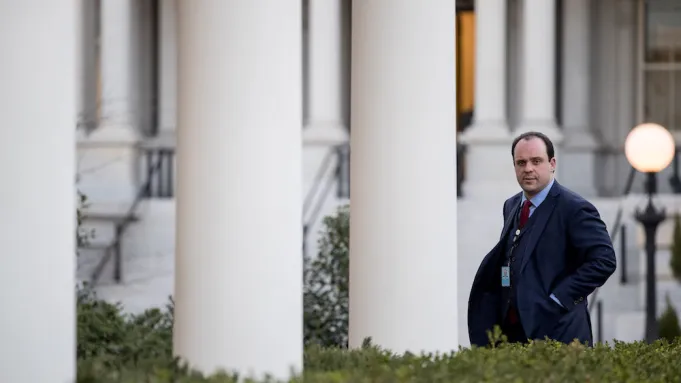
Boris Epshteyn is not a household name to most Americans, yet his influence has repeatedly surfaced at decisive moments in U.S. politics. A Russian-born immigrant, Georgetown-trained lawyer, and relentless political operative, Epshteyn has spent the past decade moving through the overlapping worlds of campaign messaging, conservative media, and high-stakes legal strategy. His rise parallels the ascent of Donald Trump, whose campaigns, presidency, and post-presidential legal battles have provided Epshteyn both opportunity and exposure. Within Trump’s orbit, Epshteyn has been many things at once: a television surrogate defending controversial positions, a campaign strategist shaping outreach efforts, and later a legal adviser involved in some of the most disputed actions following the 2020 election. Supporters describe him as fiercely loyal, disciplined, and effective under pressure. Critics portray him as emblematic of a political era in which loyalty often outweighs experience, and norms are treated as obstacles rather than guardrails.
Understanding Boris Epshteyn matters because his career illuminates how modern political power operates. Influence no longer flows only through elected office or established institutions. It also moves through cable news studios, campaign war rooms, and legal back channels where political messaging and legal interpretation blur together. Epshteyn’s story is not just about one man; it is about how American politics now rewards those who can navigate media combat, legal ambiguity, and personal allegiance simultaneously.
Early Life and Education
Boris Epshteyn was born on August 14, 1982, in Moscow, then part of the Soviet Union. His family immigrated to the United States when he was a child, settling in New Jersey as part of a broader wave of Jewish emigration from the collapsing Soviet system. Like many immigrant narratives, Epshteyn’s early years combined adaptation with ambition, shaped by the promise of American professional life. He attended Swarthmore College before transferring to Georgetown University’s School of Foreign Service, where he graduated cum laude. Georgetown would become central to his future, not only academically but socially. He later earned a Juris Doctor from Georgetown University Law Center in 2007, focusing on securities and international law. During this period, Epshteyn built relationships that later proved politically consequential, including a friendship with Eric Trump.
Before politics fully claimed his attention, Epshteyn worked in law firms and finance-adjacent roles, including boutique investment banking. These early positions reflected a conventional professional trajectory: law, finance, credentials. Yet even then, politics hovered nearby. His brief work as a communications aide on Senator John McCain’s 2008 presidential campaign offered his first exposure to national electoral politics and signaled a pivot from purely legal practice toward political advocacy.
Entering National Politics
Epshteyn’s true political ascent began with Donald Trump’s 2016 presidential campaign. At a time when the campaign faced intense scrutiny and frequent controversy, Epshteyn emerged as a reliable and combative media surrogate. He appeared regularly on cable news, defending Trump against allegations ranging from policy inconsistency to personal misconduct. His style was confrontational, disciplined, and unapologetically partisan. Inside the campaign, Epshteyn helped manage surrogate operations and co-hosted Trump Tower Live, a nightly Facebook Live broadcast designed to bypass traditional media filters. The show reflected Trump’s broader media strategy: speak directly to supporters, frame criticism as bias, and keep the campaign constantly visible.
Following Trump’s victory, Epshteyn joined the White House as a Special Assistant to the President and Assistant Communications Director. His tenure was brief, ending in 2017, but it cemented his status as a trusted figure within Trump’s inner circle. When he left the White House, Epshteyn did not leave politics. Instead, he transitioned into conservative media, becoming chief political commentator for Sinclair Broadcast Group, whose nationwide reach gave him a powerful platform.
Campaigns, Coalitions, and Messaging
By the 2020 election cycle, Epshteyn had returned to direct campaign work. He served as a strategic adviser to Trump’s reelection campaign and co-chair of the Jewish Voices for Trump Advisory Board. In that role, he focused on outreach to Jewish voters, emphasizing Trump administration policies on Israel, antisemitism, and Middle East diplomacy. Campaign officials credited the effort with increasing Republican support among Jewish voters compared to prior election cycles. Whether viewed as a messaging success or a modest demographic shift, the initiative underscored Epshteyn’s role as a coalition builder as well as a media combatant.
Table: Key Political Roles
| Period | Role | Function |
|---|---|---|
| 2008 | McCain Campaign Aide | Communications support |
| 2016 | Trump Senior Adviser | Media surrogate, messaging |
| 2017 | White House Communications | Presidential communications |
| 2020 | Trump Strategic Adviser | Coalition outreach |
| Post-2020 | Legal & Political Counsel | Strategy and coordination |
The 2020 Election and Its Aftermath
The aftermath of the 2020 election marked the most consequential and controversial phase of Epshteyn’s career. As Trump refused to concede defeat, Epshteyn became involved in efforts to challenge the election results in multiple states. Central to those efforts was the organization of alternate slates of electors in states won by Joe Biden, a strategy advanced by Trump allies as a way to preserve legal challenges. Epshteyn publicly defended the legality of these actions, arguing that historical precedents allowed for such maneuvers under disputed electoral conditions. Most constitutional scholars rejected that interpretation, warning that it undermined democratic norms and risked constitutional crisis.
Following the January 6, 2021 attack on the U.S. Capitol, Epshteyn was subpoenaed by the House committee investigating the events surrounding the election and the riot. In 2024, he was indicted in Arizona in connection with the fake electors scheme and later pleaded not guilty. These legal challenges transformed Epshteyn from political strategist into legal defendant, further blurring the lines between advocacy and accountability.
Table: Legal and Political Controversies
| Year | Issue | Status |
|---|---|---|
| 2021 | Disorderly conduct arrest | Conviction later set aside |
| 2022 | Jan. 6 committee subpoena | Testimony compelled |
| 2024 | Fake electors indictment | Not guilty plea |
Power, Loyalty, and Internal Tensions
Despite mounting controversies, Epshteyn remained close to Trump. In Trump’s post-presidential period and return to office, Epshteyn served as a senior adviser and personal counsel, coordinating with defense teams and influencing personnel decisions. His role drew criticism from some attorneys who questioned his legal experience, but loyalty often outweighed such concerns. Reports of internal disputes including allegations that Epshteyn sought payments from individuals seeking government appointments intensified scrutiny. Though denied by Epshteyn and others, these claims highlighted broader ethical concerns surrounding access and influence in presidential transitions.
Political scholars see Epshteyn as emblematic of a new class of political operative. Elaine Kamarck of the Brookings Institution has argued that modern campaigns reward versatility over specialization, blending media, legal, and political roles. James Thurber of American University has noted that loyalty now functions as political capital. Legal scholar Lawrence Lessig has warned that when personal allegiance eclipses institutional norms, democratic stability is strained.
Broader Significance
Boris Epshteyn’s career illustrates how political influence has evolved in the 21st century. Traditional pathways electoral office, senior bureaucratic roles coexist with newer forms of power rooted in media presence, legal maneuvering, and personal trust. Epshteyn’s effectiveness lies in his ability to operate across these spaces, even as that flexibility invites controversy. His immigrant background adds another layer to the narrative. Epshteyn often presents his story as evidence of American opportunity, yet his critics argue that his actions challenge the democratic principles that underpin that promise. The tension between those perspectives mirrors larger national debates about loyalty, legality, and the limits of political ambition.
Takeaways
- Boris Epshteyn is a central but polarizing figure in Trump-era politics.
- His career spans law, media, and campaign strategy rather than traditional governance.
- He played a key role in post-2020 election challenges and faces ongoing legal scrutiny.
- Supporters emphasize loyalty and effectiveness; critics cite ethical and legal concerns.
- His trajectory reflects broader changes in how political power is exercised today.
Conclusion
Boris Epshteyn’s rise from immigrant student to influential political adviser captures the volatility of modern American politics. His proximity to power has brought visibility, responsibility, and legal risk in equal measure. Whether history judges him as a loyal strategist defending his cause or as a cautionary example of politics untethered from institutional norms remains unresolved. What is clear is that Epshteyn’s story offers a revealing lens into an era defined by polarization, media warfare, and the relentless pursuit of influence.
FAQs
Who is Boris Epshteyn?
He is a Russian-born American lawyer and political adviser closely associated with Donald Trump’s campaigns and legal strategy.
What role did he play after the 2020 election?
Epshteyn was involved in efforts to challenge the election results, including organizing alternate electors.
Has he faced legal charges?
Yes. He has faced misdemeanor charges and was indicted in Arizona in 2024 related to election-related actions.
Did he work in the Trump White House?
Yes. He briefly served as a communications official during Trump’s first term.
Is he still politically active?
Yes. He continues to serve as an adviser and legal strategist within Trump’s political circle.
References
Brookings Institution. (2021). Campaign strategy and modern political influence. https://www.brookings.edu
Forbes. (2024). Inside Trump’s inner circle: Boris Epshteyn’s role and controversies. https://www.forbes.com
Lessig, L. (2019). Fidelity and constraint in constitutional democracy. Harvard Law Review.
New York Times. (2017). Trump aides and the reshaping of White House communications. https://www.nytimes.com
Wikipedia. (2025). Boris Epshteyn. https://en.wikipedia.org/wiki/Boris_Epshteyn