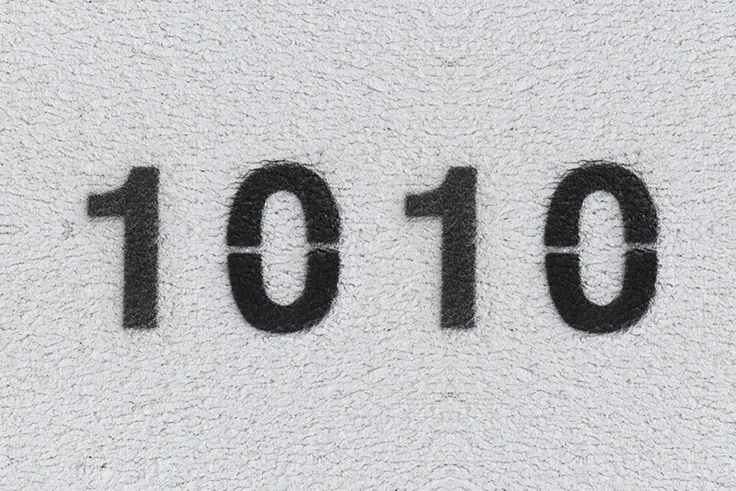
The 1010 angel number is widely understood as a symbolic sequence that many people interpret as a sign of alignment, renewal, and personal transformation. Within contemporary numerology and spiritual communities, repeated sightings of 1010 are often described as messages encouraging awareness, intention, and forward movement. Some see it as a spiritual signal, others as a psychological phenomenon, but its presence in modern culture is undeniable.
Across social media, wellness blogs, and spiritual literature, the number 1010 appears as a quiet but persistent motif. People report seeing it on digital clocks, receipts, phone notifications, and license plates, often during moments of transition or uncertainty. For believers, this repetition feels purposeful. It suggests that invisible guidance may be at work, offering reassurance during change. For skeptics, the experience reflects something equally fascinating: the human mind’s powerful tendency to notice patterns and assign them meaning.
This article examines 1010 not as a prediction or prophecy, but as a cultural symbol. It traces its roots in numerology, unpacks the symbolic meaning of its digits, and explores the psychology behind repeated-number experiences. Along the way, it situates 1010 within a broader history of number symbolism and the modern search for meaning in a digital world saturated with data, signals, and coincidence.
The Ancient Roots of Number Symbolism
Long before angel numbers entered popular vocabulary, numbers carried symbolic weight in ancient civilizations. In Mesopotamia, Egypt, China, and Greece, numbers were not merely tools for counting; they were expressions of cosmic order. Pythagoras, the Greek philosopher of the sixth century BCE, argued that number was the fundamental principle underlying reality. Harmony, he believed, could be measured, and the universe itself followed numerical ratios.
From this worldview emerged early forms of numerology. Numbers were thought to reveal character, destiny, and divine order. While modern angel numbers are not a direct continuation of ancient traditions, they inherit this central idea: that numbers are more than neutral symbols. They can be carriers of meaning.
In medieval Christian thought, numbers also played symbolic roles. The number one represented unity and God; zero, though less prominent, came to symbolize the void or divine potential once it entered Western mathematics. These layered traditions created fertile ground for later spiritual systems that assigned metaphysical qualities to numerical sequences.
By the twentieth century, numerology had merged with New Age spirituality, giving rise to the idea of “angel numbers” repeating sequences believed to signal guidance, awareness, or transition. The sequence 1010 emerged as one of the most frequently discussed.
What 1010 Is Said to Mean
Within numerology, interpretation often begins by separating the digits. The number 1 is traditionally associated with beginnings, leadership, independence, and initiative. It marks the start of cycles and the assertion of identity. The number 0, by contrast, symbolizes potential, wholeness, and infinity. It represents both emptiness and limitless possibility, often seen as amplifying the numbers beside it.
When combined as 1010, the sequence is read as a message about conscious creation. Two ones suggest initiative and action; two zeros suggest spiritual context and expansion. Together, they are often interpreted as a reminder to align intention with purpose and to act deliberately during moments of change.
In spiritual literature, 1010 is frequently described as a signal of awakening a point at which awareness is sharpening and personal growth is accelerating. It is not typically read as a prediction of events but as an invitation to reflect on current direction. The message, in most interpretations, is subtle: pay attention, remain open, and trust your capacity to shape what comes next.
This interpretive flexibility explains much of its appeal. 1010 can fit career decisions, relationships, spiritual questions, or personal doubts. Its meaning adapts to the moment in which it is noticed.
The Psychology of Seeing Repeating Numbers
From a scientific perspective, repeated number sightings can be explained without invoking metaphysics. Psychologists describe a phenomenon known as frequency illusion, sometimes called the Baader–Meinhof effect. Once a person becomes aware of a pattern, they begin to notice it more often, not because it appears more frequently, but because attention has shifted.
Another relevant concept is apophenia: the human tendency to perceive meaningful patterns in random data. This ability has evolutionary roots. Detecting patterns helped early humans survive. But in modern life, it can also lead people to find significance in coincidence.
Carl Jung’s idea of synchronicity adds a philosophical layer. Jung proposed that some coincidences feel meaningful not because of causal connection, but because they resonate psychologically with inner states. For people encountering 1010 during emotionally charged periods, the number may become a symbolic marker for reflection and decision-making.
Importantly, none of this diminishes the personal value people derive from such experiences. Psychological explanations do not invalidate emotional impact. They simply describe how meaning is constructed in the mind.
1010 in Modern Spiritual Culture
The rise of angel numbers cannot be separated from the rise of digital culture. Clocks display time numerically. Phones and screens surround daily life with digits. In such an environment, repeated sequences are unavoidable. What has changed is the narrative attached to them.
Online communities have amplified angel numbers through storytelling. Personal testimonies circulate widely: a career breakthrough after seeing 1010, a relationship turning point, a moment of clarity. These stories form a shared language of signs and symbols. Over time, they solidify into informal doctrine.
This phenomenon reflects a broader shift toward individualized spirituality. Rather than relying on formal institutions, many people build personal belief systems from psychology, mindfulness, astrology, and numerology. Angel numbers fit naturally into this landscape. They require no hierarchy, no clergy, only personal interpretation.
In this sense, 1010 functions less as doctrine and more as tool. It becomes a momentary pause a prompt to reflect on where one stands and where one hopes to go.
Expert Perspectives on Meaning and Interpretation
Scholars of religion and psychology often emphasize that symbolic systems thrive when they provide emotional utility. Numbers like 1010 become meaningful not because of inherent power, but because they offer structure during uncertainty.
“Symbols endure when they help people organize experience and reduce anxiety during periods of change.” — Professor of Religious Studies
Cognitive scientists add that humans are natural storytellers.
“We are meaning-making creatures. When randomness intersects with emotion, the brain almost automatically constructs narrative.” — Cognitive psychologist
From a coaching perspective, practitioners view angel numbers as reflective prompts rather than predictions.
“If 1010 makes someone pause and think about their direction, it has already served a purpose, regardless of metaphysical belief.” — Life coach
These perspectives suggest that 1010’s influence lies not in external forces, but in internal response.
Table: Symbolic Elements of 1010
| Digit | Traditional Symbolism | Psychological Reading | Common Association |
|---|---|---|---|
| 1 | Beginning, initiative | Agency, self-direction | New projects |
| 0 | Potential, wholeness | Openness, uncertainty | Possibility |
| 10 | Completion of cycle | Transition point | Change |
| 1010 | Alignment, awareness | Reflection trigger | Growth |
1010 Across Life Domains
People often interpret 1010 differently depending on context. In career settings, it is associated with taking initiative or changing direction. In relationships, it is seen as a call for honesty or renewal. This flexibility is key. Unlike rigid belief systems, angel numbers allow personal meaning to evolve. A single sequence can signify courage one year and patience the next.
Table: Interpretations by Domain
| Domain | Typical Interpretation | Behavioral Response |
|---|---|---|
| Career | Time to act | Set goals, take risks |
| Relationships | Realignment | Communicate, reflect |
| Spiritual | Awakening | Meditate, journal |
| Personal growth | Transition | Reassess priorities |
Takeaways
- The 1010 angel number arises from modern numerology and symbolic number traditions.
- Its meaning combines themes of beginnings, potential, and conscious choice.
- Psychology explains repeated sightings through attention, bias, and pattern recognition.
- Cultural spread is driven by digital life and personal storytelling.
- Its influence lies primarily in reflection, not prediction.
- 1010 functions as a symbolic pause rather than a directive.
Conclusion
The fascination with 1010 reveals less about hidden forces and more about human nature. We seek meaning in moments of uncertainty. We look for signals when facing decisions. Numbers, simple and universal, provide a canvas for that search.
Whether interpreted spiritually or psychologically, 1010 endures because it offers a moment of stillness in motion a chance to notice, reflect, and choose deliberately. In a world defined by speed and information, even a fleeting pattern can become a reminder to pay attention to one’s inner life.
FAQs
What does the 1010 angel number symbolize?
It commonly represents new beginnings, awareness, and alignment with personal goals.
Is there scientific evidence for angel numbers?
No. Psychology explains repeated sightings through pattern recognition and attention bias.
Why do people notice 1010 on clocks so often?
Digital displays and frequency illusion make symmetrical times stand out.
Does 1010 predict future events?
Most interpretations view it as reflective, not predictive.
Can 1010 influence decisions?
For some, it encourages reflection and motivation, rather than direct action.
References
Jung, C. G. (1960). Synchronicity: An acausal connecting principle. Princeton University Press. https://press.princeton.edu/books/paperback/9780691150505/synchronicity
American Psychological Association. (n.d.). Cognitive biases and pattern recognition. https://www.apa.org/monitor/2015/03/illusion
Encyclopaedia Britannica. (n.d.). Numerology. https://www.britannica.com/topic/numerology
Encyclopaedia Britannica. (n.d.). Apophenia. https://www.britannica.com/science/apophenia
Stanford Encyclopedia of Philosophy. (n.d.). Pythagoreanism. https://plato.stanford.edu/entries/pythagoreanism/