
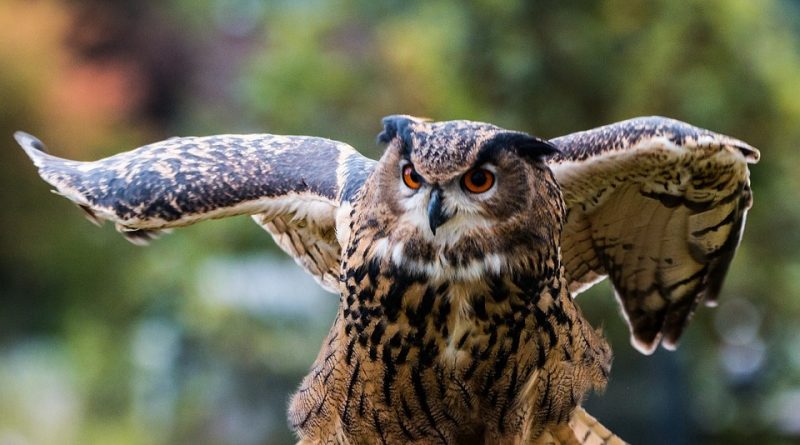
The Eurasian Eagle-Owl (Bubo bubo) is one of the largest and most formidable owls in the world, recognized for its impressive wingspan, deep resonant calls, and stealthy nocturnal hunting skills. For those exploring “Bubo bubo bird,” understanding its biology, behavior, and conservation status is key. These owls dominate their ecosystems as apex predators, controlling prey populations ranging from small mammals to other birds of prey. Despite their widespread distribution across Europe and Asia, local populations face increasing pressures from habitat loss, human activity, and declining prey availability.
In this article, we explore the Eagle-Owl’s physical characteristics, habitat preferences, hunting strategies, and social behavior. We examine its conservation challenges, population trends, and the role humans play in either supporting or threatening its survival. Expert insights and structured comparisons help contextualize the species’ ecological importance and the urgent need for conservation measures. From its breeding habits on cliff ledges to its expansive nocturnal hunting territories, the Eurasian Eagle-Owl exemplifies the balance of power, adaptability, and vulnerability in the wild.
Physical Characteristics
The Eurasian Eagle-Owl is remarkable in size and appearance. Females are larger than males, reaching lengths of up to 75 centimeters and wingspans of nearly 1.9 meters. Weight varies from 1.6 to 4.2 kilograms, with an average of 2.8 kilograms. Prominent feathered ear tufts, striking orange eyes, and mottled plumage provide camouflage and an imposing presence.
Their powerful talons allow them to hunt both small and large prey, while their wings are built for silent flight. The facial disc is subtle, aiding in sound localization, and the barred pattern of their tail and wings adds to their camouflage against rocky and forested landscapes. Their deep “ooh-hu” call resonates across mountains and valleys, marking territory and facilitating communication between mates. These adaptations have allowed the species to thrive across diverse ecosystems.
Range and Habitat
Bubo bubo occupies a wide range across the Palearctic region, from Western Europe to Siberia, Central Asia, and parts of the Himalayas. Habitats include rocky cliffs, mountain ranges, forests, open plains, and semi-arid regions. They prefer nesting sites with ledges, caves, or crevices, often near abundant prey.
Although primarily nocturnal, the Eagle-Owl adapts to semi-urban and rural environments where food sources are present. Population estimates vary widely, with 100,000 to 500,000 mature individuals globally. Despite being classified as “Least Concern” by the IUCN, regional declines highlight the uneven stability of the species, often linked to human activity and habitat fragmentation.
Behavior and Hunting
Eagle-Owls are primarily nocturnal hunters, although they may become crepuscular or diurnal during summer. Their hunting technique involves ambush, often from high perches where they can silently observe and dive on unsuspecting prey.
Their diet is opportunistic, including rodents, hares, rabbits, birds, reptiles, and occasionally larger prey such as foxes or young ungulates. Breeding requires undisturbed nesting sites and sufficient prey. Monogamous pairs often return to the same nesting locations, laying one to four eggs between late winter and early spring. Both parents care for the young, which disperse within the first year.
Territories can span up to 10 kilometers in diameter, necessitating large hunting grounds to support breeding pairs. Habitat loss and human disturbance can significantly affect breeding success and juvenile survival.
Population Trends and Threats
While Bubo bubo is globally classified as “Least Concern,” local populations face threats from persecution, habitat destruction, and prey decline. In parts of Western Europe, human activity reduced numbers between 1900 and 2000, leading to local extinctions.
Recent recovery efforts include legal protections, artificial nest programs, and habitat management. Nevertheless, ongoing threats include urban expansion, power-line collisions, and pesticide use reducing prey. Conservation strategies must address habitat protection, prey restoration, and public awareness to ensure long-term survival.
Comparative Table: Eagle-Owl vs Other Large Owls
| Feature | Eurasian Eagle-Owl (Bubo bubo) | Great Horned Owl (Bubo virginianus) |
|---|---|---|
| Wingspan | Up to 1.88 m | 1.23–1.52 m |
| Weight | 1.6–4.2 kg | 1–2.6 kg |
| Prey | Rodents, hares, foxes, birds, raptors | Rodents, rabbits, small mammals, birds |
| Habitat | Cliffs, mountains, forests, semi-arid zones | Forest edges, wetlands, urban areas |
| Conservation Status | Least Concern, patchy declines | Least Concern, stable |
Human Interactions
Historically, Eagle-Owls were feared and persecuted due to their size, nocturnal habits, and occasional predation on livestock. Modern conservation has improved protection through legal frameworks and education, though conflicts persist when prey shortages drive owls to domestic animals.
Awareness campaigns and protected nesting sites have contributed to population recovery in some regions. Conservationists stress integrated strategies addressing habitat protection, prey availability, and minimizing human disturbance to maintain stable populations.
“The Eagle-Owl thrives in remote niches, but survives only where humans choose to leave the night undisturbed.” — Dr. Elena Petrova, Raptor Ecologist
Timeline of Eagle-Owl in Europe
| Era | Event |
|---|---|
| Pre-20th century | Widespread; prominent in folklore. |
| 1900–1950 | Declines due to persecution and habitat loss. |
| 1950–1980 | Local extinctions in Western Europe. |
| 1980–2000 | Legal protections and reintroductions begin. |
| 2000–Present | Mixed populations; conservation efforts increase. |
Expert Perspectives
Dr. Natalia Smirnova:
“Even minor disturbances near breeding cliffs can disrupt Eagle-Owl reproductive cycles.”
Professor Arjun Malik:
“Their adaptability is remarkable, but land-use changes outpace natural adaptation.”
Miguel Alvarez:
“Restoring prey populations is crucial; protecting the owl alone is insufficient.”
Takeaways
- Bubo bubo is one of the largest owls globally, dominating nocturnal ecosystems.
- Its range spans Europe and Asia, inhabiting diverse habitats.
- Apex predator controlling mammal and bird populations.
- Local declines driven by habitat loss, prey scarcity, and human conflict.
- Conservation requires habitat, prey restoration, and education.
- The species’ survival reflects broader environmental challenges.
Conclusion
The Eurasian Eagle-Owl exemplifies strength, adaptability, and ecological importance. Its deep calls echo across forests and cliffs, symbolizing a delicate balance between nature and human activity. While globally widespread, localized threats underscore the need for targeted conservation strategies. Protecting this species ensures the preservation of nocturnal ecosystems and the continued presence of one of nature’s most majestic predators.
FAQs
What is Bubo bubo?
A large nocturnal owl, also called the Eurasian Eagle-Owl, inhabiting Europe and Asia.
How large do they get?
Females can reach 75 cm in length, wingspans of 1.88 m, weighing 1.6–4.2 kg.
Where do they live?
Cliffs, mountains, forests, plains, and semi-arid regions with abundant prey.
What do they eat?
Rodents, hares, birds, foxes, and occasionally larger mammals.
Are they endangered?
Globally “Least Concern,” but local populations may decline due to habitat and prey loss
References
Animal Diversity Web. (2025). Bubo bubo species profile. Animal Diversity Web.
Britannica Editors. (n.d.). Eagle owl. Encyclopaedia Britannica.
Svetlíková, S., et al. (2024). Distribution, density and trends of the Eurasian eagle owl in European forests. Acta Ornithologica, 59, 145–158.
The Owls Trust. (2022). Eurasian Eagle Owl Facts.
A-Z Animals. (2022). Eurasian Eagle Owl – Facts and Information.