
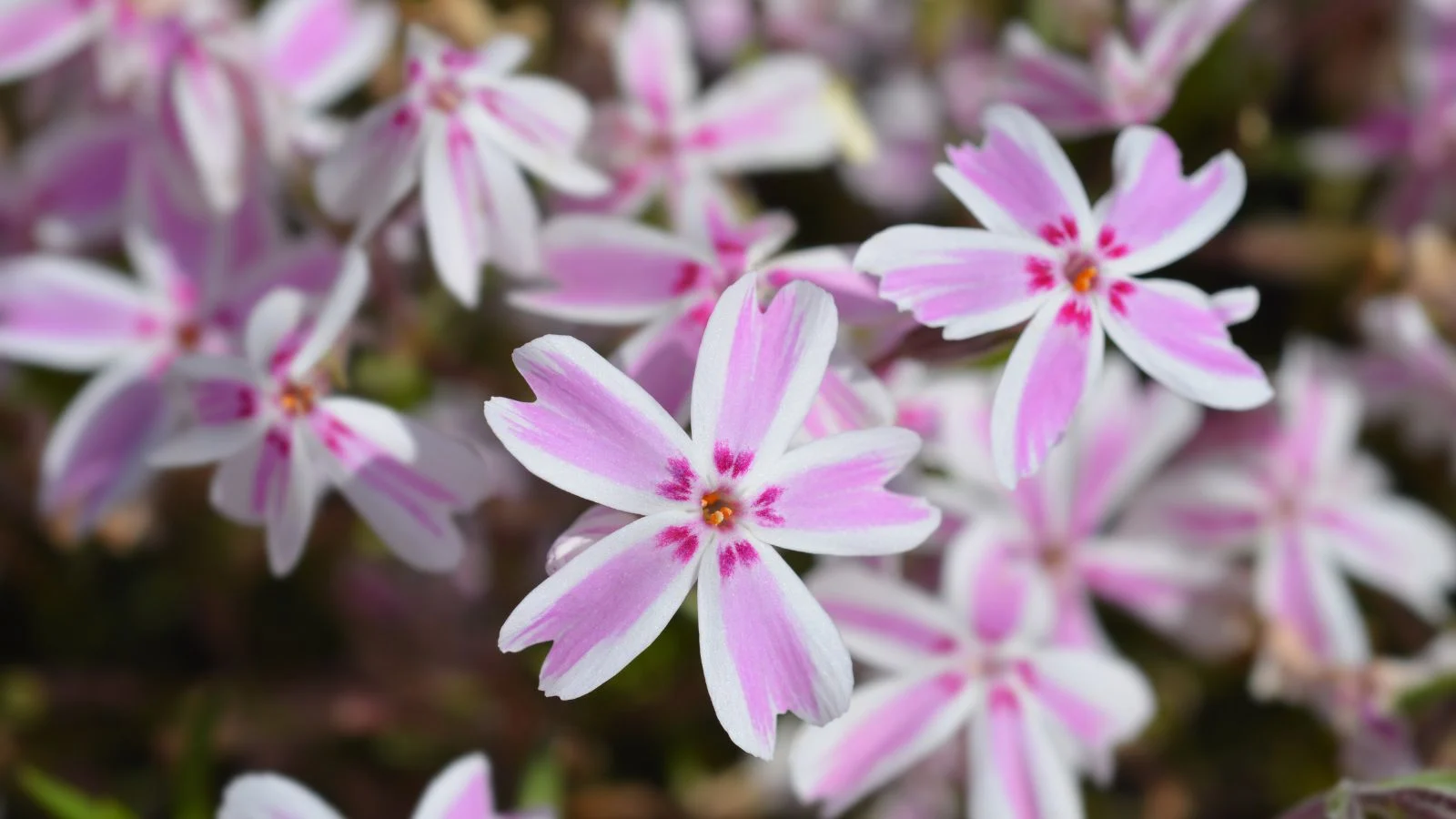
Creeping phlox (Phlox subulata) is among the most recognizable spring groundcovers in North American and European gardens, valued for its ability to transform bare ground into a living tapestry of color. In early spring, often before many perennials have fully awakened, creeping phlox erupts into dense sheets of star-shaped blooms in pinks, purples, blues, and whites. For gardeners seeking an ornamental plant that is both visually dramatic and structurally useful, creeping phlox consistently meets expectations.
The plant answers several practical questions at once. It offers erosion control on slopes, suppresses weeds through dense growth, provides early nectar for pollinators, and requires relatively little maintenance once established. Its evergreen or semi-evergreen foliage adds year-round texture, while its shallow root system allows it to thrive in rocky, well-drained soils where other plants struggle. These qualities explain its frequent use in rock gardens, along walkways, and cascading over retaining walls.
Beyond its utility, creeping phlox carries botanical and cultural significance as a North American native species adapted to temperate climates. It reflects a gardening philosophy that values plants capable of blending beauty with ecological responsibility. Understanding how creeping phlox grows, where it thrives, and why it has remained relevant for decades provides insight into the enduring appeal of groundcover plants in both traditional and contemporary landscape design.
Botanical Classification and Natural Origins
Creeping phlox belongs to the Polemoniaceae family, a group that includes approximately sixty-five species within the genus Phlox. While many phlox species are upright and summer-blooming, Phlox subulata distinguishes itself through its low, spreading habit and early flowering period. The species name “subulata” refers to the narrow, awl-shaped leaves that form dense mats close to the soil surface.
Native to eastern and central regions of North America, creeping phlox evolved in open woodlands, rocky outcrops, and sandy slopes. These environments shaped its preference for well-drained soils and full sun exposure. Unlike moisture-loving woodland plants, creeping phlox developed tolerance for periodic drought and temperature extremes, traits that contribute to its reliability in cultivated landscapes.
Its common names, including moss phlox and moss pink, reflect both its growth habit and visual effect. When not in bloom, the plant resembles a cushion of green moss; when flowering, it appears dusted with color. Botanically, creeping phlox is an evergreen perennial in many climates, maintaining foliage through winter dormancy and resuming growth as temperatures rise.
Growth Habit and Visual Characteristics
Creeping phlox typically grows four to six inches tall while spreading up to two feet wide. Its stems root as they travel across the soil surface, creating a continuous mat that knits together over time. This growth pattern makes it particularly effective as a groundcover, reducing exposed soil and limiting opportunities for invasive weeds.
The foliage consists of small, needle-like leaves arranged densely along trailing stems. This fine texture contrasts well with broader-leaved perennials and structural elements like stone and wood. During spring bloom, flowers emerge so densely that foliage becomes nearly invisible, producing the illusion of solid color across the landscape.
Flower color varies widely among cultivated varieties, ranging from soft pastels to saturated jewel tones. Many cultivars feature subtle markings or contrasting centers, adding visual depth when viewed up close. The bloom period typically lasts three to four weeks, depending on climate and weather conditions, after which the plant returns to its role as a textured green backdrop.
Table: Key Botanical Characteristics of Creeping Phlox
| Characteristic | Description |
|---|---|
| Scientific name | Phlox subulata |
| Plant type | Evergreen perennial groundcover |
| Mature height | 4–6 inches |
| Mature spread | Up to 24 inches |
| Bloom season | Early to mid-spring |
| Light requirement | Full sun to partial shade |
| Soil preference | Well-drained, sandy or loamy soils |
| Native range | Eastern North America |
Landscape Uses and Design Value
Creeping phlox has become a staple in landscape design because it performs multiple roles without dominating visual space. Along borders, it creates a clean, low edge that frames taller plants. On slopes, it stabilizes soil and softens harsh contours. In rock gardens, it fills gaps between stones while enhancing naturalistic design.
One of its most celebrated uses is cascading over retaining walls or raised beds. As stems trail downward, flowers form vertical drapes of color that add dimension to otherwise rigid structures. This effect has made creeping phlox especially popular in residential gardens where hardscape features require visual integration with plantings.
Designers often use creeping phlox as a transitional plant, bridging early spring interest with later-season perennials. Once flowering concludes, the evergreen foliage maintains continuity until summer bloomers take center stage. This seasonal rhythm contributes to cohesive garden narratives rather than isolated moments of interest.
Soil, Light, and Water Requirements
Successful cultivation of creeping phlox depends largely on proper site selection. Full sun exposure encourages dense growth and prolific flowering, although light afternoon shade may be beneficial in warmer climates. Insufficient light typically results in reduced blooms and elongated stems.
Soil drainage is critical. Creeping phlox thrives in sandy or loamy soils that allow excess water to pass quickly. Heavy clay soils may require amendment or raised planting to prevent root rot and fungal diseases. While the plant tolerates moderate soil fertility, overly rich soils can promote foliage growth at the expense of flowers.
Water needs are moderate. Newly planted specimens benefit from consistent moisture until established. Mature plants demonstrate drought tolerance, particularly in cooler climates, though supplemental watering during prolonged dry periods supports overall vigor and bloom longevity.
Seasonal Growth Cycle and Maintenance
Creeping phlox follows a predictable seasonal cycle. In early spring, buds form rapidly, leading to peak flowering as temperatures stabilize. After blooming, foliage resumes prominence, and stems continue to spread slowly throughout the growing season.
Maintenance requirements are minimal. Light pruning or shearing immediately after flowering can encourage denser growth and maintain a tidy appearance. This practice also prevents plants from becoming woody at the center. Fertilization is rarely necessary; excessive nutrients may lead to reduced flowering.
In colder climates, foliage may bronze during winter but typically recovers as temperatures warm. Mulching is generally unnecessary and can even hinder air circulation if applied too heavily.
Ecological Contributions and Pollinator Support
Although often selected for ornamental reasons, creeping phlox contributes meaningfully to garden ecosystems. Its early flowers provide nectar and pollen for bees, butterflies, and other pollinators emerging from winter dormancy. This timing is particularly valuable, as few other plants bloom so early in the season.
As a native species, creeping phlox integrates well into ecological landscaping efforts aimed at supporting local wildlife. It demonstrates resistance to deer and rabbits in many regions, reducing the need for protective measures or chemical deterrents.
Its dense growth also creates microhabitats for beneficial insects, while soil stabilization helps prevent erosion-related runoff, contributing indirectly to environmental health beyond the garden boundary.
Table: Benefits of Creeping Phlox in Landscape Ecology
| Benefit | Impact |
|---|---|
| Pollinator support | Early nectar source for bees and butterflies |
| Erosion control | Stabilizes soil on slopes and banks |
| Weed suppression | Dense mats limit invasive species |
| Low chemical input | Minimal need for fertilizers or pesticides |
| Native adaptation | Supports regional biodiversity |
Companion Planting Strategies
Creeping phlox pairs effectively with spring bulbs such as tulips, daffodils, and hyacinths, which rise above the groundcover to add vertical interest. As bulbs fade, the phlox foliage conceals their dying leaves, maintaining visual appeal.
Later-blooming perennials, including coneflowers, coreopsis, and ornamental grasses, extend seasonal interest beyond spring. The fine texture of phlox foliage contrasts with bold leaves and upright forms, creating layered compositions.
Thoughtful companion planting allows creeping phlox to serve as a foundational element rather than a standalone feature, enhancing the garden’s overall structure and seasonal flow.
Cultivars and Horticultural Selection
Numerous cultivars of creeping phlox have been developed to expand color options and improve disease resistance. Selections vary in bloom intensity, foliage density, and growth habit. Choosing cultivars suited to regional conditions increases long-term success and reduces maintenance needs.
Gardeners often select cultivars based on color harmony within existing plant palettes. Mixing several cultivars can create mosaic-like displays, while uniform plantings emphasize bold, uninterrupted color fields.
Takeaways
- Creeping phlox is a low-growing perennial groundcover native to North America.
- It produces dense spring blooms that provide early-season color and pollinator support.
- The plant thrives in full sun and well-drained soils with minimal maintenance.
- Evergreen foliage adds year-round texture and seasonal continuity.
- Creeping phlox stabilizes soil, suppresses weeds, and integrates well into ecological landscapes.
- Companion planting extends visual interest beyond its spring bloom period.
Conclusion
Creeping phlox endures as a garden favorite not because it demands attention, but because it quietly delivers consistent performance year after year. Its spring bloom transforms landscapes at a moment when color is most welcome, while its evergreen foliage provides structure through changing seasons. As gardeners increasingly value plants that combine beauty with resilience and ecological benefit, creeping phlox exemplifies the strengths of native perennials adapted to real-world conditions.
In a time when landscapes must balance aesthetics with sustainability, creeping phlox offers a compelling model. It asks little, gives generously, and proves that groundcovers—often overlooked—can shape the character and function of gardens as profoundly as more conspicuous plants.
FAQs
What makes creeping phlox different from other phlox species?
It grows low and spreads horizontally, forming dense groundcover rather than upright flowering stems.
Does creeping phlox return every year?
Yes, it is a perennial that regrows annually and often expands over time.
Can creeping phlox grow in partial shade?
It tolerates light shade but flowers best in full sun.
Is creeping phlox deer-resistant?
It is generally resistant, though browsing may occur in scarce conditions.
How long does creeping phlox bloom?
Bloom typically lasts three to four weeks in spring.
References
Britannica Editors. (2024). Phlox. Encyclopaedia Britannica. https://www.britannica.com/plant/phlox
Dirr, M. A. (2011). Dirr’s Encyclopedia of Trees and Shrubs. Timber Press.
North Carolina State Extension. (2023). Phlox subulata. NC State Extension Plant Toolbox. https://plants.ces.ncsu.edu
University of Georgia Extension. (2022). Groundcovers for Georgia Landscapes. https://extension.uga.edu
Missouri Botanical Garden. (2023). Phlox subulata Plant Finder. https://www.missouribotanicalgarden.org