
In the story of Dubai’s transformation from a modest Gulf trading port into one of the world’s most interconnected commercial cities, certain institutions operate behind the scenes, shaping outcomes without seeking the spotlight. Emirates Trading Agency, widely known as ETA, is one such institution. Founded in 1973, just two years after the formation of the United Arab Emirates, ETA emerged at a moment when the country urgently needed private-sector partners capable of translating vision into concrete progress. Within its first decades, the company became deeply embedded in the UAE’s industrial and infrastructural build-out, supplying materials, engineering expertise, and logistical capacity that supported rapid urbanization. Over time, ETA expanded far beyond its original remit, evolving into a diversified enterprise active in trading, construction, power projects, logistics, and real estate. While its name may not be as globally recognized as some multinational brands headquartered in Dubai, its influence is visible in physical infrastructure, supply chains, and long-term commercial relationships that stretch across Asia, Europe, Africa, and the Middle East.
For readers seeking to understand how Emirati businesses grew alongside the state itself, Emirates Trading Agency offers a revealing case study. Its history mirrors the UAE’s broader economic strategy: diversification away from oil dependence, openness to international trade, and a willingness to invest patiently in long-term capabilities. This article examines ETA’s origins, its core business divisions, its governance philosophy, and its role in shaping both national development and global trade flows.
Origins in a Formative Era
Emirates Trading Agency was established in Dubai in 1973, at a time when the UAE was still defining its economic identity. The early 1970s marked a period of rapid policy experimentation, with the government encouraging private enterprise to complement public investment in infrastructure, housing, and utilities. ETA began as a trading concern focused on sourcing and supplying essential materials required for construction and industrial projects. The company’s early success was closely tied to Dubai’s strategic geography. Situated between East and West, the emirate was positioning itself as a logistics and trading hub. ETA leveraged this advantage by building relationships with international suppliers and regional clients, gradually earning a reputation for reliability in procurement and delivery. These early trading activities laid the foundation for later diversification, allowing the company to accumulate sector knowledge, capital, and operational expertise.
As Dubai’s ambitions grew, so did ETA’s scope. By the late 1970s and early 1980s, the company was moving beyond pure trading into engineering and contracting services, aligning itself with the UAE’s push toward self-sufficiency in infrastructure development.
Evolution Into a Diversified Enterprise
Rather than remaining confined to a single line of business, Emirates Trading Agency followed a deliberate diversification strategy. This approach reflected both market opportunity and national policy priorities, which favored companies capable of delivering integrated solutions.
Engineering and Construction Capabilities
ETA’s engineering and construction activities became central to its identity. The company undertook electromechanical works, HVAC systems, power distribution, and industrial installations for commercial buildings, airports, and large infrastructure projects. These services required technical precision and long-term project management, capabilities that ETA developed incrementally through experience.
Participation in major projects reinforced the company’s credibility and enabled it to compete for increasingly complex contracts. In doing so, ETA contributed to the physical transformation of the UAE’s urban environment, supporting the growth of residential, commercial, and industrial zones.
Trading and Commodities
Despite diversification, trading remained at the heart of ETA’s operations. Over time, its commodities portfolio expanded to include steel, timber, paper, and other industrial inputs critical to construction and manufacturing. By managing large-scale procurement and distribution, ETA became a bridge between global producers and regional demand centers.
This trading activity connected the UAE more deeply to global markets, reinforcing Dubai’s role as a commercial intermediary. ETA’s ability to operate across borders depended on long-standing supplier relationships and a detailed understanding of logistics, customs, and regulatory environments.
Power, Energy, and Infrastructure Support
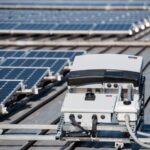
As the UAE’s population and industrial base grew, so did demand for reliable power and water infrastructure. Emirates Trading Agency responded by expanding into power and energy projects, including generation systems and desalination support services. These activities aligned with national development plans focused on energy security and infrastructure resilience. In more recent years, ETA’s involvement in energy has reflected a broader shift toward sustainability. The company has supported projects emphasizing energy efficiency and alternative energy solutions, echoing the UAE’s long-term commitment to reducing environmental impact while maintaining economic growth.
An energy-sector analyst quoted in regional business commentary once observed that “companies with deep experience in conventional infrastructure are often best positioned to manage the transition to cleaner systems, because they understand both operational realities and long-term planning.” That observation helps explain ETA’s continued relevance in a changing energy landscape.
Logistics and the Architecture of Trade
Logistics has always been implicit in ETA’s trading activities, but over time it emerged as a distinct operational strength. Dubai’s ports, free zones, and aviation infrastructure provided the backbone, while ETA supplied expertise in freight forwarding, warehousing, and supply-chain coordination. The logistics division enabled the company to offer end-to-end solutions, reducing dependency on third parties and increasing efficiency. This capability proved particularly valuable during periods of global disruption, when companies with integrated logistics were better positioned to adapt.
By facilitating the movement of goods across continents, ETA reinforced the UAE’s status as a global logistics hub. Its operations supported not only private clients but also broader economic flows that underpin international trade.
Real Estate and Asset Management
Building on its construction experience, Emirates Trading Agency entered real estate development and property management. This division focused on creating and maintaining commercial and residential assets, emphasizing long-term value rather than speculative growth. Facilities management services became a key component, ensuring that properties remained functional, efficient, and compliant with evolving standards. In a region where rapid construction sometimes outpaces maintenance planning, ETA’s integrated approach helped differentiate its offerings.
Snapshot of Core Business Divisions
| Division | Primary Focus | Strategic Contribution |
|---|---|---|
| Engineering & Construction | Electromechanical and infrastructure projects | Supports national development |
| Trading & Commodities | Steel, timber, industrial materials | Strengthens global trade links |
| Power & Energy | Generation, infrastructure support | Enhances energy security |
| Logistics | Freight, warehousing, supply chains | Enables cross-border commerce |
| Real Estate | Development and facilities management | Creates long-term asset value |
Governance, Leadership, and Corporate Culture
A defining feature of Emirates Trading Agency has been its emphasis on governance and long-term relationships. Leadership structures have traditionally combined regional knowledge with international business practices, enabling the company to operate across diverse regulatory and cultural environments. Transparency, compliance, and ethical conduct have been emphasized as prerequisites for sustained growth. In industries such as construction and commodities trading, where reputational risk can be significant, this focus has helped ETA maintain trust with partners and clients.
According to a Middle East corporate governance specialist, “Conglomerates that survive multiple economic cycles usually do so because governance is treated as strategy, not administration.” ETA’s longevity suggests that this principle has informed its internal decision-making.
International Expansion and Adaptation
While firmly rooted in the UAE, Emirates Trading Agency pursued international expansion as markets opened and demand diversified. Operations and partnerships across South Asia, Europe, and Africa allowed the company to balance regional exposure and access new growth opportunities. Notably, ETA adapted its international footprint over time, scaling back or restructuring where market conditions changed. This willingness to adjust reflected a pragmatic approach to globalization, focused on sustainability rather than symbolic presence. The company’s international activities also reinforced knowledge transfer, bringing global best practices back into domestic operations.
Perception Versus Reality
| Common Assumption | Operational Reality |
|---|---|
| ETA is primarily a trading firm | It operates across infrastructure, energy, and real estate |
| Its impact is limited to the UAE | Its supply chains span multiple continents |
Expert Perspectives
Outside observers often point to ETA as an example of “quiet scale.” A regional infrastructure consultant has described such firms as “system builders rather than brand builders,” noting that their success lies in reliability and execution rather than public visibility. An academic specializing in Gulf economies has similarly argued that diversified family-linked conglomerates played a crucial role in stabilizing growth during periods of oil price volatility, providing continuity when public spending fluctuated. These assessments place ETA within a broader ecosystem of firms that underwrote the UAE’s economic resilience.
Key Takeaways
- Emirates Trading Agency was founded in 1973 during a pivotal period in UAE history.
- The company evolved from trading into a diversified multi-sector enterprise.
- Its operations supported infrastructure, energy, logistics, and real estate development.
- ETA’s growth mirrors the UAE’s diversification strategy.
- Governance and long-term partnerships underpin its resilience.
- Integrated logistics strengthened its global trade role.
Conclusion
Emirates Trading Agency’s story is not one of dramatic headlines or sudden disruption, but of steady accumulation — of expertise, trust, and strategic relevance. From its origins in a newly formed nation to its current status as a diversified enterprise, ETA reflects a model of growth closely aligned with national priorities and global realities. Its contributions to infrastructure, trade, and energy have helped shape the physical and economic landscape of the UAE, even as its international operations link the country to wider markets. In an era defined by volatility and rapid change, ETA’s emphasis on diversification, governance, and operational depth offers a lesson in endurance. The company’s history suggests that influence does not always announce itself loudly; sometimes, it is built quietly, project by project, shipment by shipment, over decades.
Frequently Asked Questions
What is Emirates Trading Agency?
Emirates Trading Agency is a diversified Emirati enterprise involved in trading, construction, logistics, energy projects, and real estate.
When was ETA founded?
The company was established in 1973 in Dubai.
Is ETA active outside the UAE?
Yes. It has conducted international operations and partnerships across Asia, Europe, and Africa.
What sectors does ETA focus on today?
Its core sectors include engineering, commodities trading, logistics, power projects, and property management.
Why is ETA important to the UAE economy?
ETA supported infrastructure development, trade diversification, and long-term industrial growth.
References
Bloomberg. (n.d.). Company overview: Emirates Trading Agency. https://www.bloomberg.com
Encyclopaedia Britannica. (n.d.). Economy of the United Arab Emirates. https://www.britannica.com
Gulf News. (n.d.). Business history and diversification in the UAE. https://gulfnews.com
Oxford Business Group. (n.d.). UAE construction and infrastructure overview. https://oxfordbusinessgroup.com
World Bank. (n.d.). United Arab Emirates: Trade and economic development. https://www.worldbank.org