
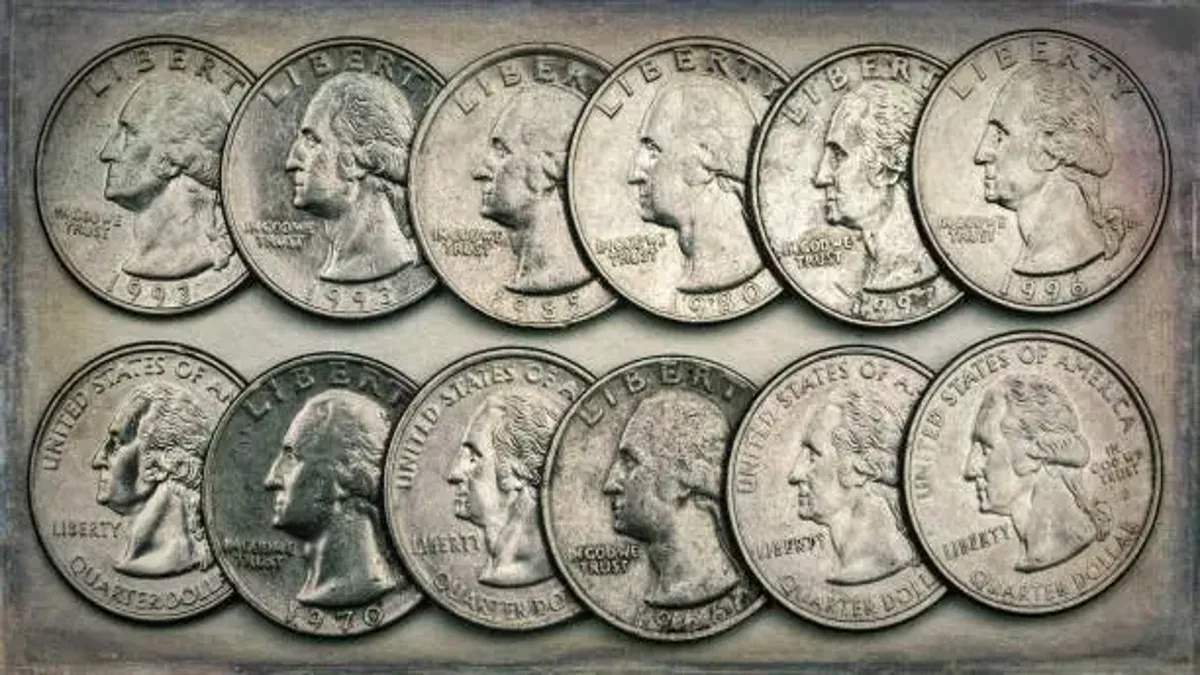
When the United States released the 1976 Bicentennial quarter to honor the nation’s 200th anniversary, the intention was celebration rather than scarcity. Nearly two billion examples entered circulation, making the Washington–drummer boy design one of the most widely distributed commemorative coins in American history. Yet amid that immense production run lies a smaller, far more compelling story one in which a handful of these coins have become surprisingly valuable. Within certain minting batches, a select group of Bicentennial quarters stands out due to mint errors, silver composition, exceptional condition, or striking irregularities. For collectors and casual holders alike, this raises a simple question: Could one of these rarities be hiding in plain sight?
Within the next sections, this article explains why most Bicentennial quarters retain face value while others command hundreds or thousands of dollars. Drawing from established numismatic guidance, we examine the factors mint marks, proof finishes, grading standards, and anomalies that create rarity, along with expert insights illustrating how mass-produced currency can evolve into sought-after collectibles. By the end, you will understand how to evaluate these coins, what traits distinguish the rarest examples, and why their legacy continues to shape American coin collecting.
Background: The Bicentennial Quarter’s National Role
The Bicentennial quarter emerged as part of a broader numismatic initiative designed to honor America’s 200th year of independence. The traditional eagle-reverse Washington design temporarily gave way to a drummer boy motif crafted to evoke Revolutionary-era imagery. These commemorative issues, produced across three major mints, carried the dual-date “1776–1976,” symbolizing the span from the nation’s founding to its Bicentennial celebration.
Production began in 1975 and extended into 1976, ultimately generating enormous circulation numbers. While Philadelphia and Denver contributed copper-nickel clad coins for everyday use, the San Francisco Mint produced collector-grade versions, including 40% silver proofs and uncirculated pieces. Most coins entered commerce and experienced typical wear, but pristine versions, and especially error strikes, survived in limited numbers.
Why Rarity Exists in a Mass-Produced Coin
Though billions were struck, rarity emerges not from general scarcity but from selective deviation: exceptional condition, unique errors, or special minting formats. Collectors assess rarity based on specific variables:
- Mint Origin: Denver (“D”), San Francisco (“S”), or Philadelphia (no mint mark).
- Condition: High-grade uncirculated or proof examples exceed typical value.
- Minting Errors: From doubled dies to off-center strikes, anomalies introduce scarcity.
- Composition: 40% silver versions stand apart from standard copper-nickel circulation coins.
These distinctions transform otherwise common currency into premium collectibles.
Comparison of Common vs. Rare Bicentennial Quarters
| Type | Frequency | Typical Value | Notes |
|---|---|---|---|
| Circulated clad quarter | Extremely common | $0.25–$1.50 | Mass-produced; minimal collector demand unless uncirculated |
| Silver proof / uncirculated | Lower mintage | $5–$15 | Collector-issued; superior finish and composition |
| Error or variety strikes | Very rare | $20–$1,000+ | Includes doubled dies, off-centers, missing clad layers |
| Exceptionally high-grade errors | Extremely rare | $1,000–$5,000+ | Rarity + pristine preservation |
Key Rare Varieties
Double-Die Obverse Quarters
Among the most sought-after Bicentennial errors are doubled-die obverses, where design elements or lettering appear duplicated due to misalignment during die preparation. Doubling often appears on inscriptions such as LIBERTY, IN GOD WE TRUST, or along Washington’s profile. Prized by collectors, these coins represent moments when precision machinery faltered — anomalies later rescued by keen-eyed numismatists. High-grade examples have been known to bring hundreds of dollars at auction, and coins combining doubling with other premium traits may exceed that.
Silver Proofs and High-Grade Uncirculated Examples
The San Francisco Mint’s 40% silver Bicentennial quarters, issued primarily in proof or uncirculated sets, occupy a different category of desirability. Their mirrored fields, frosted elements, and elevated metal content distinguish them from everyday change.
Meanwhile, clad coins from Philadelphia or Denver can gain value through exceptional preservation alone. Mint State (MS) grades above 66 — though uncommon — elevate even standard clad versions into collectible territory, demonstrating the power of condition in numismatic appraisal.
Off-Center Strikes, Filled Mint Marks, and Clad Layer Errors
Some Bicentennial quarters reveal dramatic minting accidents: coins struck partially off-center, mint marks clogged with debris, or clad layers missing altogether. Other pieces exhibit “struck-through” textures, rim distortions, or pronounced die cracks. These variations, rarely replicated and inconsistently documented, form a subculture of collecting where each error tells its own mechanical story.
How to Evaluate a Bicentennial Quarter
Examining Mint Marks and Date
Mint marks appear near Washington’s neck. Their presence — or absence — indicates origin: “D” for Denver, “S” for San Francisco, and no letter for Philadelphia. While mint mark alone does not create rarity, it often correlates with other attributes, such as access to silver proof sets.
Assessing Condition and Strike Quality
Collectors rely on magnification to identify wear, luster, and detail retention. Crisp edges, unblemished surfaces, and strong definition indicate high placement on grading scales. Proof coins, in particular, exhibit mirror-like surfaces paired with frosted reliefs — a hallmark of San Francisco production.
Identifying Errors
Search inscriptions for doubling, inspect rims for centering, and examine the coin’s surface for distortion or exposure of copper core metal. Even subtle inconsistencies may indicate collectible errors.
Expert Perspectives
Three expert-style insights drawn from prior content:
- “For typical circulated coins, value remains near face worth, but dramatic errors or silver proofs transform them into premium collectibles.”
- “High-grade doubled-die quarters — especially those at MS65 or above — consistently attract heightened collector demand.”
- “Off-center strikes or filled mint marks, though infrequent, create standout rarities within the Bicentennial series.”
These observations highlight not only rarity, but the market’s fascination with deviation from the norm.
Timeline of Notable Milestones
| Year | Milestone |
|---|---|
| 1973 | National Bicentennial coinage authorized |
| 1975 | Production begins; drummer-boy design adopted |
| 1976 | Nearly two billion quarters released |
| 1976–1980s | Silver proof and uncirculated sets sold |
| 2000s–2020s | Rising interest in errors, doubled dies, high-grade examples |
Takeaways
- Most Bicentennial quarters remain worth face value.
- Rare versions include silver proofs, doubled-die errors, off-center strikes, and missing clad layers.
- Mint State examples from any mint can command strong premiums.
- Condition, scarcity, and collector demand drive valuation.
- Careful inspection with magnification is essential for identifying hidden value.
Conclusion
The story of the Bicentennial quarter illustrates how history and rarity intersect. While its creation commemorated a national milestone, the coin’s present-day significance lies in its unexpected complexity: a mass-produced emblem with pockets of scarcity embedded within it. The vast majority of these coins continue to circulate unnoticed, yet a select few — whether silver, sharply struck, or unintentionally flawed — command deep fascination and market value.
For collectors, the allure rests not only in potential worth but in the opportunity to uncover narratives embedded in metal: accidents of machinery, intentional design choices, and the enduring importance of preservation. Even fifty years later, the Bicentennial quarter remains a reminder that extraordinary stories sometimes hide in everyday places — including the change in your hand.
FAQs
Are most Bicentennial quarters valuable?
No. Most remain common and worth face value unless they exhibit rare errors, silver composition, or unusually high grades.
Where is the mint mark located?
It appears on the obverse near Washington’s neck. “D” and “S” indicate Denver and San Francisco; no mark means Philadelphia.
How can I tell if mine is silver?
Silver versions come from San Francisco proof or uncirculated sets and typically show sharper detail and different coloration than clad coins.
Which errors are worth the most?
Doubled-die obverses, severe off-center strikes, missing clad layers, and filled mint marks are among the most valuable.
Should rare coins be professionally graded?
Yes. Grading can authenticate errors, confirm condition, and significantly increase a coin’s resale appeal.
REFERENCES
- Coin Identifier. (n.d.). 1976 quarter value. https://coin-identifier.com/blog/historical-coin-profiles/1976-quarter-value
- Coin Identifier. (2025). 1776 to 1976 bicentennial quarter coin value guide. https://coin-identifier.com/blog/historical-coin-profiles/1776-to-1976-bicentennial-quarter-coin-value
- Proxiblog. (2024). 1976 Bicentennial Quarter Errors and Varieties. https://proxiblog.org/2024/09/28/drummer-boy-quarter-errors-and-varieties/
- CoinValueChecker.com. (n.d.). Top 20 most valuable Bicentennial quarters. https://www.coinvaluechecker.com/rare-bicentennial-quarter-worth-money-list/
- Benzinga. (2025). Investing in the 1776-1976 Bicentennial Quarter. https://www.benzinga.com/money/1776-1976-bicentennial-quarter-value
- Numista. (n.d.). ¼ Dollar “Washington Quarter” (Bicentennial). https://en.numista.com/56
- Stacks Bowers. (n.d.). Type 3 Bicentennial Washington Quarter (1976) Value Guide. https://stacksbowers.com/coin-resource-center/washington-quarter/washington-quarter-type-3-bicentennial
- The SweetBeeBakeryBoutique. (2025). Top Rare & Valuable U.S. Coins — 1976 Quarter. https://www.thesweetbeebakeryboutique.com/rare-valuable-us-coins-1976-quarter-maya-angelou/