
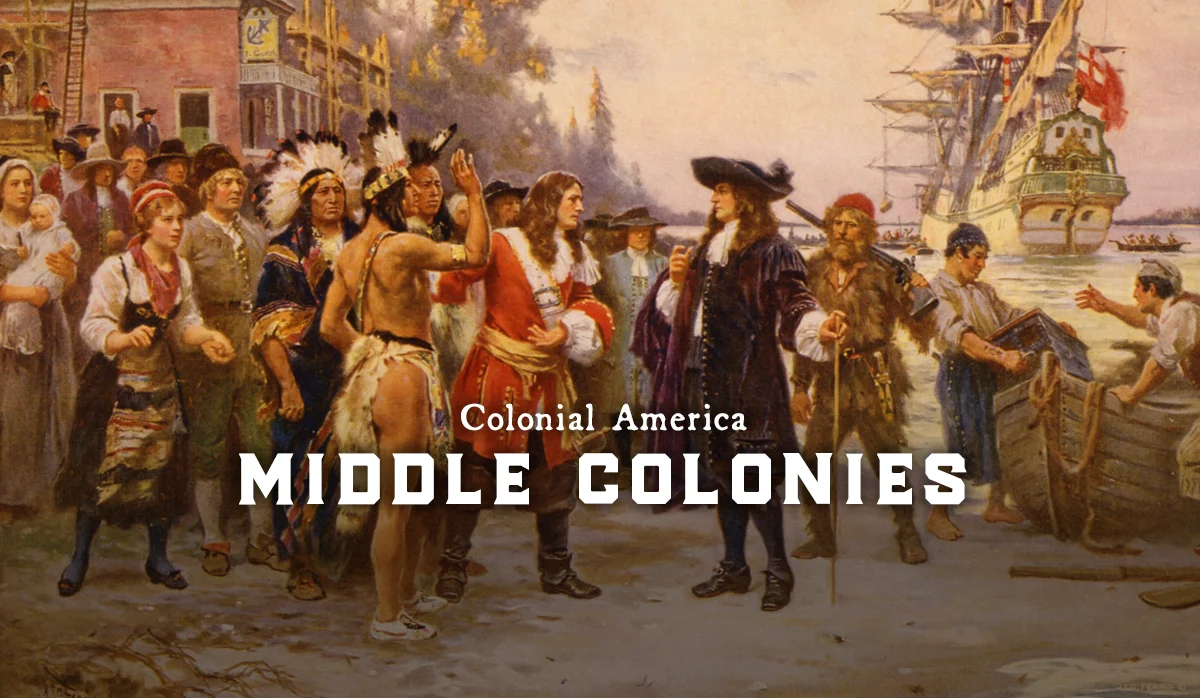
The Middle Colonies of colonial America comprising New York, New Jersey, Pennsylvania, and Delaware formed a unique region bridging New England and the southern plantations. These colonies were defined by fertile soils, navigable rivers, and moderate climates, supporting a mix of agriculture, trade, and emerging urban centers. In the first hundred words, it becomes clear why the Middle Colonies were central to early American life: they produced much of the food that fed the colonies, became hubs of commerce, and offered a degree of religious and cultural tolerance that attracted a mosaic of European settlers.
By the 18th century, these colonies earned the title “America’s breadbasket,” supplying grain, livestock, and other staples both locally and abroad. Cities like Philadelphia and New York grew into commercial and cultural centers, fostering printing, crafts, and trade networks that linked the interior with Atlantic markets. Socially, the Middle Colonies were a patchwork of ethnicities and religions, with Dutch, English, German, Scots-Irish, and Swedish settlers coexisting alongside diverse faiths including Quakers, Lutherans, Catholics, Jews, and Anglicans. This diversity fostered cooperation, innovation, and civic engagement, laying early foundations for American pluralism.
The region’s geographic advantages, economic diversity, and social tolerance created a dynamic colonial environment, providing lessons about adaptation, cooperation, and the shaping of early American identity that would resonate well beyond the colonial period.
Geography and Environment
The Middle Colonies stretched along the Atlantic coast from the Hudson River to the Delaware River, encompassing coastal plains, rolling Piedmont, and uplands near the Appalachians. The region’s rich soils, temperate climate, and navigable rivers created ideal conditions for agriculture and trade. Winters were milder than in New England, while summers were warm enough to support a long growing season.
Rivers including the Hudson, Delaware, and Susquehanna served as vital transportation routes for crops, livestock, and raw materials. Natural harbors facilitated commerce, while fertile farmland supported abundant grain harvests. These environmental features allowed the Middle Colonies to develop an economy that blended agriculture, industry, and commerce, distinguishing them from both the rocky farms of New England and the plantation-dominated South.
Origins and Colonial Governance
The Middle Colonies emerged from a complex mixture of European claims and charters. New York, originally settled by the Dutch as New Netherland, came under English control in 1664. New Jersey, initially divided into East and West Jersey, united as a royal colony in 1702. Pennsylvania, founded by Quaker William Penn in 1681, emphasized religious freedom and self-governance, while Delaware developed as a separate entity with its own assembly after 1701.
Governance in the Middle Colonies combined proprietary and royal oversight, with assemblies that allowed colonists a degree of self-rule. These structures facilitated civic engagement and accommodated the region’s diverse population, setting a precedent for democratic participation that would influence later American political culture.
Demographics and Religious Diversity
The Middle Colonies were distinguished by their cultural and religious plurality. Dutch, English, German, Swedish, and Scots-Irish settlers formed a heterogeneous population. Religious communities included Quakers, Lutherans, Anglicans, Catholics, Jews, and others. Pennsylvania’s “Holy Experiment” exemplified this tolerance, attracting immigrants seeking freedom of worship.
Ethnic and religious diversity shaped everyday life. Villages and cities hosted multiple languages and customs, while cooperation in agriculture, trade, and craftsmanship created strong communal networks. This pluralism provided a social model of coexistence and practical collaboration that contrasted sharply with the homogeneity of New England or the hierarchical structure of the South.
Economy and Industry
Agriculture formed the backbone of the Middle Colonies’ economy. Fertile soils and favorable climate supported wheat, barley, rye, corn, and oats. Livestock raising supplemented crop production with meat, dairy, and hides. This agricultural abundance enabled the colonies to supply both domestic and export markets, earning the region the moniker “breadbasket of America.”
Beyond farming, the Middle Colonies developed diverse industries. Ironworks, sawmills, shipbuilding, and milling flourished due to natural resources such as forests and ore deposits. Urban centers like Philadelphia and New York became hubs of commerce, crafts, and trade, linking inland farms with Atlantic markets. This combination of agriculture, manufacturing, and commerce fostered economic resilience and social mobility.
Urban Centers and Trade
Philadelphia and New York emerged as the region’s principal urban centers. Philadelphia, founded by William Penn in 1682, became a cultural and economic hub, with printing presses, artisan shops, and bustling markets. New York, with its strategic harbor, developed into a major port city facilitating international trade.
These cities served as points of entry for immigrants, centers of political debate, and spaces for social interaction. The flow of goods, ideas, and people through these urban centers connected the Middle Colonies to wider Atlantic and colonial networks, making them integral to regional and international commerce.
Social Structure and Mobility
Social hierarchy in the Middle Colonies was more fluid than in New England or the South. A substantial “middling” class of farmers, artisans, and tradesmen characterized the population. Landownership, industry, and trade offered opportunities for upward mobility.
Colonial assemblies and local governance structures encouraged participation and civic responsibility. This social environment, combined with economic opportunity, allowed individuals and families to improve their status, reflecting values of self-reliance, community engagement, and pluralism that influenced later American society.
Native Relations and Land Expansion
Expansion of European settlements often displaced indigenous populations. Treaties, purchases, and coercive agreements, such as the Walking Purchase of 1737, resulted in significant land loss for the Lenape and other Native peoples. Subsequent negotiations, including the Treaty of Fort Stanwix in 1768, ceded additional territory from Haudenosaunee and allied tribes.
While these acquisitions allowed European settlers to expand agriculture and settlements, they also disrupted native societies, economies, and populations. The Middle Colonies illustrate the complex interplay between settlement growth and indigenous displacement that shaped early American history.
Cultural Life and Intellectual Activity
Cultural and intellectual life thrived in the Middle Colonies. Printing presses, schools, and artisans contributed to a dynamic public sphere. Festivals, markets, and religious diversity fostered social interaction and exchange of ideas.
This environment encouraged the blending of European traditions with new colonial experiences. Religious tolerance allowed diverse communities to maintain their customs while engaging with neighbors, fostering a unique regional culture that emphasized cooperation, practical skills, and adaptability.
Comparative Analysis
| Feature | Middle Colonies | New England | Southern Colonies |
|---|---|---|---|
| Climate & Soil | Fertile, moderate | Rocky, cold | Warm, plantation-suited |
| Economy | Grain, livestock, industry, trade | Small-scale farming, fishing, timber | Plantations, cash crops |
| Population | Ethnically/religiously diverse | Largely English, Puritan | English planters, African slaves |
| Social Structure | Middling class, artisans, landowners | Town-based, church-centered | Aristocratic, hierarchical |
| Governance | Proprietary or royal, assemblies | Self-governing townships | Royal/proprietary, plantation rule |
Expert Insights
Dr. Elena Ramirez: “The Middle Colonies exemplified early American pluralism religious, linguistic, and economic which shaped the national ethos.”
Professor Marcus Boyd: “As the breadbasket, these colonies sustained the Atlantic economy and reinforced colonial trade networks essential to growth.”
Dr. Sarah Atwood: “European expansion brought prosperity but also profound displacement for native populations, revealing a complex colonial legacy.”
Takeaways
- The Middle Colonies offered fertile land, navigable rivers, and temperate climate supporting diverse economic activity.
- Agriculture was complemented by industry: ironworks, lumber, shipbuilding, and milling created economic resilience.
- Ethnic and religious diversity fostered tolerance and cooperation, attracting settlers seeking freedom and opportunity.
- Political structures included proprietary and royal governance, with assemblies promoting early self-rule.
- Urban centers such as Philadelphia and New York became hubs of commerce, culture, and immigration.
- Expansion often displaced indigenous populations, highlighting colonial impacts on native societies.
- The Middle Colonies’ combination of economic opportunity, diversity, and governance influenced early American identity.
Conclusion
The Middle Colonies stood at the crossroads of geography, culture, and economy. Fertile fields supported grain and livestock, while rivers and harbors facilitated trade and communication. Cities became centers of commerce, crafts, and cultural exchange. Pluralism, relative social mobility, and early political participation distinguished the region within colonial America.
Yet the Middle Colonies’ growth was intertwined with displacement of native populations and reliance on indentured labor, reflecting the complexities of colonial expansion. These colonies offered a model of tolerance, economic versatility, and social dynamism that prefigured the diverse, entrepreneurial, and democratic character of the United States.
FAQs
What were the Middle Colonies?
They were New York, New Jersey, Pennsylvania, and Delaware, central to colonial agriculture, trade, and governance.
Why are they called the “breadbasket”?
Because fertile land allowed extensive grain production for local and export markets.
What religions were practiced in the Middle Colonies?
Quakers, Lutherans, Anglicans, Catholics, Jews, and others coexisted in a tolerant environment.
What industries existed besides farming?
Shipbuilding, ironworks, milling, lumbering, textiles, crafts, and trade flourished.
How did the Middle Colonies influence early America?
They shaped economic networks, cultural diversity, and governance structures that informed later American identity.
References
American History Central. (2025). Middle Colonies — Overview & Characteristics. Retrieved from americanhistorycentral.com
Savemyexams.com. (2025). Life in the Middle Colonies. Retrieved from savemyexams.com
Study.com. (2025). Middle Colonies — Geography, Climate & Economy. Retrieved from study.com
InternationalInsurance.org. (2025). The 13 Colonies — Economic Activities Chart. Retrieved from www2.internationalinsurance.org
Encyclopaedia Britannica. (2025). American Colonies Overview. Retrieved from britannica.com
Middle Colonies Social Studies Curriculum. (2025). Geography, Economy, and Environment. Retrieved from ca01000317.schoolwires.net