
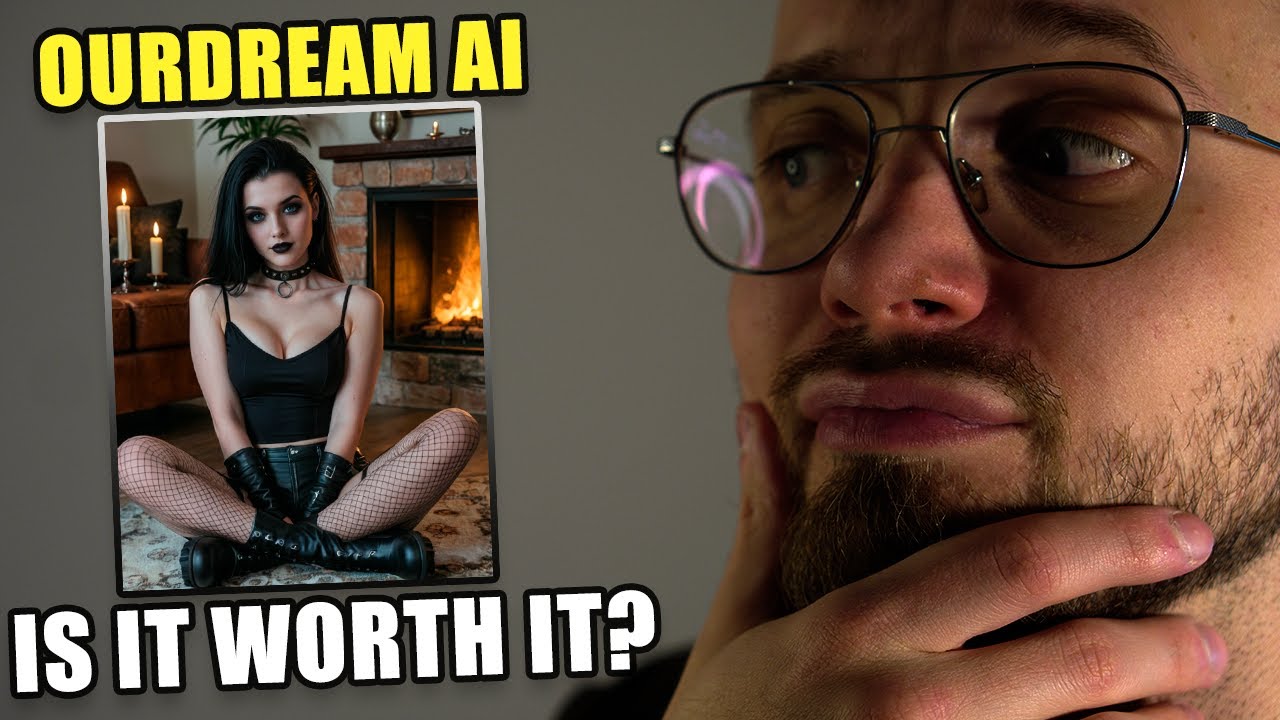
Artificial intelligence has quietly moved from the background of daily life into its emotional foreground. Voice assistants schedule meetings, algorithms curate our memories, and chatbots now engage in conversations that feel increasingly personal. Within this landscape, OurDream AI represents a growing class of platforms designed not simply to answer questions, but to accompany users creatively, conversationally, and emotionally. In its simplest form, OurDream AI allows users to create highly customized digital companions capable of sustained dialogue, narrative role-play, and multimedia expression. In the first moments of interaction, users are invited to define a character’s personality, visual appearance, and conversational style. The result is not a generic chatbot, but an adaptive entity that remembers prior exchanges and responds with contextual awareness. For many users, this feels less like using software and more like building an ongoing relationship one mediated entirely through code.
The rise of platforms like OurDream AI coincides with broader social trends: increased remote interaction, widespread loneliness reported in industrialized societies, and rapid advances in generative AI. Together, these forces have created fertile ground for digital companions that blur boundaries between tool, entertainment, and emotional mirror. This article explores how OurDream AI works, why it resonates with users, and what its emergence reveals about the future of human–AI relationships.
The Evolution of AI Companionship
AI companionship did not emerge overnight. Early conversational programs such as ELIZA in the 1960s demonstrated that even simple text-based scripts could evoke emotional responses from users. Over time, advances in machine learning, natural language processing, and computational power transformed these experiments into scalable systems capable of dynamic interaction.
By the 2010s, conversational agents became embedded in consumer technology, but they remained largely transactional. What distinguishes modern companion platforms is their emphasis on continuity and personalization. OurDream AI builds on this shift by prioritizing long-term interaction, memory retention, and emotional tone. Conversations are not isolated queries; they accumulate into narrative histories that shape future responses.
This evolution mirrors a change in user expectations. People no longer want AI solely for efficiency. They seek engagement, creativity, and sometimes emotional resonance. As AI systems become more fluent and context-aware, the line between functional assistant and social presence continues to blur.
Customization as the Core Experience
At the heart of OurDream AI is an unusually deep customization framework. Users define not only what their AI companion looks like, but how it behaves, reacts, and evolves over time. Personality traits such as warmth, humor, introspection, or assertiveness can be emphasized, shaping the rhythm and tone of conversation.
Visual customization plays an equally important role. Companions can be designed with realistic or stylized appearances, reinforcing the sense of identity and presence. These visual elements are not static; they integrate with narrative scenarios and media generation features that allow users to imagine their companions in different settings or storylines.
The psychological effect of customization is significant. Research in human–computer interaction suggests that personalization increases perceived trust, attachment, and engagement. When users invest creative effort into shaping an AI companion, they often report a stronger sense of ownership and continuity an experience closer to authorship than consumption.
Customization Dimensions in OurDream AI
| Dimension | User Control | Experiential Impact |
|---|---|---|
| Personality | Emotional tone, conversational style | Shapes relational feel |
| Appearance | Realistic or stylized visuals | Enhances immersion |
| Narrative Role | Friend, partner, mentor, character | Defines interaction goals |
| Memory Depth | Recall of past conversations | Builds continuity |
The Technology Beneath the Interface
While the experience of OurDream AI feels intuitive, it rests on complex technical foundations. At its core are large-scale language models trained to recognize patterns in human dialogue. These models generate responses based on probability, context, and prior interaction history, allowing conversations to feel fluid rather than scripted.
Memory systems distinguish companion AI from standard chatbots. Instead of discarding past exchanges, the system references them, enabling callbacks, emotional consistency, and narrative development. This technical design choice significantly alters user perception, transforming isolated chats into evolving relationships.
Visual and multimedia generation relies on generative models capable of producing images and short videos from descriptive prompts. These models translate abstract language into concrete visual representations, giving users a way to see imagined companions and scenarios. Together, conversational intelligence and media generation create a multi-modal experience that feels richer than text alone.
Creativity, Fantasy, and Narrative Play
One of the most distinctive uses of OurDream AI lies in creative storytelling. Users frequently engage the platform as a collaborative narrative partner, co-creating scenes, dialogues, and fictional worlds. This aligns with a long tradition of interactive fiction, but with a crucial difference: the AI adapts in real time, responding unpredictably yet coherently.
For writers, artists, and role-players, the platform functions as a creative catalyst. It can help explore character psychology, generate dialogue variations, or sustain long narrative arcs. Unlike static tools, an AI companion can challenge assumptions, introduce new plot directions, or mirror emotional states.
This creative dimension complicates simple categorizations of AI as either tool or relationship. In practice, OurDream AI often becomes both: a medium through which users express imagination and a responsive presence that shapes that expression.
Emotional Resonance and Psychological Effects
Perhaps the most debated aspect of AI companionship is its emotional impact. Users report a wide range of experiences, from casual entertainment to meaningful emotional support. The sense that an AI “remembers” and responds empathetically can foster comfort, particularly during moments of stress or isolation.
Psychologists caution, however, that emotional resonance does not equate to genuine reciprocity. AI systems simulate understanding without consciousness or lived experience. Yet research also shows that perceived empathy regardless of its source can influence mood and behavior. The question becomes not whether AI emotions are real, but whether their effects are.
Scholars like Sherry Turkle have argued that such technologies act as mirrors, reflecting user emotions back to them. This can encourage self-reflection, but it may also reduce motivation for complex human relationships if relied upon exclusively. The balance between support and substitution remains an open question.
Ethical and Social Considerations
The popularity of platforms like OurDream AI raises ethical questions that extend beyond individual use. Issues of data privacy, emotional dependency, and transparency are central to ongoing debates about companion AI.
Because conversations often involve personal thoughts and feelings, data security is paramount. Responsible platforms emphasize encryption, limited data retention, and user control. At the same time, the opaque nature of machine learning models makes it difficult for users to fully understand how their data shapes future interactions.
There is also a cultural dimension. As AI companions become normalized, social norms around intimacy, creativity, and emotional expression may shift. Some critics worry about commodifying companionship; others see potential for therapeutic and educational applications. What is clear is that these systems do not exist in isolation—they reflect and influence the societies that create them.
Comparing AI Companions to Traditional Social Technologies
| Aspect | Social Media | Virtual Assistants | AI Companions |
|---|---|---|---|
| Primary Goal | Connection and sharing | Task efficiency | Sustained interaction |
| Personalization | Algorithmic feeds | Limited preferences | Deep character design |
| Emotional Engagement | Indirect | Minimal | Central feature |
| Narrative Continuity | Fragmented | None | Ongoing |
This comparison highlights how AI companions occupy a unique niche, blending elements of social interaction, creativity, and personalization.
Takeaways
- OurDream AI exemplifies a shift from task-oriented AI toward relationship-oriented interaction.
- Deep customization fosters attachment and long-term engagement.
- Memory and context awareness distinguish companion AI from traditional chatbots.
- Creative storytelling is a central, not peripheral, use case.
- Emotional resonance offers both comfort and ethical complexity.
- Companion AI reflects broader societal changes in how connection is mediated.
Conclusion
OurDream AI sits at the crossroads of technology, creativity, and human psychology. It is neither merely software nor a substitute for human connection, but something more ambiguous and revealing. By allowing users to design and interact with personalized digital companions, the platform exposes how deeply people desire understanding, continuity, and imaginative freedom.
As AI systems continue to evolve, the questions surrounding them will become less technical and more philosophical. What does it mean to feel understood by a machine? How should society balance innovation with emotional responsibility? OurDream AI does not answer these questions definitively, but it brings them into sharper focus—inviting users and observers alike to reflect on the future of companionship in a digital age.
FAQs
What is OurDream AI primarily used for?
It is used for personalized AI companionship, creative storytelling, and immersive conversational experiences.
Does the AI remember past conversations?
Yes, memory retention allows conversations to build continuity over time.
Is OurDream AI meant to replace human relationships?
No. It functions as a digital experience, not a human substitute.
Who typically uses AI companion platforms?
Users range from creatives and writers to individuals seeking interactive entertainment.
Are there ethical concerns with AI companionship?
Yes, including data privacy, emotional reliance, and transparency.
References
Turkle, S. (2011). Alone together: Why we expect more from technology and less from each other. Basic Books.
Russell, S., & Norvig, P. (2021). Artificial intelligence: A modern approach (4th ed.). Pearson.
Boden, M. A. (2016). AI: Its nature and future. Oxford University Press.
Reeves, B., & Nass, C. (1996). The media equation: How people treat computers, television, and new media like real people and places. Cambridge University Press.
Floridi, L. (2023). Ethics, governance, and policies in artificial intelligence. Springer.