
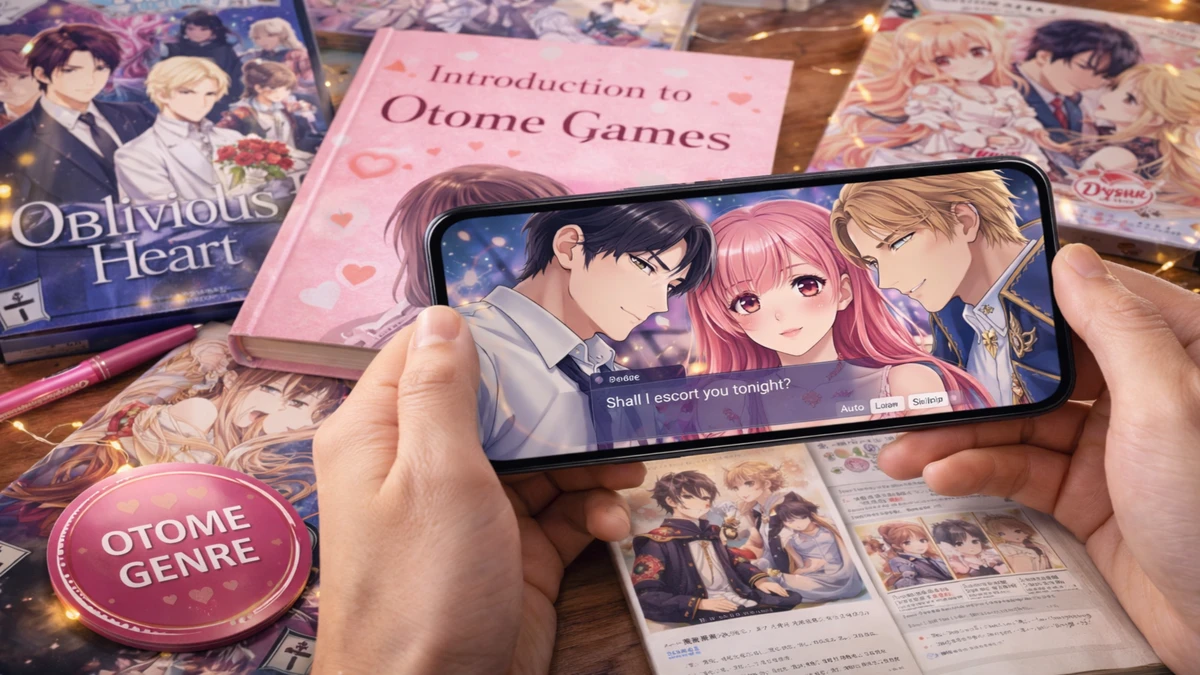
The phrase “Otomi Games” appears across forums, search engines, and download sites, often causing confusion about what it actually refers to. Many people searching for Otomi Games want to know whether it is a real company, a genre, a platform, or something else entirely. In practice, Otomi Games is best understood as a name attached to a website and online identity, while the actual creative tradition behind it is the otome game genre, a form of interactive narrative romance gaming that originated in Japan and has since spread worldwide.
Otome games are story-driven titles centered on a protagonist, usually female, who navigates branching romantic and narrative paths with multiple characters. Players make choices that shape relationships, endings, and emotional outcomes. These games are closer to interactive novels than traditional action games, prioritizing dialogue, character development, and emotional immersion over reflex-based mechanics.
The confusion between Otomi Games and otome games highlights a larger issue in digital culture: how names, platforms, and genres blur together online. A website can adopt the language of a genre without being part of its creative or commercial ecosystem, and users can easily mistake a distribution portal for an original creator. This article untangles those meanings, tracing the history of otome games, examining the role of Otomi Games as a web presence, and exploring how interactive romance storytelling became one of the most distinctive and emotionally resonant forms of modern gaming.
The Origins of Otome Games
Otome games emerged in Japan during the early 1990s as a response to dating simulations and visual novels that primarily targeted male audiences. Developers recognized that there was a large untapped audience interested in romance-driven narratives from a female perspective, and they began creating games that placed emotional choice and character relationships at the center of gameplay.
Early otome titles established core conventions that still define the genre today. Players assume the role of a protagonist who encounters several potential romantic partners, each with their own story route. Dialogue choices influence affection levels, unlock events, and determine which ending the player reaches. The experience is designed to be replayed, encouraging exploration of different emotional paths and narrative outcomes.
As technology evolved, otome games expanded beyond simple text and static images. Voice acting, animated cutscenes, elaborate art styles, and complex branching narratives became standard features. What began as a niche genre grew into a substantial creative field with its own fan culture, conventions, and online communities.
Otome Games as Interactive Literature
Otome games function as a hybrid medium between literature and games. They rely on written narrative as their foundation, but they introduce agency through choice, timing, and consequence. Unlike novels, where readers follow a fixed path, otome games invite players to co-author the story through decisions that shape characters’ feelings, plot developments, and endings.
This interactivity changes the emotional experience. Players often feel personally responsible for outcomes, experiencing guilt, satisfaction, regret, or joy depending on how a relationship unfolds. This emotional feedback loop is central to the genre’s appeal. It transforms romance from something observed into something participated in.
Because of this structure, otome games often explore themes rarely emphasized in mainstream gaming, such as communication, emotional intelligence, consent, trust, and vulnerability. They create space for reflection on how relationships form and fail, making them as much psychological simulations as entertainment products.
The Emergence of Otomi Games as a Platform
The name Otomi Games entered online culture not as a creative studio but as a website and digital identity associated with the distribution of downloadable games, including otome titles and other offline releases. This has led many users to assume that Otomi Games is a developer or publisher, when in fact it functions more like a content hub or file-sharing portal.
This distinction matters because platforms and creators play very different roles in digital ecosystems. Creators invest time, labor, and artistic vision into making games, while platforms distribute, host, or index them. When platforms adopt names closely tied to genres, they can unintentionally (or deliberately) blur that line, making it harder for users to distinguish between original content and redistributed material.
Otomi Games thus represents a broader phenomenon in internet culture: the way branding and search behavior can reshape how cultural products are perceived, sometimes obscuring origins and ownership in the process.
Otome Games and Global Fandom
As otome games spread beyond Japan, international fandoms formed around shared emotional experiences rather than shared geography. Players across continents discuss favorite characters, debate narrative choices, and recommend titles to one another, often forming tight-knit communities on social platforms.
Fan culture plays a major role in sustaining the genre. Players create fan art, write fan fiction, translate games, and organize events. These activities blur the line between consumer and creator, turning otome gaming into a participatory culture rather than a one-way media experience.
This community energy also shapes development trends. Developers pay attention to player feedback, cultural sensitivities, and evolving expectations around representation, consent, and emotional realism. In this way, otome games evolve in dialogue with their audiences.
Comparison of Genre and Platform
| Aspect | Otome Games Genre | Otomi Games Platform |
|---|---|---|
| Nature | Creative genre | Distribution identity |
| Origin | Japan, 1990s | Online era |
| Purpose | Tell interactive romance stories | Host or link downloadable games |
| Relationship to users | Narrative engagement | Access and convenience |
| Cultural role | Storytelling tradition | Digital infrastructure |
Common Features of Otome Games
| Feature | Description |
|---|---|
| Branching narratives | Multiple story routes based on player choices |
| Romantic focus | Emotional relationships as core gameplay |
| Character-driven plots | Stories centered on personalities and development |
| Replay value | Encourages multiple playthroughs |
| Emotional immersion | Designed to evoke empathy and attachment |
Expert Perspectives
Narrative designers often describe otome games as emotionally interactive rather than mechanically complex. The player’s primary skill is not reflex but empathy: reading characters, anticipating reactions, and choosing responses that shape emotional trajectories.
Media scholars view otome games as part of a broader shift toward personalized storytelling. In a world saturated with content, people increasingly seek experiences that feel tailored to them, and otome games offer precisely that through choice-driven narratives.
Cultural critics note that the genre also challenges assumptions about what games are supposed to be. By centering emotion and relationships, otome games expand the definition of gameplay itself, showing that play can be contemplative, relational, and introspective rather than competitive or violent.
Takeaways
- Otomi Games is a platform identity, not a genre or creative studio.
- Otome games are narrative romance games centered on emotional choice.
- The genre originated in Japan and has grown into a global cultural form.
- Otome games function as interactive literature, blending reading and play.
- Community participation is essential to the genre’s vitality and evolution.
- Naming and branding online can blur distinctions between creators and platforms.
Conclusion
Otomi Games and otome games represent two very different aspects of digital culture: one is a name attached to online distribution, the other is a storytelling tradition rooted in emotional interactivity. Understanding the difference between them reveals how easily cultural meaning can be reshaped by platforms, branding, and search behavior.
At their heart, otome games are about connection. They offer spaces where players can explore relationships, reflect on emotions, and experience stories that respond to their choices. In doing so, they expand what games can be and who they are for. As digital storytelling continues to evolve, otome games stand as a reminder that play is not only about action or competition, but also about empathy, narrative, and the human desire to be seen and understood.
FAQs
What are otome games?
They are interactive romance games with branching narratives focused on character relationships.
Is Otomi Games a game developer?
No, it refers to an online platform or identity, not a creative studio.
Why are otome games popular?
They offer emotional immersion, personal choice, and story-driven experiences.
Do otome games have gameplay beyond dialogue?
Some include stats, puzzles, or exploration elements, but story remains central.
Are otome games only for women?
They are targeted primarily at female audiences but are enjoyed by people of all genders.
REFERENCES
- Otome game. (n.d.). In Wikipedia. https://en.wikipedia.org/wiki/Otome_game Wikipedia
- OTOMI-GAMES.COM profile. (n.d.). About.me. https://about.me/otomi-games.com About.me
- Otomi-games.com safety check. (n.d.). Scamvoid. https://www.scamvoid.net/check/otomi-games.com/ Scamvoid.net
- Top games tagged Otome. (n.d.). itch.io. https://itch.io/games/tag-otome