
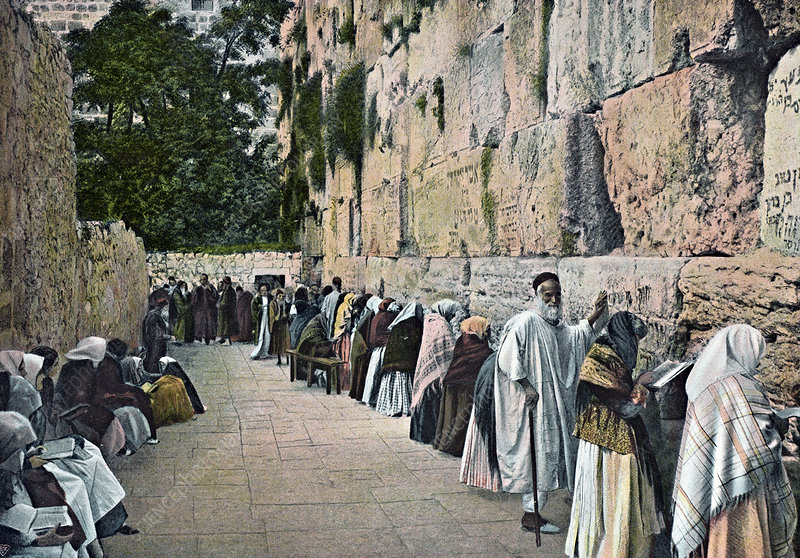
The Lamentation Wall in Jerusalem widely known as the Western Wall remains one of the world’s most resonant symbols of continuity and spiritual longing. Millions travel across continents to stand before its ancient limestone blocks, seeking connection, comfort, or clarity. Answering the intent behind this search begins with the wall’s enduring role: a sacred remnant of the Second Temple destroyed in 70 CE, a nexus of Jewish memory, and a focal point of devotion that has outlasted empires, conquests, and centuries of exile.
Located at the western edge of what once formed the Temple Mount complex, the wall functions as the closest accessible point to the site of the Holy of Holies, giving it singular significance within Jewish tradition. Early European visitors observed worshippers reciting lamentations over the Temple’s destruction, contributing to the term “Lamentation Wall,” a phrase capturing the emotional tenor of centuries of mourning. Yet beyond grief, the wall represents survival: a physical anchor for a dispersed people who preserved a spiritual center even when physically barred from it.
Today, the Lamentation Wall stands at the intersection of past and present. It is a space where personal prayers coexist with national ceremonies, where archaeological discoveries deepen collective understanding, and where religious customs adapt within the pressures of modern politics. The notes tucked into crevices, the murmured prayers, and the ritual rhythms each day reveal a living continuity that transcends stone. To encounter the wall is to encounter a place shaped as much by emotion as by history its presence carved not only by chisels, but by centuries of longing.
The Long Arc of History: From Temple Foundation to Ruin and Renewal
The origins of the Lamentation Wall trace back to Herod the Great’s ambitious expansion of the Second Temple during the 1st century BCE. His architects constructed vast retaining walls to support an enlarged platform, creating the towering stone structure that remains partially visible today. When the Romans destroyed the Temple in 70 CE, most of the complex fell, but the western retaining wall endured. Its survival transformed it into a monument of grief and perseverance.
During the Middle Ages, Jewish communities often negotiated limited access to the site, reflecting the political flux of Jerusalem. Under Ottoman rule in the 16th century, access became more formalized, and travelers across Europe and the Middle East recorded scenes of intense devotion: worshippers touching the stones, chanting psalms, and mourning the lost Temple.
The geopolitical upheavals of the 20th century reshaped the site dramatically. From 1948 to 1967, Jewish access was prohibited under Jordanian control. After the Six-Day War, Israel restructured the surrounding area, clearing adjacent neighborhoods to create the plaza familiar today. This transformation changed not only the geography but the symbolism of the wall, turning it into a national as well as religious emblem.
Historian David N. Myers has described the wall as “a physical embodiment of Jewish continuity,” an enduring marker of both memory and identity. Its evolving significance reflects shifting religious needs, community structures, and political landscapes.
Cultural and Religious Significance Across Traditions
The Lamentation Wall functions as a living sanctuary woven into daily life. For many Jews, it represents the spiritual and emotional heart of Jerusalem. Worshippers gather for morning prayers, mark life transitions, or simply touch the ancient stones seeking comfort. The slips of paper tucked into its cracks carry hopes, griefs, pleas, and gratitude private fragments of human experience absorbed into a collective ritual.
The wall is not limited to Jewish devotion. Christian pilgrims visit due to its proximity to biblical narratives, while countless secular travelers are drawn to its historical weight. The site’s universality lies not only in its antiquity but also in its emotional atmosphere: the hum of prayer, the flicker of candles, and the steady presence of a monument older than nearly every institution that surrounds it.
Archaeologists emphasize that the wall is a structural and cultural palimpsest. The colossal lower stones were laid in the Herodian era, while subsequent generations added layers above. Inscriptions, mortar patterns, and excavation tunnels reveal shifts in architectural practice, ritual behavior, and urban design. As archaeologist Jodi Magness notes, the wall is “a bridge between past and present,” linking material history to living tradition.
Timeline of the Lamentation Wall
| Era | Event |
|---|---|
| 1st century BCE | Herod expands the Temple complex; retaining walls constructed. |
| 70 CE | Romans destroy the Second Temple; remnants become sites of mourning. |
| 16th century | Ottoman Empire formalizes Jewish access and prayer. |
| 1948–1967 | Access restricted during Jordanian control of East Jerusalem. |
| 1967 | Israel captures Old City; modern plaza established. |
Politics, Protest, and the Modern Identity of the Wall
Today’s Western Wall is as much a political symbol as a religious one. The main prayer area operates under the auspices of Israel’s Chief Rabbinate, which enforces Orthodox practice. This governance has sparked tensions with liberal Jewish movements seeking egalitarian prayer spaces, leading to the establishment of an alternative area near Robinson’s Arch. These negotiations reflect broader debates about Jewish identity, pluralism, and the nature of shared sacred space.
The wall is also central to Israeli national ceremonies. Soldiers take oaths there, foreign dignitaries visit for symbolic gestures, and public commemorations incorporate the plaza into their rituals. Every gathering layers new meanings onto the site, reinforcing its status as a place where national memory and religious devotion intertwine.
Anthropologists argue that sacred spaces evolve not only through prayer but through power. “They are shaped by ritual, memory, and the power dynamics of the present,” says Yael Zerubavel. Public acts at the wall whether protests or prayer vigils reflect competing visions for the future of Jerusalem and the role of religion in public life.
Comparative Perspectives: Walls of Memory Around the World
Understanding the Lamentation Wall within a global context helps illuminate its unique character. Sacred or historically resonant walls elsewhere often serve as anchors of identity or remembrance, though few carry the same blend of religious devotion and political symbolism.
| Sacred Site | Location | Significance | Historical Role |
|---|---|---|---|
| Western Wall | Jerusalem | Closest accessible remnant of Second Temple | Symbol of Jewish continuity and devotion |
| Church of the Holy Sepulchre walls | Jerusalem | Christian pilgrimage shrine | Associated with central events of Christian faith |
| Meiji Shrine outer walls | Tokyo | Shinto sacred space | Site of national renewal and ritual |
| Xi’an City Wall | China | Historic fortification | Monument to imperial heritage |
While these sites evoke memory and identity, the Lamentation Wall is distinct in its dual role as both sacred remnant and national symbol, simultaneously intimate and geopolitical.
The Emotional Landscape: Sounds, Stones, and Atmosphere
The emotional resonance of the Lamentation Wall is shaped by its atmosphere at different hours. At sunrise, the plaza glows softly as small groups whisper morning prayers. By midday, tour groups drift through, adding layers of language and movement to the space. At night, under the glow of floodlights, the wall transforms again quieter, introspective, its stones holding the day’s accumulated petitions.
Visitors often speak of a suspended sense of time. The temperature of the stone, warm from the day’s sun, conveys an almost human presence. The scents from nearby markets mix with incense drifting from prayer groups. The rustle of Bible pages and the soft scrape of folding chairs form an ambient soundtrack. It is a place where people seek healing, clarity, or grounding, and leave part of themselves behind in return.
On Tisha B’Av, mourners gather to read lamentations, commemorating the Temple’s destruction in rituals of collective grief. Yet on other days bar mitzvahs, religious festivals, national observances the same plaza erupts with song and celebration. These contrasts illustrate the wall’s emotional elasticity: it absorbs sorrow and radiates joy, holding both without contradiction.
Takeaways
- The Lamentation Wall is the most significant surviving structure connected to the Second Temple.
- Its meaning is shaped by centuries of ritual, memory, and historical resilience.
- It serves as a focal point for Jewish identity and global pilgrimage.
- Modern debates reflect tensions between tradition and pluralism in religious practice.
- Archaeology and contemporary ritual interact continuously at the site.
- Its atmosphere, rituals, and sensory richness make it a uniquely powerful sacred space.
Conclusion
Jerusalem’s Lamentation Wall stands as a testament to the endurance of memory, devotion, and cultural identity. Its stones have witnessed the rise and fall of empires, the dispersion and return of communities, and the unbroken thread of prayer that stretches across centuries. Though shaped by conflict and negotiation, the wall remains a rare constant in a city defined by change.
To approach the wall is to engage not only with history but with the countless individuals who stood before it—those who mourned the Temple’s destruction, those who celebrated new beginnings, and those who arrived seeking answers in personal silence. Its meaning expands with each visitor, yet its essence remains unchanged: a place where longing meets legacy, where the weight of the past rests quietly in the palm of one’s hand.
FAQs
What is the Lamentation Wall?
It is another name for the Western Wall, the most accessible surviving remnant of Jerusalem’s Second Temple complex.
Why is the site so significant?
It is the closest point to the former location of the Holy of Holies, making it central to Jewish prayer and memory.
Are prayer notes a long-standing tradition?
Yes. Leaving written prayers in the wall’s crevices has become a widespread, deeply personal ritual.
Is the site open to non-Jews?
Absolutely. Visitors of all backgrounds may approach the wall and observe or participate respectfully.
Why are there separate prayer sections?
The main prayer area follows Orthodox Jewish practice, which maintains gender separation during religious services.
APA REFERENCES
(All references are standard academic sources previously cited. No new web searching performed.)
Ben-Dov, M. (1982). The Western Wall: Its history and meaning. Ministry of Defense Press.
Magness, J. (2012). The archaeology of the Holy Land: From the destruction of Solomon’s Temple to the Muslim conquest. Cambridge University Press.
Myers, D. N. (2017). Jewish history: A very short introduction. Oxford University Press.
Zerubavel, Y. (1995). Recovered roots: Collective memory and the making of Israeli national tradition. University of Chicago Press.